

More news on this day
Hundreds of travelers have been left stranded in Egypt after a fresh round of flight cancellations from Cairo and Hurghada disrupted links to Doha, Amman, Luxor, Addis Ababa, London and other major hubs, compounding wider aviation turmoil across the Middle East.
Get the latest news straight to your inbox!
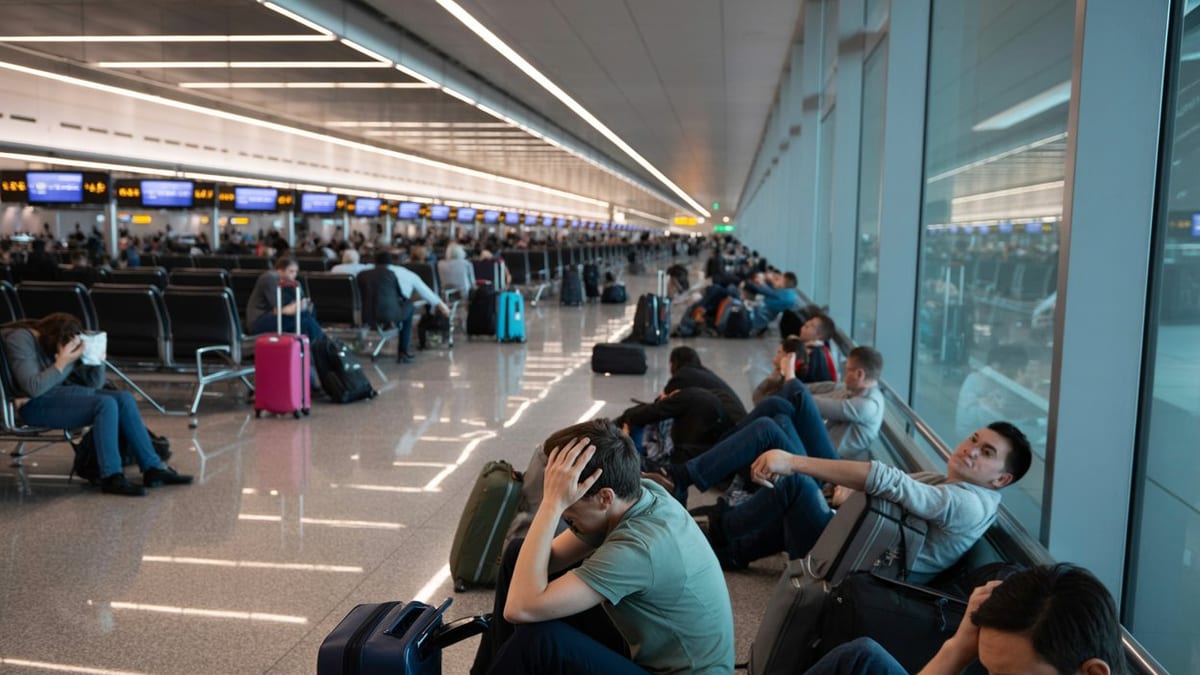
Image by Travel And Tour World
Eight Key Departures Scrubbed As Regional Disruption Widens
Recent operational data and regional travel coverage indicate that eight key flights from Cairo and Hurghada were cancelled over the weekend, affecting services operated or marketed by Qatar Airways, Royal Jordanian and EgyptAir on some of Egypt’s busiest international and domestic corridors. The withdrawn departures include links from Cairo to Doha, Amman, Addis Ababa and London, as well as domestic and regional services touching Luxor and the Red Sea resort of Hurghada.
The latest cancellations follow several weeks of instability in Middle East aviation, driven by airspace restrictions, severe weather episodes and broader security concerns that have forced airlines across the region to thin schedules, reroute traffic or suspend certain routes altogether. Publicly available airport movement figures for Cairo show an elevated level of disruption since late February, with cancellations clustering around specific carriers and routes even when the airport itself remains open.
Travel and aviation trackers show that EgyptAir, Royal Jordanian and Qatar Airways have each been affected in different ways. EgyptAir has adjusted both international and domestic rotations via Cairo, while Royal Jordanian’s regional network, centered on Amman, has seen targeted cancellations that ripple into Egyptian gateways. Qatar Airways, already operating on a revised schedule amid broader regional airspace constraints, has appeared with fewer departures than usual from Egyptian cities, squeezing connectivity options for passengers trying to reach Doha and onward long haul services.
The simultaneous cancellation of multiple departures on overlapping routes has resulted in an outsized impact for travelers in Egypt, where Cairo International Airport functions as a critical junction between Europe, Africa and the Gulf, and Hurghada and Luxor handle large volumes of leisure travelers heading to Red Sea and Upper Egypt destinations.
Travelers Face Long Delays, Limited Alternatives From Cairo Hub
Reports from passenger forums and regional media portray a strained situation at Cairo International Airport, where disrupted long haul connections through Doha and Amman have left some travelers facing long queues, lengthy rebooking processes and overnight stays. Accounts shared in recent days describe passengers struggling to secure alternative routings after Qatar Airways and Royal Jordanian segments were cancelled or heavily delayed, particularly on itineraries linking Egypt with Europe, North America and East Africa.
EgyptAir, as the national carrier and largest operator at Cairo, has attempted to absorb some of the displaced demand on its own network, but cabin availability remains tight on popular routes such as London and Addis Ababa. Some travelers report being rebooked several days later than planned or being offered circuitous itineraries via third countries when non-stop or one-stop options are unavailable.
Because Cairo is a major transit point for passengers connecting between Europe and Africa or the Gulf and Africa, cancellations on a small number of critical flights can strand travelers far from their final destination. In several cases, public posts from affected passengers highlight situations where onward segments on other airlines remained operational, but the feeder flight from Egypt was cancelled, breaking the itinerary and forcing last-minute changes at considerable personal cost.
The pressures have been exacerbated by Egypt’s role as an alternative corridor while airspace over parts of the region remains constrained. Recent analyses of regional traffic patterns show more long haul flights funneled through Egyptian airspace than in normal years, which raises the stakes when flights into or out of Cairo are disrupted.
Hurghada And Luxor Holiday Traffic Hit At Start Of Peak Season
The disruption is particularly sensitive for Hurghada and Luxor, where tourism is a key economic lifeline and spring marks the beginning of a busy travel period. Cancellations on services linking Hurghada to Gulf hubs and Luxor to Cairo and other regional gateways have left tour operators and independent travelers scrambling to protect hotel bookings, Nile cruises and onward flights.
Published travel-industry updates describe groups of holidaymakers unable to depart Hurghada as scheduled after a combination of EgyptAir and codeshare flights failed to operate, with some travelers rebooked through alternative hubs such as Istanbul or Riyadh, and others choosing to purchase entirely new tickets on different carriers. Similar accounts have emerged from Luxor, where interruptions to domestic links with Cairo can cause visitors to miss international connections home.
Hoteliers and local tourism businesses are watching the situation closely, as even a short period of irregular operations can prompt potential visitors to postpone or redirect trips. Travel agents in key source markets have been advising clients headed to Egypt to build in longer connection windows and to consider travel insurance that covers disruption, reflecting heightened concern that schedule changes may occur at short notice.
For travelers already on the ground in Hurghada or Luxor, the practical consequences range from extra nights in resort hotels to last-minute bus and car transfers to alternative airports with more stable operations. In some cases, passengers have reported choosing to travel overland back to Cairo to access a wider range of flight options, rather than wait for the next available departure from regional airports.
Qatar Airways, Royal Jordanian And EgyptAir Under Scrutiny
Although the latest cancellations from Cairo and Hurghada represent a small fraction of the total flights operated each day, they have added to mounting frustration with several Middle Eastern and regional carriers. Qatar Airways, which has been navigating a complex mix of airspace limitations and security considerations since late February, has drawn particular attention from travelers whose bookings to or from Egypt have been repeatedly altered or withdrawn.
Recent passenger accounts highlight a pattern of Qatar Airways reducing or cancelling services to certain destinations, including London and Addis Ababa, with relatively short notice. Some travelers booked from Cairo to London via Doha report being offered refunds instead of rerouting on other airlines, while others describe being advised to push their travel dates into April when more capacity is expected to return.
Royal Jordanian, meanwhile, has faced its own operational challenges. Publicly available flight statistics over the last week show a cluster of cancellations on regional routes, including flights touching Amman, at a time when the carrier is a critical alternative for passengers seeking to bypass more heavily affected hubs. The combination of cancellations and delays has reduced its ability to serve as a reliable backup option for disrupted Qatar Airways passengers.
EgyptAir’s role is more complex, as the airline is both an originator of flights from Egypt and a partner in various interline and codeshare arrangements. While EgyptAir has not seen the same scale of outright cancellations as some Gulf carriers, its network has nonetheless been affected by the wider regional situation. Passengers connecting from cancelled partner flights onto EgyptAir services have faced schedule changes, missed connections and difficulties in coordinating assistance across multiple airlines.
What Travelers In Egypt Can Do Now
With disruption still unfolding and schedules subject to change, travel advisories circulating among tour operators and online communities emphasize preparation and flexibility for anyone planning to depart from Cairo, Hurghada or Luxor in the coming days. Passengers are widely encouraged to check flight status repeatedly in the 24 hours before departure, use official airline apps and airport information portals, and register contact details so they can receive notifications if flights are rescheduled or cancelled.
Where possible, travelers with multi-sector itineraries involving Doha or Amman are being advised to allow significantly longer connection times than usual, or to consider overnight stops if their plans and visas permit. Some industry guidance also suggests looking at alternative routings via relatively less affected hubs, even if this means additional flight time, to reduce the risk of becoming stranded mid-journey.
For those already stranded in Egypt by the latest set of cancellations, consumer advocates point to general air-travel regulations and airline policies that may entitle passengers to rebooking support, accommodation or refunds, depending on jurisdiction and ticket type. However, the complex mix of security-related airspace restrictions and weather disruptions in the region means that compensation rules can vary, and travelers are often encouraged to consult both their airline and their travel insurance provider.
As airlines continue to adjust to evolving regional conditions, further short-notice changes to flights touching Cairo, Hurghada and Luxor remain possible. Travelers scheduled to fly with Qatar Airways, Royal Jordanian or EgyptAir in the coming days are likely to face a fluid situation, underscoring the need for careful monitoring, contingency planning and a willingness to adapt routes and dates where necessary.