

More news on this day
Travelers across the Middle East faced escalating disruption on March 3, 2026, as more than 75 flights were cancelled at Cairo International Airport, with services by EgyptAir, Emirates, Qatar Airways and Gulf Air among those grounded amid widening Gulf airspace closures.
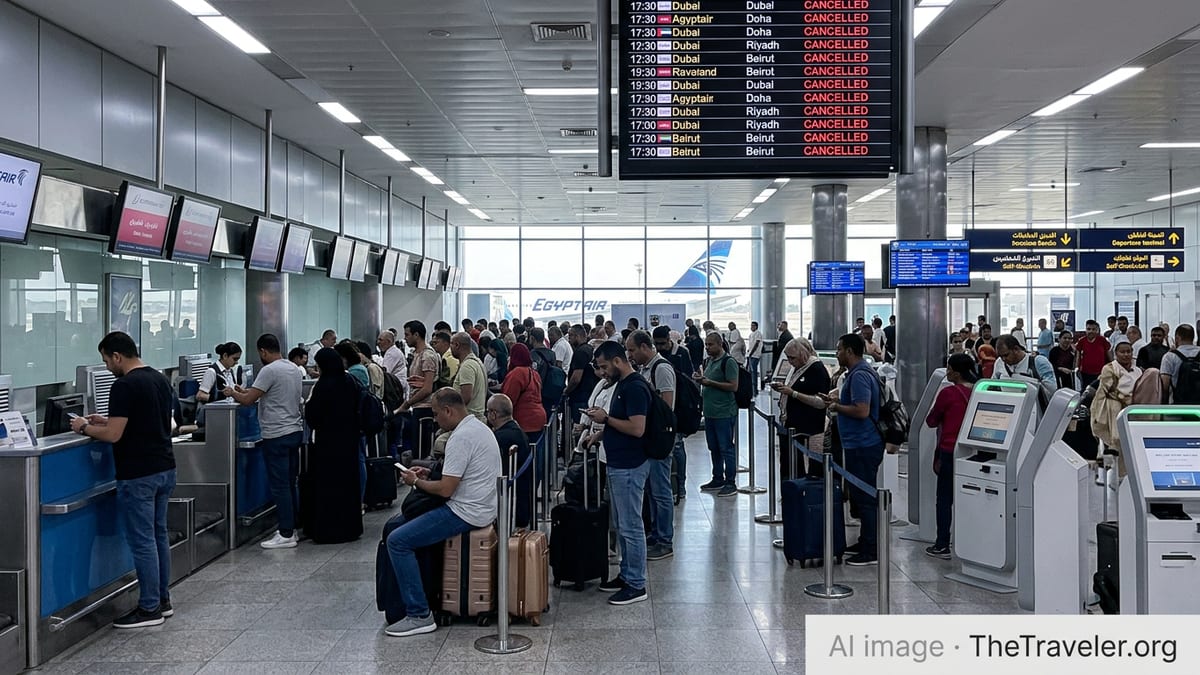
Cairo Becomes Latest Flashpoint in Regional Aviation Crisis
Operational data from Cairo International Airport on Tuesday showed dozens of departures and arrivals scrubbed from boards, affecting key routes to Dubai, Doha, Riyadh, Beirut and other regional hubs. Airport and airline officials attributed the cancellations to continuing airspace restrictions and security concerns following the outbreak of conflict involving Iran, the United Arab Emirates and Qatar at the end of February.
The wave of cancellations pushed the tally of disrupted services at Cairo alone beyond 75 within a 24 hour window, according to airport sources and schedule tracking platforms. That figure includes a mix of outbound flights from Cairo to Gulf and Levant destinations and inbound services that were due to connect through major hubs such as Dubai International and Hamad International in Doha.
While Cairo’s runways and local Egyptian airspace remained technically open, airline planners said the city was increasingly ensnared in a network-wide crisis as key onward hubs to Asia, Europe and North America stayed closed or heavily restricted. The result was a rapid thinning of options for passengers using Cairo as either an origin, destination or connection point.
EgyptAir Extends Suspensions on Core Gulf and Levant Routes
EgyptAir confirmed in a notice to customers that it is continuing the suspension of flights from Cairo to several of its busiest regional destinations, including Dubai, Abu Dhabi, Sharjah, Beirut, Doha, Amman, Dammam, Bahrain, Baghdad, Erbil and Kuwait, until further notice. The flag carrier cited the impact of “escalating events in the region” and associated air traffic restrictions in neighboring countries.
The extended suspension removes a substantial portion of EgyptAir’s short and medium haul network from the schedule, significantly reducing capacity between Egypt and Gulf states at a time when many travelers are seeking to leave or avoid conflict-affected areas. Services to a limited number of Saudi destinations, which operate on alternative routings, continue, but frequencies and aircraft types are being adjusted day by day.
EgyptAir urged passengers to review their bookings and stay in close contact with its call center or ticket offices, warning that further changes could be implemented at short notice. Industry analysts noted that the airline is effectively ring-fencing its remaining operational network while maintaining flexibility to add repatriation or relief flights should conditions allow.
Emirates, Qatar Airways and Gulf Air Cut Cairo Links as Hubs Stay Shut
The cancellations in Cairo are also being driven by decisions taken hundreds of miles away. Emirates, Qatar Airways and other Gulf carriers have scrapped large portions of their Middle East schedules in recent days after airspace over the United Arab Emirates, Qatar and parts of the wider region was closed or severely restricted following Iranian missile and drone strikes.
Data compiled by aviation analytics firms show that Emirates, Qatar Airways and Gulf Air have each cancelled a significant share of their planned flights since February 28, with Dubai, Abu Dhabi and Doha operating at only a fraction of normal capacity. In that context, Cairo flights that would typically feed global long haul connections through those hubs have been among the first to be pulled from the timetable.
For Qatar Airways, whose Doha hub remains constrained by ongoing airspace and security measures, Egypt services have been particularly affected. Gulf Air, operating from Bahrain, is facing similar pressures as traffic flows across the northern Gulf are rerouted, extended or cancelled outright. Airline statements describe the suspensions as temporary but offer few concrete timelines for full restoration of Cairo frequencies.
Passengers Stranded and Rerouted Amid Limited Alternatives
The upheaval has left thousands of passengers holding Cairo tickets for Dubai, Doha, Riyadh, Beirut and other cities scrambling for alternatives. Travel agents in the Egyptian capital reported a surge in demand for seats on the few remaining services to Saudi Arabia and Europe, as well as interest in complex routings via North Africa, Turkey and Southern Europe that bypass closed Gulf hubs.
However, with regional carriers across the board cancelling or consolidating flights, spare capacity is limited. Some travelers have opted to remain in Egypt rather than risk becoming stranded in transit. Others with urgent travel needs are paying sharply higher fares for the last remaining seats on indirect routes, or seeking overland options into neighboring countries with functioning airports.
Consumer advocacy groups and legal experts cautioned passengers to read the fine print of their tickets and monitor airline communications closely. In many cases, carriers are offering free rebooking within defined travel windows, vouchers or refunds, but processing times are lengthening as call centers and online support channels are overwhelmed.
Outlook: Rolling Cancellations as Airlines Await Security Clarity
Aviation analysts expect Cairo’s disruption to continue as long as key Gulf and Levant air corridors remain constrained. With Dubai, Abu Dhabi and Doha still under tight operational limits and further security assessments pending, carriers are preparing schedules in short cycles, often updating day by day rather than publishing longer term plans.
Industry data compiled over recent days indicate that Middle Eastern hubs have recorded thousands of cancellations since the conflict began, with Emirates, Qatar Airways and Gulf Air among the most affected full service airlines. That pattern is now clearly visible in Cairo, where embedded connections to those hubs make the airport especially vulnerable to regional volatility.
For now, airlines are emphasizing safety and regulatory compliance above all else, even as they acknowledge the mounting financial cost and reputational strain. Travelers with plans involving Cairo and nearby Gulf or Levant cities are being strongly advised to check flight status repeatedly in the days leading up to departure, to keep flexible itineraries where possible and to be prepared for abrupt changes as the security situation evolves.