

More news on this day
Travelers passing through Cairo International Airport on April 6 faced mounting disruption as 155 delayed flights and six cancellations rippled across regional and long haul routes, leaving passengers stranded on services involving EgyptAir, Emirates, Lufthansa and other major carriers.
Get the latest news straight to your inbox!
Wide-Ranging Disruptions Across Major Carriers
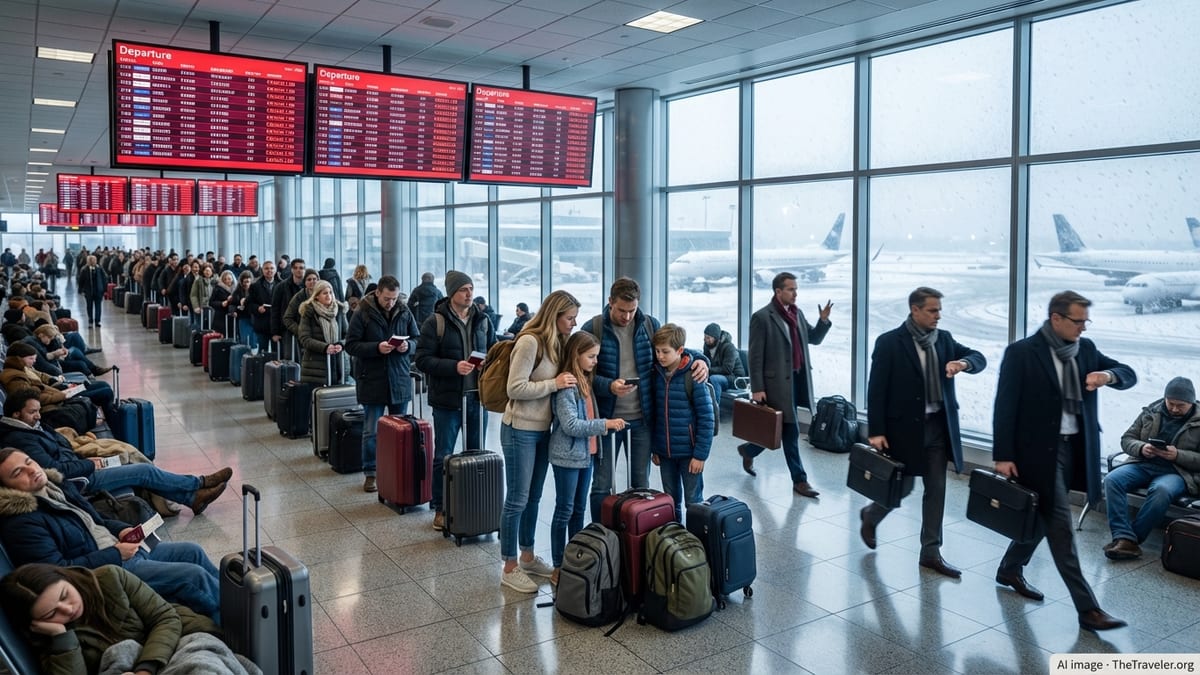
Operational data and regional travel reports indicate that Cairo International Airport has become a pinch point in an already strained Middle East aviation network, with delays affecting both departures and arrivals. While the majority of today’s 155 affected services eventually operated, extended ground holds and late inbound aircraft led to missed connections and lengthy waits in crowded terminals.
EgyptAir appears among the most heavily impacted operators at Cairo, with a high proportion of its schedule subject to delay and at least one service canceled. Emirates and other Gulf-based carriers have also faced schedule pressure, particularly on wide body operations connecting Cairo with Dubai and beyond. Lufthansa services linking Cairo to European hubs have been disrupted as well, reflecting broader constraints on routings between Europe and the Middle East.
According to publicly available tracking dashboards, smaller regional and low cost airlines operating through Cairo have not been spared. Knock on effects from delayed turnarounds and constrained airspace elsewhere in the region have reduced schedule resilience, so a single aircraft arriving late can cascade into multiple subsequent disruptions.
Despite the relatively small number of outright cancellations compared with delays, the imbalance has contributed to crowded gate areas and longer queues at transfer and rebooking desks, as passengers seek alternative options on already busy departures.
Key Routes Hit: Frankfurt, Doha, Dubai, Istanbul and London
Published flight monitoring snapshots for April 6 show particular strain on routes connecting Cairo to several major hubs, including Frankfurt, Doha, Dubai, Istanbul and London. These cities function as onward gateways for Europe, Africa, Asia and North America, so delays on these sectors often lead to missed intercontinental connections.
Lufthansa’s Cairo services from Frankfurt and Munich feature among the disrupted connections, with at least one Europe to Cairo rotation canceled in recent days and further knock on delays noted in today’s schedule. For travelers bound for Germany or transferring onward to other European destinations, even relatively short ground delays in Cairo can mean missed long haul connections.
Flights between Cairo and the Gulf hubs of Doha and Dubai are experiencing similar pressure. Emirates, flydubai and Qatar Airways are all operating with reduced or adjusted schedules compared with earlier in the year, according to recent regional travel advisories, and this has left little flexibility to absorb additional disruption on Cairo rotations.
Services linking Cairo and Istanbul, operated by both Turkish and regional carriers, have likewise been affected. Istanbul’s own congestion and weather related challenges in recent weeks have occasionally pushed delays down the line, affecting departure waves out of Cairo and tightening connection windows for passengers heading to Europe and Central Asia via Turkey.
Middle East Aviation Under Sustained Strain
The latest disruption at Cairo comes against a backdrop of sustained operational pressure on Middle East aviation. Over recent weeks, multiple industry reports have pointed to thousands of daily cancellations and extensive rerouting as airlines adjust to changing airspace restrictions and shifting demand patterns between Europe, the Gulf and Asia.
Analyses from regional travel publications and aviation data providers describe a system operating with limited slack, in which aircraft and crew are frequently out of position. When this coincides with high passenger loads, even minor technical issues, ground handling delays or air traffic control restrictions can quickly snowball into wider schedule instability at key hubs such as Cairo.
Recent coverage focused on the Middle East notes that Emirates, Qatar Airways, Etihad, Saudia, EgyptAir, Turkish Airlines and others have all faced a combination of cancellations, diversions and extended ground times. Airlines are generally attempting to prioritize core trunk routes and repatriation style demand, which means secondary frequencies or less profitable rotations may be more vulnerable to last minute changes.
Cairo’s role as a bridge between Europe, the Gulf and parts of Africa has been underscored by these shifts. As other transit points experience periodic closures or capacity reductions, more flights are being funneled through Egyptian airspace, increasing the risk of congestion and compounding the impact when things go wrong on the ground.
Passengers Face Long Queues, Missed Connections and Limited Alternatives
For travelers on the ground at Cairo International Airport, today’s figures translate into practical challenges that go beyond the raw number of delayed and canceled flights. With 155 services running behind schedule, passengers with onward connections in Frankfurt, Doha, Dubai, Istanbul and London have faced heightened risk of misconnecting and being rebooked onto later flights where seats may be scarce.
Travel industry coverage from across the region describes scenes of long queues at ticket desks and transfer counters on recent days, as disrupted passengers seek rerouting or accommodation. Many carriers are encouraging digitally managed changes through mobile apps and websites, but travelers whose itineraries involve multiple airlines or separate tickets often still need to negotiate changes in person at the airport.
Accommodation and meal support policies vary significantly between airlines and jurisdictions, which can add to the uncertainty for those stranded overnight. Consumer advice columns continue to urge passengers to retain boarding passes and obtain written confirmation of disruption causes where possible, since this documentation can assist in any later claims for refunds or compensation under applicable regulations.
Travelers with urgent commitments, such as international connections or time sensitive business travel, are reportedly the most affected by the unpredictability. With limited spare capacity across the network, same day alternatives are not always available, especially on heavily booked sectors between Cairo and major hubs.
Advice for Travelers Planning to Transit Through Cairo
Given the elevated level of disruption, travel experts and advisory services are recommending that passengers with upcoming journeys through Cairo factor in additional time and flexibility. Recent guidance from international travel agencies suggests booking longer connection windows, particularly when linking from regional Middle East flights onto long haul services to Europe or North America.
Publicly available advisories also stress the importance of checking flight status repeatedly in the 24 hours before departure, as schedules remain subject to rapid change. Airline apps, airport information screens and third party tracking tools can all provide indications of creeping delays well before a formal schedule change is posted at the gate.
Some carriers have broadened their rebooking and change fee waivers across the Middle East, allowing passengers to shift travel dates or reroute via alternative hubs where capacity exists. While such waivers are not universal, travelers affected by disruption at Cairo are frequently urged to explore these options, particularly if their itineraries involve routes known to be under sustained operational strain.
For those yet to finalize travel plans, specialist agencies advise considering time of day and day of week patterns, as peak connection banks at major hubs are more vulnerable to chain reaction delays. With Cairo currently experiencing a combination of local congestion and regional knock on effects, cautious itinerary planning may help reduce the risk of becoming stranded when schedules unravel.