

More news on this day
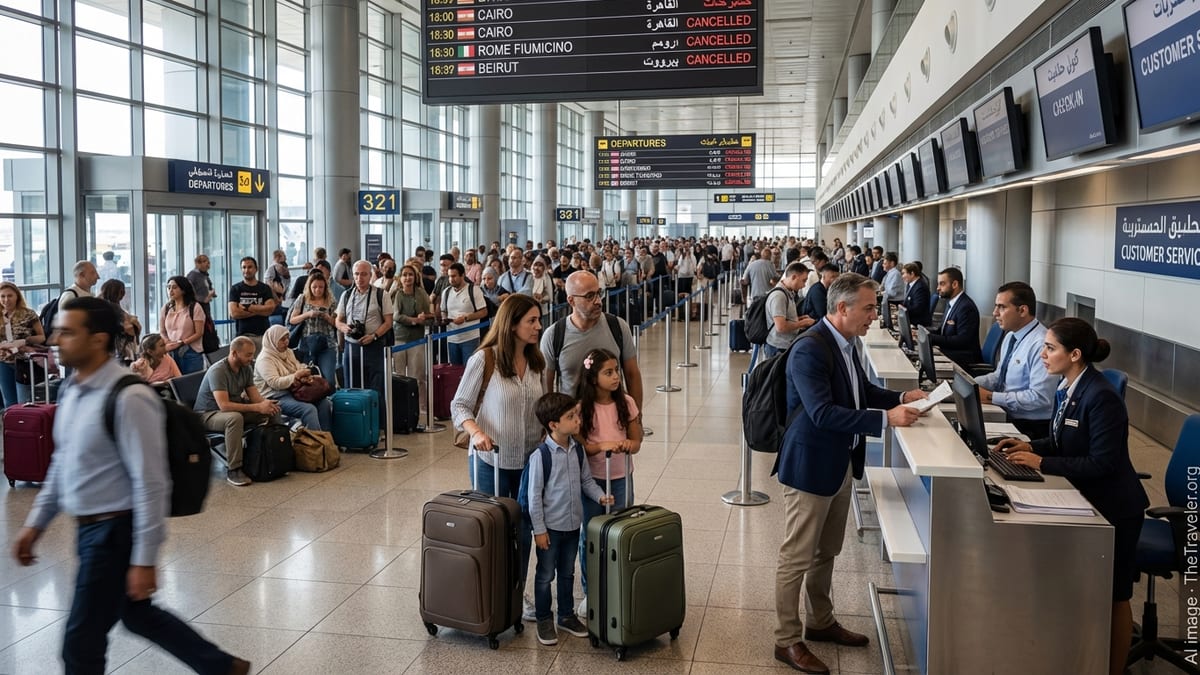
Passengers at Cairo International Airport faced fresh disruption on February 27, 2026, after ITY Airways and MSR Airlines cancelled two key regional flights, one bound for Rome Fiumicino and another for Beirut, forcing travelers into last-minute changes and extended waits in already busy terminals.
Targeted Cancellations Hit Fiumicino and Beirut Routes
The latest disruption centers on two high-demand routes linking Cairo to Rome Fiumicino and Beirut, services that are critical for both business and leisure travelers as well as onward long-haul connections. According to airport schedule data and airline updates, ITY Airways cancelled its flight from Cairo to Rome Fiumicino, while MSR Airlines withdrew a scheduled service on the Cairo–Beirut corridor, affecting dozens of passengers booked on Friday departures.
While Cairo International Airport has not reported a full-scale operational shutdown, the targeted cancellations come at a sensitive time, coinciding with wider air sector unrest in Italy and ongoing instability in parts of the Middle East. The Rome route is a key gateway to Europe for Egyptian travelers, while Beirut remains a crucial regional hub, especially for short-haul corporate traffic and family visits.
Ground staff at Terminal 3 spent much of the morning assisting affected passengers, many of whom arrived at the airport before receiving confirmation that their flights would not operate. Airline counters saw extended queues as customers sought refunds, rebooking options on later services, or rerouting via alternative hubs in the region.
The latest disruption also adds pressure to Cairo’s role as a transfer hub. With the cancelled Fiumicino service feeding onward connections across Italy and Western Europe, and the Beirut flight supporting links to the Levant, some transit passengers found their itineraries unraveling mid-journey, forcing unplanned overnight stays in Cairo.
Knock-on Effects for Travelers at Cairo International
Passengers reported a mix of delays and uncertainty across the morning and early afternoon peak as the dual cancellations rippled through departure and transfer operations. Those holding through-tickets on the cancelled legs were generally prioritized for rebooking, but independent travelers with separate tickets often faced fewer protections and higher costs to salvage their trips.
Travel agents in Cairo said demand for last-minute seats on alternative flights to both Rome and Beirut surged quickly, with some itineraries rerouted through other European or Gulf hubs. Remaining economy seats on competing carriers were reported to be selling at premium prices, leaving budget-conscious travelers with difficult choices between postponement and higher fares.
The disruptions also affected inbound travel plans. Families waiting in Cairo for relatives arriving from Italy or Lebanon reported scrambling to adjust hotel bookings and ground transport, while some business meetings and short stays were canceled outright once it became clear that rebooked itineraries would not arrive on the original dates.
Airport staff urged passengers to arrive early, check their flight status frequently, and keep boarding passes, receipts and booking documents on hand to speed up processing at service desks. Extra staff were deployed around departure halls to help direct travelers to the correct counters and to manage growing lines at airline offices.
Why the Flights Were Pulled at Short Notice
The cancellation of the Fiumicino service operated by ITY Airways comes against a backdrop of industrial action and operational strain in Italy’s air transport sector. Recent Italian air transport strikes have already forced carriers to trim schedules and consolidate services, prioritizing routes with protected status and higher demand while cutting back on others when staff availability or air traffic control capacity is limited.
Industry analysts note that when strike action or staffing shortages hit, airlines often focus on preserving core routes to domestic and high-volume European destinations, which can leave secondary or lower-frequency flights, including some to North Africa, more vulnerable to late schedule changes. Cairo, although an important regional hub, can find itself exposed when airlines are forced into difficult day-of-operations choices.
The Beirut cancellation by MSR Airlines appears linked to continued security and operational uncertainty around flights to and from Lebanon. Over the past two years, several regional and international carriers have periodically suspended or curtailed Beirut services in response to heightened regional tensions, fluctuating risk assessments and changing insurance conditions. Even when schedules resume, they can remain fragile, with airlines keeping a close watch on developments and sometimes acting conservatively at short notice.
Both airlines have yet to issue detailed public statements specific to Friday’s Cairo cancellations, but internal advisories shared with travel agents cited a combination of “operational reasons” and “network adjustments,” language commonly used when carriers seek flexibility to respond quickly to evolving conditions without committing to long-term route decisions.
Rebooking, Refunds and What Passengers Should Do Now
For passengers ticketed on the cancelled ITY Airways service to Rome Fiumicino, airline staff in Cairo have been offering free rebooking on the next available flights where seat inventory allows, or rerouting via other European hubs served from Cairo. Travelers whose journeys are time-sensitive, such as those with cruise departures or important business meetings in Italy, are being advised to contact their airline or booking agent immediately to secure the earliest viable alternative.
MSR Airlines passengers bound for Beirut are facing a similar mix of options, including rebooking onto later Cairo–Beirut services when they operate, or rerouting via third countries such as Jordan or Gulf states using partner and interline agreements. However, seat availability remains tight, and some travelers seeking same-day departures have had to consider overnight stays or changing their trip dates altogether.
Consumer advocates in Cairo recommend that affected travelers keep detailed records of extra expenses, including hotel nights, meals, ground transportation and any change fees incurred as a direct result of the cancellations. Depending on the eventual explanations provided by airlines and the jurisdictions involved, some passengers may later be eligible to request compensation or reimbursement under applicable aviation and consumer protection frameworks.
Passengers who booked directly with the airlines can typically manage changes through official apps, customer service hotlines or airport ticketing desks, although the latter have faced heavy demand since the cancellations were confirmed. Those who booked via online travel agencies or traditional agents are being urged to work through their original point of sale to avoid confusion over who holds responsibility for changes and refunds.
How to Navigate Future Travel Through Cairo Amid Uncertainty
The latest Cairo disruption underscores how quickly regional air travel plans can shift, particularly on routes intersecting with European labor disputes or Middle East security concerns. Travel planners advise building additional flexibility into itineraries that rely on connections through Cairo to destinations such as Rome and Beirut, including longer layovers and, where budgets permit, fully flexible or changeable fares.
Experts also stress the importance of proactive monitoring. Passengers are encouraged to enable notifications in airline apps, verify flight status on the day of travel and the evening before, and keep a close eye on news out of Italy and Lebanon that might foreshadow disruptions. Booking earlier flights in the day can increase the range of same-day rebooking options if a cancellation occurs.
Travel insurers in the region report growing interest in policies that explicitly cover trip disruption, missed connections and unplanned overnight stays. However, travelers are advised to read policy wording carefully to understand what is covered in cases of strikes, security events or so-called operational cancellations, which may be treated differently from weather-related disruptions.
For now, operations at Cairo International Airport remain broadly stable beyond the affected flights, and most services to major regional and global hubs are running close to schedule. Yet Friday’s cancellations serve as a vivid reminder that even a small number of withdrawn departures can have outsized consequences for passengers when they involve key connecting routes at one of the Middle East and North Africa region’s busiest gateways.