

More news on this day
Egypt’s key urban rail networks are returning to normal operating schedules after Eid Al Fitr, with the Cairo Metro and the electric light rail transit (LRT) system resuming standard hours as Greater Cairo grapples with rising passenger demand and chronic road congestion.
Get the latest news straight to your inbox!
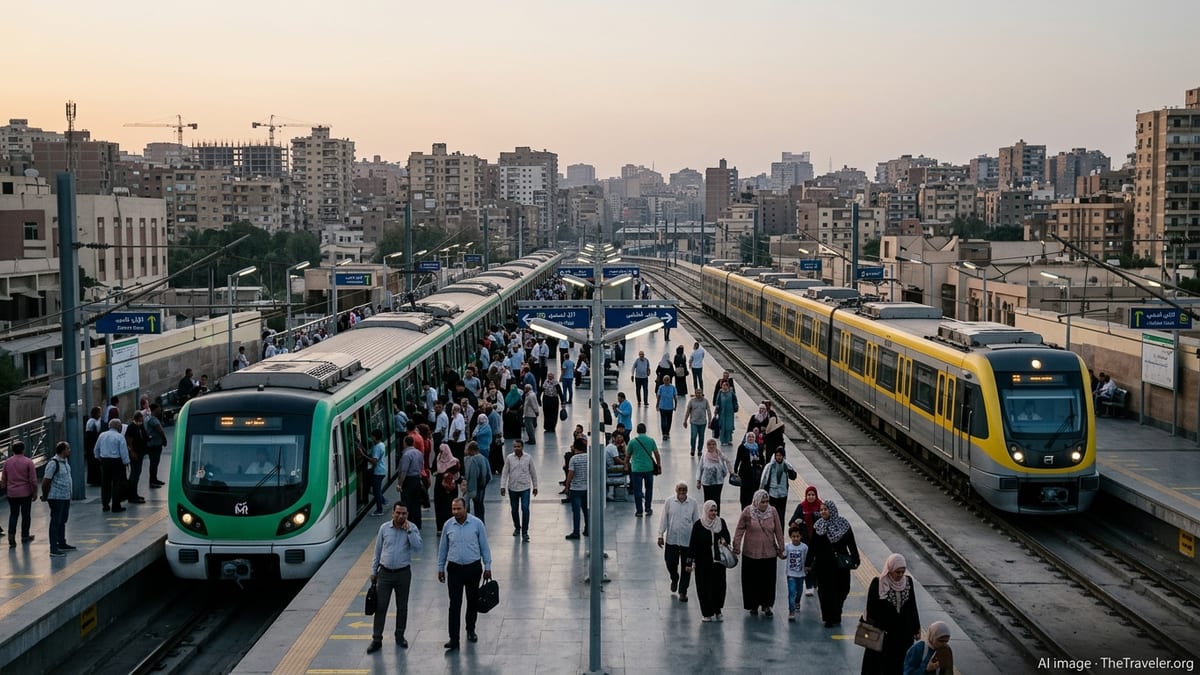
Rail Services Shift From Ramadan Timetable Back To Regular Hours
During Ramadan, Cairo’s public transport system traditionally adjusts operating patterns to match altered commuting habits, evening gatherings, and late-night shopping. Publicly available information shows that the Cairo Metro typically extends its closing time by roughly one hour during the holy month, while the LRT serving the New Administrative Capital and 10th of Ramadan City runs on a tailored timetable aimed at evening peaks.
With Eid Al Fitr bringing Ramadan to a close in March 2026, reports indicate that both networks are now transitioning back to their regular schedules. For the Cairo Metro, this means a return to the standard span of service from the early morning until shortly after midnight, while the LRT reverts to its established operating window and train frequencies across key commuter corridors in East Cairo.
Local coverage of recent transport plans notes that the timing of the switch back to normal hours is designed to coincide with the end of public Eid holidays and the gradual return to regular work and school routines. This rapid reversion aims to minimize confusion for daily commuters who depend on fixed departure and arrival times once the special Ramadan rhythm subsides.
The restoration of standard timetables also allows maintenance teams to resume routine overnight work on a more predictable schedule. Technical reports on metro operations in Cairo highlight how a stable maintenance window is essential for keeping heavily used rolling stock and signaling equipment in serviceable condition as demand continues to rise.
Growing Demand Underscores Cairo’s Reliance On High-Capacity Transit
Cairo’s reliance on mass transit has deepened in recent years as the city’s population swells and car ownership continues to climb. Research on Greater Cairo’s mobility patterns notes that the metro already carries millions of passengers every day, providing a substantial share of public transport trips and relieving pressure on chronically congested roads.
Urban mobility studies cited in local and international transport journals indicate that Cairo’s persistent traffic congestion imposes heavy economic costs, from fuel waste to lost productivity. In this context, the rapid transition of the metro and LRT back to normal hours after Eid Al Fitr is not simply an operational detail but a key factor in how quickly the city recovers from holiday disruptions.
Passenger counts during Ramadan often fluctuate as commuting times shift later in the day and evening travel increases. Once Eid holidays end, ridership typically rebounds toward familiar weekday peaks in the morning and late afternoon. By reinstating standard timetables at this moment, Egypt’s rail operators aim to ensure that trains are aligned with typical rush-hour patterns and that crowding is managed as people resume ordinary work and study schedules.
Transport analysts point out that dependable service hours help encourage long-term mode shift from private cars to rail. Consistency in first and last train times, particularly on feeder lines connecting suburban areas and new satellite cities, gives commuters the confidence to plan daily travel without defaulting to taxis or ride-hailing in anticipation of unexpected service gaps.
LRT Links New Administrative Capital To Wider Cairo Region
The electric LRT corridor between eastern Cairo, the New Administrative Capital, and 10th of Ramadan City has quickly become a critical component of the region’s transport mix. Project documentation and operator information describe a system designed to integrate with existing metro lines and bus services, providing a fast, segregated rail option for commuters traveling between new urban developments and established districts.
During Ramadan, adjusted LRT hours and headways were calibrated to late-evening and night travel when many residents move between family visits, shopping centers, and entertainment areas. With the end of the holiday period, the network’s return to its regular timetable re-centers operations on weekday peak flows, particularly for government employees and private-sector workers commuting to and from the New Administrative Capital.
Travel guidance published for visitors and new residents regularly highlights the LRT as a more predictable alternative to highway travel on the frequently congested corridors east of Cairo. As normal working days resume after Eid Al Fitr, the restoration of standard LRT service is expected to support continued population and employment shifts toward these planned cities while reducing reliance on private vehicles.
Transport planning materials also emphasize the role of the LRT in long-term sustainability goals, including reduced emissions and better air quality. Having the system back on its regular operating plan shortly after the Eid holiday helps sustain ridership momentum and reinforces the perception of the corridor as a dependable, everyday backbone of the region’s transport network.
Integrated Mobility Strategy Seeks To Balance Roads And Rail
Egypt’s recent policy initiatives reflect a broader effort to rebalance urban mobility toward public and active transport. A national active mobility strategy launched in early 2026 highlights the importance of integrated networks where walking and cycling connect seamlessly with high-capacity modes such as metro, LRT, bus rapid transit, and regional rail.
The decision to restore normal metro and LRT schedules promptly after Eid Al Fitr fits within this wider strategy. According to published coverage of Egypt’s transport plans, authorities are pursuing parallel projects, including new metro lines, monorail links to satellite cities, and dedicated bus corridors, all intended to create a more resilient and multimodal urban network.
For both residents and visitors, the alignment of post-Eid rail services with regular business hours strengthens this integrated approach. Reliable, predictable train operations offer a strong spine around which last-mile modes such as buses, microbuses, and shared mobility services can organize, especially in districts still waiting for fixed rail extensions.
Industry observers note that as new lines come into operation and existing systems expand, seasonal adjustments like those seen during Ramadan and Eid will continue to matter. Clear communication of temporary changes, followed by a swift return to standard timetables, is seen as essential to maintaining public confidence in public transport as a primary way of moving around Greater Cairo.
What The Return To Normal Means For Residents And Visitors
For daily commuters, the return of the Cairo Metro and LRT to their pre-Ramadan schedules means a familiar pattern of first and last trains, along with more predictable journey times on workdays. Many office workers, students, and service employees plan their housing, childcare, and secondary jobs around these timetables, so the end of the holiday operating pattern represents a practical reset of daily routines.
For travelers and tourists, the change reduces some of the uncertainty that can arise when visiting during Ramadan, when timetables, opening hours, and peak travel times differ from the rest of the year. Travel advisories and guide materials for 2026 recommend that visitors use the metro for efficient access to central Cairo neighborhoods and transfer to taxis or ride-hailing for final legs to major attractions such as the pyramids, which remain beyond direct rail reach.
As Egypt continues to invest in its transport infrastructure, the way its networks handle seasonal surges and post-holiday rebounds is increasingly seen as a test of system resilience. The smooth resumption of normal Cairo Metro and LRT hours after Eid Al Fitr, set against a backdrop of expanding lines and rising ridership, underscores the central role of these rail corridors in keeping one of the region’s largest cities moving.
Observers of Egypt’s urban development note that continued improvements in capacity, frequency, and comfort will be necessary to keep pace with demand. However, the rapid shift from special Ramadan operations back to standard service in March 2026 is being viewed as an encouraging signal that Cairo’s rail systems are better equipped each year to manage both seasonal change and long-term growth.