

Set among the forested hills and winding waterways of Ontario’s Highlands, Calabogie has quietly evolved into one of Eastern Ontario’s most versatile outdoor playgrounds.
Travelers come for its skiable slopes and famous cliff-top views, then stay for the glassy lakes, relaxed small-town atmosphere, and four-season trail network that rewards both casual wanderers and committed adventurers.
Whether you are planning a winter ski escape, a shoulder-season hiking weekend, or a lake-centered summer holiday, Calabogie offers an appealing blend of wilderness access and comfortable resort amenities within easy reach of Ottawa and the Ottawa Valley.
Getting Oriented: Where Calabogie Fits in Ontario’s Outdoors
Calabogie sits along the Madawaska River system in the Township of Greater Madawaska, southwest of Ottawa, where forest, shield rock, and water dominate the landscape. The village itself hugs the eastern shore of Calabogie Lake, while Calabogie Peaks Resort, the area’s main ski and four-season hub, lies a short drive away at the base of Dickson Mountain. From this compact base, visitors can access ski runs, hiking and snowshoe trails, lakeside beaches, paddling routes, and backcountry-style views without needing long transfers between activities.
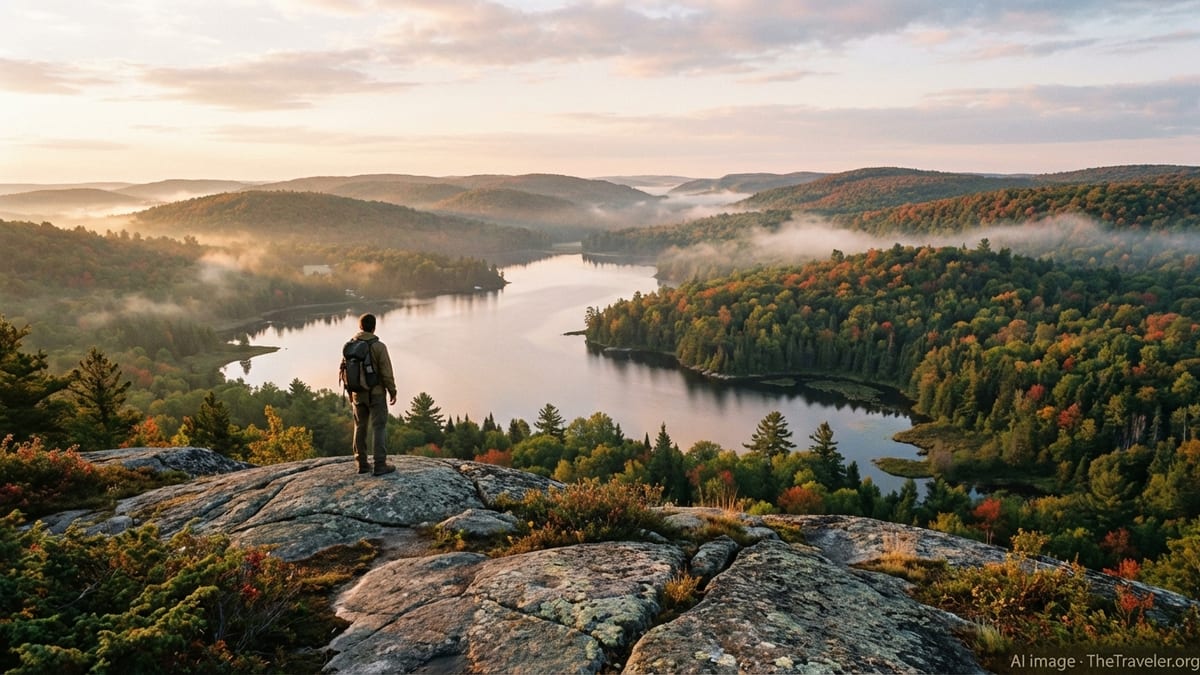
The setting is characteristic of Ontario’s Highlands: rolling, forested ridges, granite outcrops, and mixed hardwood stands that flare into colour each autumn. Calabogie Lake and nearby Black Donald Lake provide long reaches of navigable water, with quiet bays favoured by paddlers and anglers. The region’s topography is modest by alpine standards, but the vertical relief is enough to create engaging ski terrain, steep lookout points, and sheltered valleys that feel surprisingly remote for a destination so close to a major city.
Because Calabogie is a genuine four-season area, timing your visit largely depends on the experience you want. Winter is defined by downhill and cross-country skiing, snowshoeing, snowmobiling, and even ice climbing on nearby cliffs. Spring and fall emphasize hiking, gravel riding, and quieter, cool-weather paddling. Summer is the season of lakeside life, with swimming, stand-up paddleboarding, boating, and warm evenings on resort patios overlooking the water.
Most visitors anchor their stay around Calabogie Peaks Resort or one of several lakeside lodges, cabins, or small inns that sit directly on Calabogie Lake or Black Donald Lake. This makes it easy to leave your car parked for much of the trip, stepping from your accommodation onto a trailhead, ski run, sandy beach, or dock, often all within a few minutes’ walk.
Signature Trails and Lookouts Around Calabogie
Calabogie’s reputation among hikers is closely tied to its network of interconnected trails, many of which start within a short drive of the village. The Manitou Mountain Trail corridor forms the backbone of this system, running between trailheads on Barrett Chute Road and along Calabogie Road. Along the way, it links several prominent viewpoints, including the well-known Eagle’s Nest Lookout, Juniper Ridge Lookout, and the Skywalk Trail atop Dickson Mountain. Sections range from easy rambles on former logging roads to more rugged, rooty stretches characteristic of the Canadian Shield.
Eagle’s Nest is the most iconic of these stops and is often a first hike for new visitors. The route follows a gradually climbing old road and forest path to a dramatic cliff-top ledge roughly 120 metres above the valley below. Here, hikers gaze over uninterrupted forest and the rolling Madawaska Highlands, with the escarpment dropping steeply away at their feet. The trail is relatively short by regional standards, but the combination of accessibility and big views can make it busy in peak seasons, so mornings or shoulder-season visits are often more peaceful.
For those looking to extend their day, the longer Manitou Mountain Trail continues westward from near Calabogie Peaks, weaving through mixed forest and rocky clearings toward Eagle’s Nest and beyond. This linear route can be broken into shorter segments or tackled in one go using a car shuttle between trailheads. The trail also provides access to the Lost Valley Trail and Juniper Ridge, which reward extra effort with quieter viewpoints and a better sense of Calabogie’s backcountry character.
Closer to the resort, the Skywalk Trail climbs to the top of Dickson Mountain. In summer and fall, this route offers sweeping views over Calabogie Lake, the Madawaska wilderness, and the complex terrain of ridges and small lakes that define the region. In winter, portions of this high ground help shape the resort’s ski runs, making it one of the highest skiing experiences in the Ottawa Valley. Wherever you hike, good footwear, a map from the resort or local visitor information centre, and a flexible plan are recommended, as trail conditions can vary with recent weather.
Downhill Skiing and Winter on the Slopes
When snow arrives, Calabogie Peaks Resort becomes the focal point of winter activity. The mountain rises from near the shore of Calabogie Lake, creating a scenic link between ski terrain and waterfront. The resort’s lift-accessed slopes offer a range of groomed runs suitable for both beginners and experienced skiers, with the vertical drop standing out in the Ottawa Valley context. Terrain is typically organized into green, blue, and black categories, so families and mixed-ability groups can spread out while still skiing together.
Snowmaking is a key part of the resort’s operation, extending the season and helping ensure reliable coverage even during less snowy periods. Groomed cruisers make up much of the trail network, but there are also steeper pitches and more challenging sections that appeal to confident skiers and boarders. A dedicated beginner area, ski school programs, and rental services make it straightforward for first-timers or occasional skiers to get onto the snow without traveling to larger, more distant mountain regions.
The setting helps distinguish Calabogie from other regional hills. On clear days, views from the upper slopes stretch over frozen Calabogie Lake, surrounding forests, and distant ridgelines, giving an expansive sense of scale that belies the modest elevation. Off the main pistes, snowshoe and winter hiking trails allow non-skiers to experience the winter landscape, while nearby Madawaska Nordic Trails provide classic cross-country routes maintained by local partners.
Winter in Calabogie is not solely about skiing, however. Ice climbing has become an increasingly visible niche activity, taking place on frozen cliff faces accessible from trailheads near the resort. Local guiding operations can introduce novices to the sport with appropriate instruction and equipment. Snowmobiling, ice fishing on Calabogie Lake and Black Donald Lake, and simple pleasures such as campfires, stargazing, and hot drinks in lodge lounges round out the colder months, giving non-skiers ample reason to visit.
Lakeside Life: Calabogie Lake and Black Donald Lake
From late spring through early fall, attention shifts to the water. Calabogie Lake sits directly beside the village and resort, its irregular shoreline creating sandy beaches, sheltered coves, and grassy bays that suit a wide range of water-based activities. The resort maintains a lakeside area with a small beach and boathouse, where guests can access canoes, kayaks, and stand-up paddleboards through day passes or stay-and-play packages. Paddlers often set out toward tranquil Grassy Bay or trace the shoreline toward town, watching for loons, otters, and the occasional fish breaking the surface.
Beyond the resort waterfront, Calabogie Lake supports a lively cottage and boating community. Powerboats tow water-skiers and wakeboarders in open stretches, while quieter corners remain the domain of paddlers and anglers. Public boat launches make it possible to arrive with your own craft and spend the day exploring, and some lakeside lodges and cottage rentals provide private docks where guests can tie up small boats or relax with a book just above the water.
Black Donald Lake, connected to Calabogie Lake by the Madawaska River system, offers a different kind of experience. Larger and more elongated, it feels wilder and more remote, with long reaches of open water hemmed in by forested shorelines. Anglers prize it for walleye, pike, and bass, while those seeking quiet exploration favour its side bays and inlets. Several cabin and chalet operators sit on its shores, catering to visitors who want direct access to fishing and boating as well as easy day trips back to Calabogie’s restaurants and services.
The broader watershed encourages exploration beyond the main lakes. The Madawaska River and nearby waterways create options for day paddles and short multi-day routes, often assisted by portage maps and local outfitters. Calm conditions during early mornings and evenings can be particularly rewarding, with soft light on the water, birdlife active along the edges, and a sense of calm that contrasts with busier midday beach scenes.
Summer Activities: From Paddle Sports to Golf and Motorsports
Summer in Calabogie builds on the area’s lakeside strengths while adding activities that take advantage of open trails, clear roads, and long daylight hours. On the water, the choice typically begins with paddle sports. Calabogie Peaks Resort runs a rental program for kayaks, canoes, and stand-up paddleboards, giving visitors access to the lake without bringing their own gear. Instruction is informal and geared toward beginners, and staff provide lifejackets and basic guidance on routes, safety, and where to find calmer conditions for first outings.
Back on land, golf is a popular option on warm mornings and late afternoons. The immediate resort area features a compact lakeside course framed by mountain views, while additional courses sit within driving distance around the Madawaska Valley. These are generally relaxed, walkable layouts suited to holiday play rather than high-pressure competitive rounds, and many pair well with time on the lake or a casual meal afterward.
For travelers interested in a different kind of speed, the Calabogie Motorsports Park adds an unexpected dimension to the region. Located a short drive from the village, it hosts track days, driving schools, and lapping sessions for sports car enthusiasts. Some local inns and retreats package visits with motorsports experiences, offering guests a chance to drive or ride on a professional circuit during the day and return to lakeside quiet in the evening.
Summer evenings often centre around food, drink, and live music. Calabogie Brewing Company represents the local craft beer scene, with tasting opportunities often combined with visits into town. Small venues and cafes occasionally host concerts or acoustic sets, especially on weekends, contributing to a low-key but engaging après-lake atmosphere. It is a softer, more intimate counterpart to the bustle of winter ski lodges, suited to couples’ getaways and relaxed family holidays alike.
Four-Season Outdoors: Nordic Skiing, Snowshoeing, and Shoulder Seasons
One of Calabogie’s strengths is that it rarely goes fully quiet. While summer and winter are the busiest seasons, spring and fall bring their own quieter rewards. In late winter and early spring, as snow softens on the slopes, cross-country skiers and snowshoers make use of the Madawaska Nordic Trails and other local networks. These trails traverse rolling forest, frozen wetlands, and gentle hills, with loops of varying length that can accommodate everyone from beginners to fitness-focused skiers looking for a workout.
Snowshoeing is perhaps the simplest way to sample Calabogie’s winter backcountry. Many accommodations provide snowshoes for guests or can recommend local rental options, and popular summer hiking routes such as Eagle’s Nest and sections of Manitou Mountain become atmospheric winter walks. The key considerations are winter-specific: dressing in layers, carrying traction suitable for icy sections, and allowing more time for distances that feel short in summer.
Autumn might be the most visually striking season. The region’s mix of maple, birch, and conifer means that ridges and hillsides flare into red, orange, and gold from late September through much of October, with timing varying by year. Trails like Eagle’s Nest, Skywalk, and Juniper Ridge provide natural viewpoints for foliage, while lakes and rivers offer reflective surfaces that double the effect on calm days. Cooler temperatures also make longer hikes more comfortable, and insects that can occasionally trouble midsummer visitors are largely absent.
Spring has a different appeal. As snow recedes, waterfalls and small creeks swell with meltwater, and trails transition from snow and ice to soft earth. Shoulder-season hiking requires more attention to footing and trail conditions, but rewards include quiet lookouts, wildlife activity, and the first opportunities of the year for paddling along ice-free lake edges. For photographers and nature-focused travelers, these transitional windows can be some of the most rewarding times to visit, even if they lack the clear-cut identity of peak ski or beach seasons.
Planning Your Stay: Accommodation, Access and Practical Tips
Most visitors plan a Calabogie trip around a base that suits their priorities. Calabogie Peaks Resort functions as an all-in-one option for those who want ski-in/ski-out access in winter or direct lakeside amenities in summer. It typically combines hotel-style rooms with on-site dining, beach access, and activity rentals, making it especially convenient for families or for travellers who prefer not to drive between activities once settled.
Beyond the main resort, a wide range of rentals and small lodges line Calabogie Lake, Black Donald Lake, and nearby smaller lakes. These can range from rustic cabins and tiny off-grid retreats to fully serviced chalets with docks, hot tubs, and space for groups. Many market themselves as four-season escapes, with woodstoves or fireplaces for winter, decks and firepits for summer, and easy access to fishing, paddling, or trailheads. When booking, it is wise to confirm how close the property is to the water, what equipment is included, and whether access roads are ploughed or maintained in winter.
Reaching Calabogie typically involves a drive from Ottawa or other points in Eastern Ontario. Roads are paved but can be winding as they cross hills and waterways. In winter, allowing extra time for snow conditions is sensible, and carrying appropriate tires and emergency supplies is standard advice for rural travel in the region. Once in town, most attractions lie within a compact radius, and parking is generally straightforward at trailheads, resorts, and public access points, though peak weekends can see popular lots fill early.
Practical considerations include packing for changeable weather, especially outside the stable heat of mid-summer. Even in July and August, evenings by the lake can be cool, while shoulder seasons can shift quickly between sun, rain, wind, and fog. Bug protection is recommended in late spring and early summer, particularly in wooded and marsh-adjacent areas. Trail etiquette and environmental care are central themes among local operators, who encourage visitors to stay on marked routes, respect posted signs at lookouts and culturally sensitive sites, and pack out all garbage to protect both ecological and cultural values.
The Takeaway
Calabogie stands out not because it offers one singular, dramatic attraction, but because of how its elements fit together. A ski hill rises directly above a lake known for paddling and fishing. A famous cliff-top vista is a short hike from a main road, yet links into a longer trail system that feels genuinely wild at times. Motorsports enthusiasts share the region with quiet-water kayakers and birdwatchers, while families alternate between ski lessons in January and stand-up paddleboarding in July, often from the same lakeside base.
For travelers planning a visit, the key is to think in layers rather than single activities. A winter weekend might combine downhill skiing with a snowshoe to a lookout and an evening at a local brewery. A summer week could weave together lazy beach afternoons, early-morning paddles to watch loons fish, and sunset hikes to ridgeline viewpoints. Shoulder seasons encourage slower exploration, photography, and quiet time in cabins or inns as weather shifts outside.
Ultimately, Calabogie offers a manageable, human-scale introduction to the Canadian Shield landscape that feels accessible without being overdeveloped. It is close enough to urban centres for spontaneous weekends yet varied enough in terrain, trails, skiing, and lakeside activities to reward longer stays. For those seeking a place where mountain, lake, and forest converge in a single, easy-to-navigate destination, Calabogie remains one of Eastern Ontario’s most appealing choices.
FAQ
Q1. Where is Calabogie located and how far is it from Ottawa?
Calabogie is in the Township of Greater Madawaska in Eastern Ontario, set along the Madawaska River system. It is roughly a one to one-and-a-half hour drive southwest of Ottawa, depending on your exact starting point and road conditions.
Q2. What is the best time of year to visit Calabogie?
The best time depends on your interests. Winter is ideal for downhill skiing, snowshoeing, and ice activities. Summer is perfect for swimming, paddling, and lakeside relaxation. Autumn offers spectacular foliage and cooler hiking, while spring is quieter and suited to those who do not mind variable trail and weather conditions.
Q3. Are the hiking trails around Calabogie suitable for beginners?
Yes, many trails are beginner friendly, including shorter routes to Eagle’s Nest Lookout along old logging roads. However, some sections of the Manitou Mountain corridor and other ridge-top paths are steeper and more rugged, better suited to hikers with moderate experience. Checking current trail descriptions and choosing routes that match your fitness level is recommended.
Q4. Do I need a car to get around Calabogie?
In practice, a car is the most convenient way to explore the region. While the village and resort areas are compact, trailheads, lakeside access points, and wider attractions such as motorsports facilities or more remote lakes are spread out enough that driving significantly increases your flexibility.
Q5. What kind of ski terrain does Calabogie Peaks offer?
Calabogie Peaks provides a mix of groomed green, blue, and black runs served by chairlifts, with a vertical drop that is notable for the Ottawa Valley. Terrain ranges from gentle beginner slopes to steeper pitches suited to advanced skiers and snowboarders. A ski school and rental services support visitors who are new to the sport.
Q6. Can I rent kayaks or paddleboards on Calabogie Lake?
Yes, rental programs based at Calabogie Peaks and other local providers typically offer kayaks, canoes, and stand-up paddleboards during the summer season. Equipment is generally available by the hour or through day passes, and staff can advise on safe routes and current lake conditions.
Q7. Is Calabogie a good destination for families with children?
Calabogie works well for families. In winter, the resort’s beginner slopes, ski school, and tubing or snow play options give children different ways to enjoy the snow. In summer, shallow sections of beach, calm-water paddling, and easy hikes to viewpoints provide low-pressure adventures that can be tailored to younger ages.
Q8. Are there options for anglers in and around Calabogie?
Yes, both Calabogie Lake and Black Donald Lake are known for species such as walleye, pike, bass, and panfish, and the broader Madawaska watershed includes smaller lakes and ponds, some stocked by provincial authorities. Anglers must follow Ontario fishing regulations and obtain the appropriate licence before heading out.
Q9. What should I pack for a four-season trip to Calabogie?
Packing depends on the season, but layers are useful year-round. In winter, warm, waterproof outerwear, insulated boots, gloves, and hats are essential. In summer and shoulder seasons, bring breathable clothing, a light jacket, sturdy footwear for trails, sun protection, and bug repellent for wooded areas. A small daypack, refillable water bottle, and basic first-aid supplies are sensible in any season.
Q10. Is Calabogie suitable for visitors who prefer quieter, nature-focused trips?
Yes. Outside of peak holiday weekends, Calabogie often feels relaxed and low key, especially on shoulder-season weekdays. By choosing less trafficked trails, quieter bays on Calabogie or Black Donald Lake, and smaller inns or cabins, visitors can craft an itinerary that emphasizes nature, photography, and peaceful time by the water or in the forest.