

More news on this day
Western Canada’s adventure travelers are poised to gain a powerful new gateway to Asia in 2026, as emerging schedules and booking data point to the arrival of true one-plane, same-flight-number connections linking Calgary and Taipei and making Taiwan’s dramatic landscapes easier to reach than ever.
Get the latest news straight to your inbox!
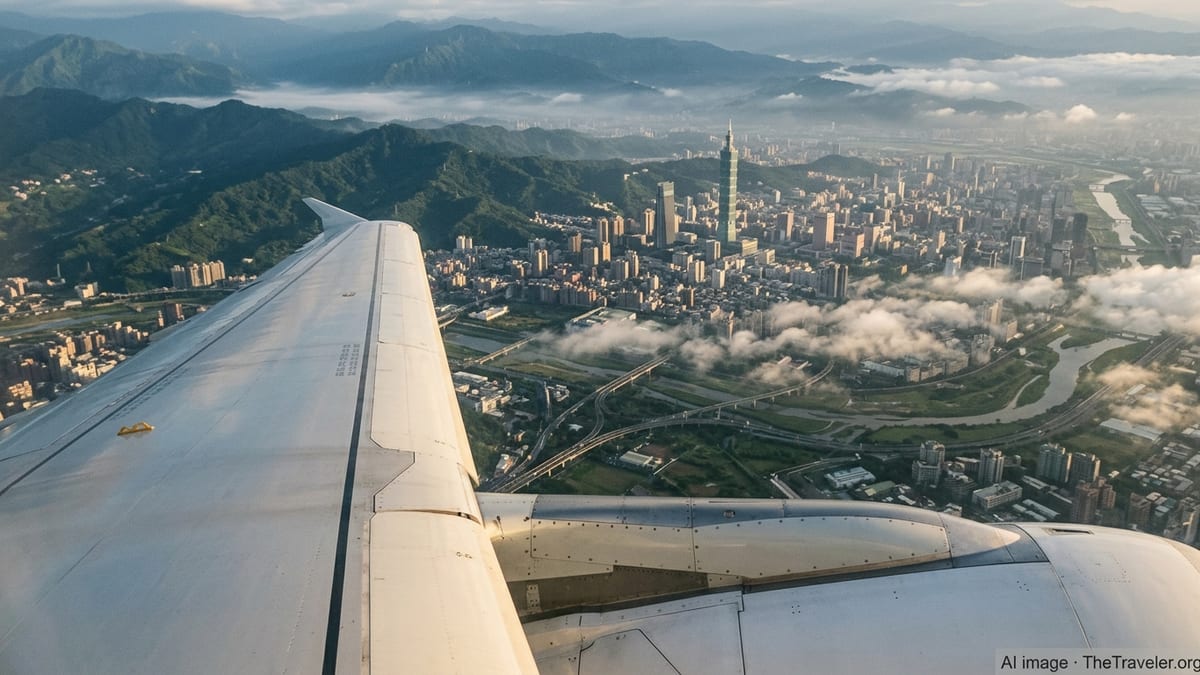
A Faster Path From the Rockies to Taiwan
Recent booking platforms and schedule aggregators show a growing cluster of Calgary–Taipei options tied to 2026 departures, often built around coordinated services from WestJet and Air Canada feeding into long-haul partners that operate the transpacific segments into Taiwan Taoyuan International Airport. While many itineraries still include an intermediate stop, the structure increasingly resembles seamless, same-flight-number journeys that remove much of the complexity traditionally associated with getting from Alberta to Taiwan.
Publicly available fare searches for February 2026 already highlight WestJet-marketed services on the Calgary–Taipei corridor, with Taiwan Taoyuan listed as the primary arrival airport. These itineraries typically use a single booking reference and integrated connection, giving travelers a near-nonstop experience in practical terms, with through-checking of baggage and coordinated minimum connection times that are designed around long-haul departures.
Parallel listings from Air Canada demonstrate similar connectivity, with searchable YYC–TPE trips tied to its broader Asia network and Star Alliance partnerships. For many travelers in Western Canada, this effectively turns Calgary into a front door for Asia, reducing the need to route via multiple airports or self-connect across fragmented tickets.
This new web of one-stop and near-nonstop options coincides with a broader expansion of transpacific capacity from Taipei. Taiwan-based carriers continue to add gateways in North America, while North American airlines refine codeshare and partnership links. The result is a step change for Calgary-based travelers who want to reach Taiwan with fewer handoffs and shorter total journey times.
Strategic Timing in a North Pacific Shake-Up
The timing of these enhanced Calgary–Taipei links aligns with a wider reshaping of North Pacific aviation. Taiwan’s major hub at Taoyuan is expanding its reach into the United States with new nonstop services to cities such as Phoenix and Washington, D.C., and is steadily increasing weekly frequencies across its long-haul network. Canada is a natural extension of that strategy, and Calgary’s role as a growing hub in Western Canada makes it an attractive point to plug into this evolving map.
Reports from airline industry trackers indicate that 2026 will be a pivotal year for Canadian long-haul connectivity, with carriers redeploying widebody aircraft and experimenting with new routings that capture both passenger and cargo demand. Calgary’s strong energy sector, diversified economy, and proximity to high-value tourism destinations in the Rockies contribute to its appeal as a transpacific launch point.
On the Taiwan side, tourism and trade bodies have been promoting the island as a hub for both leisure and business travel, highlighting its role as a connector between North America and broader Asia. Expanded schedules to multiple U.S. cities from Taipei, coupled with growing alliances with Canadian carriers, set the stage for smoother itineraries from Calgary even when a technical stop remains part of the journey.
Analysts following these developments note that as more aircraft and crews are committed to the Taipei hub, it becomes easier for airlines to maintain regular, reliable departure banks that line up neatly with North American feeder flights. Calgary’s inclusion in those patterns in 2026 strengthens the case for the city as a long-term player in Canada–Asia travel.
Gateway to Taiwan’s Mountains, Coasts, and Hot Springs
For adventure travelers, the most significant impact of Calgary–Taipei connectivity is on the ground in Taiwan. Shorter and more efficient flight options make long weekends and 10-day trips more realistic for Canadians who want to pair the Rockies with Asia’s subtropical peaks in a single year. With itineraries now bookable that deliver passengers from Calgary into Taipei with fewer steps, classic Taiwan journeys are suddenly more attainable.
From Taipei, high-speed rail and an extensive regional rail network place much of the island within a few hours’ reach. The dramatic peaks of Taroko Gorge, with their marble cliffs and narrow hiking trails, are a popular draw for trekkers seeking challenging day hikes and multi-day routes. Further south, the central mountain spine offers alpine terrain that can feel surprisingly remote given Taiwan’s overall density, with hut-based trekking that appeals to experienced outdoor enthusiasts.
The island’s volcanic geology underpins another major attraction for Canadian visitors: hot springs. Northeastern Taiwan, including areas near Taipei such as Beitou and Yangmingshan, combines accessible geothermal baths with hiking paths through lush, misty hillsides. On the east coast, surf beaches sit close to hot spring towns, making it possible to combine ocean sports with post-activity soaking on the same day.
Coastal cycling routes, including well-known circuits around the island and shorter regional loops, have been gaining attention in international travel media. Improved air access from Western Canada is likely to amplify interest in these lower-impact, slow-travel experiences, particularly among travelers already accustomed to biking and trekking in the Canadian Rockies and foothills.
Tourism Trends: From Stopover Curiosity to Primary Destination
Historically, Taiwan has sometimes been treated as a stopover by North American travelers en route to Southeast Asia or other parts of East Asia. The emergence of stronger Calgary–Taipei connectivity in 2026 has the potential to shift that perception for Canadian visitors, positioning Taiwan as a primary destination in its own right for culture and outdoor exploration.
Visitor data released in recent years has shown that Taiwan’s international arrivals are skewing younger and more adventure-focused, with particular growth in markets that value independent travel infrastructure and safety. Canada fits this profile, and Western Canadian travelers in particular often prioritize destinations that combine accessible trails, public transit, and local food culture, all of which align closely with Taiwan’s strengths.
Industry commentary suggests that new or upgraded flight options often trigger a “curiosity wave” lasting several booking seasons, during which travelers experiment with itineraries and share experiences through social media and word-of-mouth. If 2026 proves to be a year when Calgary-based flyers can reach Taiwan more directly and more affordably, the island’s visibility in Canadian travel planning is likely to rise accordingly.
Tour operators that focus on small-group trekking, cycling, and culinary tours are already highlighting Taiwan more prominently in their Asia lineups. Enhanced air links from Calgary give these companies a concrete selling point, particularly for travelers who prefer to avoid the extra time and stress of connections through multiple mega-hubs.
What 2026 Means for Western Canada’s Asia Access
The strengthening of Calgary–Taipei connectivity in 2026 is part of a broader story about Western Canada’s changing relationship with Asia. As carriers add more long-haul services and refine alliance partnerships, Calgary is evolving from a primarily domestic and North American hub into a genuine bridge between Canada’s interior and the Pacific Rim.
For travelers in Alberta and neighboring provinces, this shift means more than just convenience. It translates into more predictable travel times, greater choice in cabin products and schedules, and potentially more stable pricing as airlines compete for eastbound and westbound traffic. Taiwan’s role as both a destination and a connecting hub amplifies these benefits, linking Canadian flyers to secondary cities across East and Southeast Asia.
For Taiwan, the deepening connections through Calgary open new channels for tourism, study abroad, and business exchange with Western Canada’s universities, energy companies, and technology firms. As 2026 schedules continue to firm up, the Calgary–Taipei corridor is emerging as a promising new route for travelers who want to move quickly from the Canadian Rockies to Asia’s lush mountains, rugged coasts, and steaming hot springs.