

More news on this day
For the first time since before the pandemic, Disneyland’s walkways are filled less with once-in-a-lifetime visitors from overseas and more with familiar faces from across California, as local fans reclaim their long standing role as the park’s dominant audience.
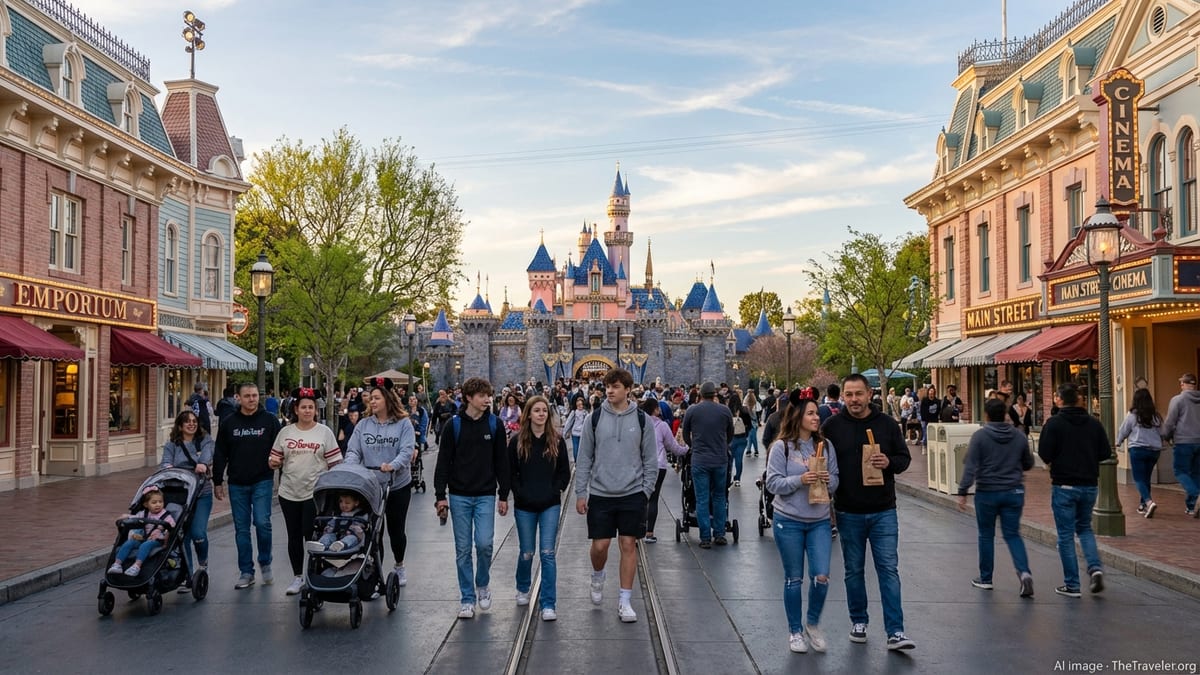
Domestic Momentum Meets Global Slowdown
Walt Disney’s original park in Anaheim has long drawn a passionate local following, but in recent years that homegrown base was often overshadowed by a surge of long haul tourism. That dynamic is shifting again. As international travel to the United States cools, Disney’s latest results show domestic attendance inching higher even while overseas visitation declines, a trend that is especially visible in Southern California queues and parade routes.
Company filings for late 2025 and early 2026 highlight a modest one percent rise in domestic attendance at Disney’s U.S. parks, contrasted with a noticeable drop in foreign visitors. Executives describe international traffic softening across both Disneyland Resort in California and Walt Disney World in Florida, part of a broader pullback in inbound tourism linked to economic uncertainty, political tensions and safety perceptions among would be travelers.
For Anaheim, where the local population of nearly 3.2 million in Orange County is bolstered by more than 39 million residents statewide, that shift is significant. The sheer size of the Southern California market means that even a small rebalancing toward residents can quickly change the feel of the parks, from the accents overheard in line to the rhythms of weekday attendance.
Industry analysts note that the global appeal of Disney parks remains strong, with international resorts in Paris, Tokyo and Shanghai absorbing some demand that might once have flowed to California. Yet within the United States the story is different. Nationwide data shows foreign visits to the country dropping by mid single digits in 2025, with steeper falls from traditional feeder markets such as Canada and Western Europe. For Disneyland, that has translated into fewer first time global tourists and a renewed reliance on Californians willing to drive rather than fly.
Deals and Discounts Aim Straight at Californians
Disneyland’s marketing strategy has adapted quickly to the new reality. This winter the resort unveiled one of its most aggressive regional offers in years, targeting residents across the Golden State with steeply discounted multi day tickets valid through spring 2026. The headline deal offers California residents a three day Park Hopper ticket for a fraction of standard pricing, provided guests can prove in state residency.
The offer, which runs from early January through late May, is designed to fill the calendar during what has traditionally been a quieter stretch between holiday peaks and summer crowds. By limiting eligibility to Californians, Disney ensures that the promotion primarily boosts local and regional attendance rather than subsidizing long haul travelers, who are more likely to visit during marquee vacation periods regardless of discounts.
Beyond official ticket windows, warehouse club packages and travel agents have also leaned into the local angle. A recently revived multiday Disneyland deal sold through a major warehouse retailer is being marketed heavily to West Coast members, even as consumer advocates urge shoppers to compare it against resident only pricing that can be more advantageous for those who live nearby. The fine print may be complex, but the message is clear: there has rarely been a better time for Californians to return to the park.
Inside Anaheim’s hotels and restaurants, managers describe a noticeable uptick in short lead bookings coming from within the state. Rather than planning international trips months in advance, many guests are opting for long weekends built around discounted Disneyland tickets and modestly priced off site accommodations. The shift has helped smooth occupancy across the week and reduce the feast or famine patterns that often accompany school holiday seasons driven by out of state and foreign visitors.
Magic Key Holders and Local Rituals Reshape the Day
Perhaps the clearest sign that California residents are again outnumbering global tourists on any given day is the renewed visibility of Magic Key holders. These pass style products, which replaced the old annual pass structure, cater specifically to frequent visitors who may drop in for a few hours after work or spend a morning in the park before heading home. As international visitation softens, these locals are once again critical to keeping turnstiles spinning.
Cast members describe a subtle but distinct change in daily patterns. Weekday evenings have grown busier as nearby residents arrive for dinner, a fireworks show or a single coveted ride, while early mornings and late nights are increasingly filled with regulars who know precisely which attractions to hit and which corners of the park offer the quietest escape. Lunchtime lines at quick service restaurants, once packed with large tour groups consulting maps in multiple languages, are more often made up of guests who navigate mobile ordering with practiced ease.
The culture of the park shifts along with the crowd. Local visitors tend to treat Disneyland less as a once in a lifetime pilgrimage and more as a beloved neighborhood haunt. That means fewer frantic attempts to squeeze every attraction into a single day and more time spent revisiting favorite experiences, from classic dark rides to seasonal snacks. Longtime fans talk about meeting up at the same table in the same café, turning Main Street into an informal community hub woven into their weekly routines.
This local dominance also influences what stories are told online. Social media feeds from the resort are filled with tips from Southern California creators who know the parks intimately, offering advice on the best parking strategies for late arrivals or the most reliable coffee stops before rope drop. The tone is one of lived expertise rather than distant aspiration, reinforcing Disneyland’s identity as both global icon and local gathering place.
Economic Ripples Across Anaheim and Orange County
The return of Californians as the primary backbone of Disneyland’s attendance has important implications for Anaheim’s broader economy. While international tourists often spend heavily on hotels and souvenirs during infrequent but elaborate vacations, in state visitors generate more frequent, if sometimes smaller, bursts of spending. That cadence can be a boon for local businesses located beyond the resort’s immediate perimeter.
Hoteliers along Harbor Boulevard report steadier weekend bookings from families driving in from San Diego, the Inland Empire and California’s Central Valley. These guests often combine park days with visits to nearby beaches or sports events, spreading their spending across a wider swath of the region. Restaurants, convenience stores and rideshare drivers say they benefit from this pattern, which disperses tourism dollars beyond the resort’s gates and into residential neighborhoods.
City officials are watching closely. Anaheim’s budget leans heavily on hotel bed taxes and sales tax generated by the resort corridor. A reliable stream of weekend and shoulder season traffic from Californians helps smooth revenue volatility that might otherwise emerge from swings in global travel. While fewer international visitors can mean some lost high end spending, the resilience of the local market is providing a measure of fiscal stability as the city works on long term infrastructure and transit projects.
There are trade offs. Some luxury retailers in the Downtown Disney district note that overseas guests have historically been more inclined to splurge on high ticket items and branded merchandise. With more of the crowd arriving from within a day’s drive, demand skews toward practical purchases such as snacks, apparel and small souvenirs. Still, many businesses say they prefer a dependable year round local base to a boom and bust cycle tied to geopolitical trends beyond their control.
Guest Experience: Shorter Stays, Deeper Familiarity
For many visitors on the ground, the ascent of California residents translates into a subtly different park experience. Instead of navigating alongside families who may never return and are determined to do everything, guests are more likely to encounter groups who know the layout by heart and are content to focus on a handful of highlights. The result can be slightly lighter pressure on certain marquee attractions, particularly on non peak days when local attendance spreads across the calendar.
Travel agents specializing in Disneyland vacations say more of their clients are now booking one or two park days as part of broader California itineraries, rather than dedicating an entire trip solely to Anaheim. These itineraries often pair Disneyland with coastal drives, national park visits or stays in Los Angeles and San Diego, reflecting a travel mindset shaped by road trips and regional exploration. For international visitors who still make the journey, that can mean a somewhat less frenetic environment, with more opportunities to appreciate immersive theming and live entertainment.
The rising share of locals also influences how Disneyland manages operations. Knowing that many guests will return multiple times a year, the resort has continued to refine virtual queues, mobile food ordering and app based planning tools to minimize frustration. Locals tend to adopt these systems quickly, smoothing the learning curve for occasional visitors who can follow their lead. In some cases, popular events such as seasonal festivals are now programmed with repeat visits in mind, featuring rotating food booths and limited time merchandise that reward guests who come back week after week.
On the flip side, Californians who feel they have regained “their” park are vocal about crowding, pricing and reservation policies. Online discussions about value and access are intense, and Disney’s leadership is acutely aware that this engaged audience can amplify both praise and criticism. Balancing demand, affordability and the guest experience for a mostly domestic crowd has become a central challenge for the company’s theme park division.
Strategic Pivot: Marketing the Magic Close to Home
Behind the scenes, the shift toward a more local guest mix at Disneyland is not purely organic. It reflects a deliberate strategic pivot by Disney’s Experiences division, which oversees parks and resorts. With international arrivals to the United States declining over multiple quarters, the company has redirected marketing budgets toward domestic audiences, emphasizing ease of access and flexible planning for those within driving distance.
Recent campaigns have spotlighted California families enjoying spontaneous visits, showcasing scenes that resonate with residents who can feasibly decide on a Thursday to spend Saturday in the park. The messaging leans on nostalgia and the idea of Disneyland as a multigenerational tradition, passed down from grandparents who remember the park’s early decades to children experiencing new attractions tied to modern film franchises.
This domestic focus is not entirely new. Historically, Disneyland has always depended heavily on locals, especially compared with Florida’s Walt Disney World, which draws a much larger share of its guests from out of state and abroad. What is different in 2025 and 2026 is the intensity of that emphasis and the extent to which it is now central to Disney’s growth narrative for its U.S. parks. In earnings calls, executives have highlighted robust per guest spending and strong demand from American visitors even as they caution about softness in inbound tourism.
For travel planners and tourism boards across California, Disney’s strategy presents both competition and opportunity. On one hand, aggressive resident ticket discounts can pull discretionary spending toward Anaheim at the expense of other attractions. On the other, the resurgence of regional travel habits encourages Californians to explore closer to home, creating chances for destinations from Palm Springs to the Central Coast to package their own offerings alongside a Disneyland visit.
What It Means for Future Visitors
As California residents reclaim numerical dominance at Disneyland, both local fans and out of town travelers are recalibrating their expectations. Prospective visitors from abroad may find that the park feels a bit less like an international crossroads and more like an authentic slice of West Coast culture, shaped by the habits and preferences of those who grew up with it. For some, that authenticity enhances the appeal, offering a chance to see how the “Happiest Place on Earth” functions as a living part of everyday life in Southern California.
Travel experts suggest that the coming year will test how durable these patterns prove to be. If geopolitical tensions ease and exchange rates shift, international demand could rebound, once again transforming the composition of the crowd. For now, though, Disneyland appears content to lean into its roots, cultivating loyalty among Californians who can return often and spend steadily rather than relying on a revolving cast of first time foreign tourists.
For families weighing whether this is the right moment to visit, the message is nuanced. The park remains busy, and popular attractions still command long waits, especially during school breaks. Yet the combination of targeted resident discounts, a slightly softer international market and a more evenly distributed calendar of events has created pockets of relative calm that reward flexible planners. With the magic once again anchored by locals, Disneyland in 2026 is both familiar and subtly transformed, a reminder that even the most iconic destinations evolve with the people who pass through their gates.