

California is larger than many countries, with a coastline longer than some nations’ borders and a landscape that runs from high alpine peaks to subtropical desert. For first-time visitors, the sheer variety can be thrilling and overwhelming at the same time. This guide focuses on a classic first trip, introducing you to the state’s marquee cities, beloved beaches, and world-famous national parks, along with practical advice shaped by the latest conditions on the ground.
Understanding California’s Scale, Seasons, and Current Conditions
First-time visitors are often surprised by how big California really is. Driving from San Diego in the south to the Oregon border can take 12 hours or more without significant stops, and crossing the state from the Pacific Coast to the Sierra Nevada can mean several climate zones in a single day. Planning a realistic itinerary means choosing one or two regions to explore in depth rather than trying to see everything in a single trip.
California travel remains extremely popular. State officials reported record tourism spending in 2024, with visitors drawn to the state’s mix of cities, beaches, wine regions, and national parks. That popularity means higher demand for hotel rooms, restaurant reservations, and rental cars in peak seasons. Booking well ahead is strongly recommended, especially for school holidays, summer, and long weekends.
Seasons shape the experience as much as geography. Coastal cities such as San Francisco, Los Angeles, and San Diego are generally mild year-round, though San Francisco can be cool and foggy even in summer. Inland areas and the deserts can be extremely hot in July and August, while the Sierra Nevada can hold deep snow into late spring. Winter storms in early 2026 have periodically closed mountain roads and even major parks such as Yosemite, so it is essential to check current conditions before traveling.
Wildfire is now a regular part of California’s annual cycle, primarily from late summer into autumn. State and local agencies are investing heavily in prevention and response, but visitors should remain flexible. Smoke, road closures, and short-notice evacuations can disrupt travel during active fires, particularly in forested and rural regions. Build backup options into your plans and monitor official advisories as your trip approaches.
Classic Cities: Los Angeles, San Francisco, and San Diego
Los Angeles is California’s largest city and a sprawling constellation of neighborhoods stretching from the beaches of Santa Monica and Venice to the foothills around Pasadena. For a first visit, think in terms of districts rather than a single downtown. The Westside offers beach culture and upscale shopping, Hollywood and nearby areas bring studios, film history, and nightlife, while Griffith Park and the hills provide hiking trails with expansive city views. Driving is still the default here, and traffic can be heavy at almost any time, so allow generous time to move between areas.
San Francisco, by contrast, is compact and walkable by big-city standards, though its steep hills can make even short walks feel like a workout. Distinct neighborhoods sit side by side: the waterfront and Ferry Building, North Beach’s café culture, the colorful streets of the Mission District, and the Victorian houses of Alamo Square and Haight-Ashbury. The city’s weather often surprises visitors. Even in August, fog and wind can make evenings feel chilly, so pack layers and expect temperatures that may be 10 to 20 degrees cooler than inland regions on the same day.
San Diego anchors the far south of the state and offers a gentler pace. The city’s core is built around a natural harbor, with the Gaslamp Quarter and downtown, the museums and gardens of Balboa Park, and nearby beach communities such as Ocean Beach, Pacific Beach, and La Jolla. The region’s climate is reliably mild, which supports a laid-back outdoor culture centered on surfing, paddleboarding, and waterfront dining. For first-time visitors, San Diego can feel like an ideal introduction to Southern California life without the intensity of Los Angeles traffic.
Across all three cities, public transportation exists but varies in usefulness. San Francisco’s network of streetcars, buses, and regional rail can make a car unnecessary for many visitors. Los Angeles has been expanding its rail lines, but many popular sites still require a combination of train, rideshare, or rental car. San Diego’s trolley system is convenient in some corridors but does not fully replace a car for beach-hopping or exploring more distant neighborhoods. When deciding whether to rent a car, consider not only cost and parking but also your own comfort with busy multi-lane freeways.
Beaches and Coastal Drives: From SoCal Sands to Big Sur Cliffs
California’s coastline is as varied as its cities. In Southern California, beaches tend to be wide, sandy, and framed by development, with long stretches lined by bike paths and lifeguard towers. Popular options for first-time visitors near Los Angeles include Santa Monica and Venice, which combine beach access with shopping, dining, and people-watching. Farther south, Orange County offers resort-style strands such as Laguna Beach and Newport Beach, while San Diego County’s coast brings smaller communities and countless surf breaks.
Moving north, the Central Coast slows down. Towns like Pismo Beach, Morro Bay, and Cambria offer a quieter experience, especially outside of major holidays. Inland from the coast, wine regions around Paso Robles and Santa Ynez have grown into destinations of their own, with tasting rooms, farm-to-table restaurants, and rolling vineyard landscapes. Temperatures here can swing widely between afternoon heat and cool evenings, so packing layers remains important even far from the foggy Bay Area.
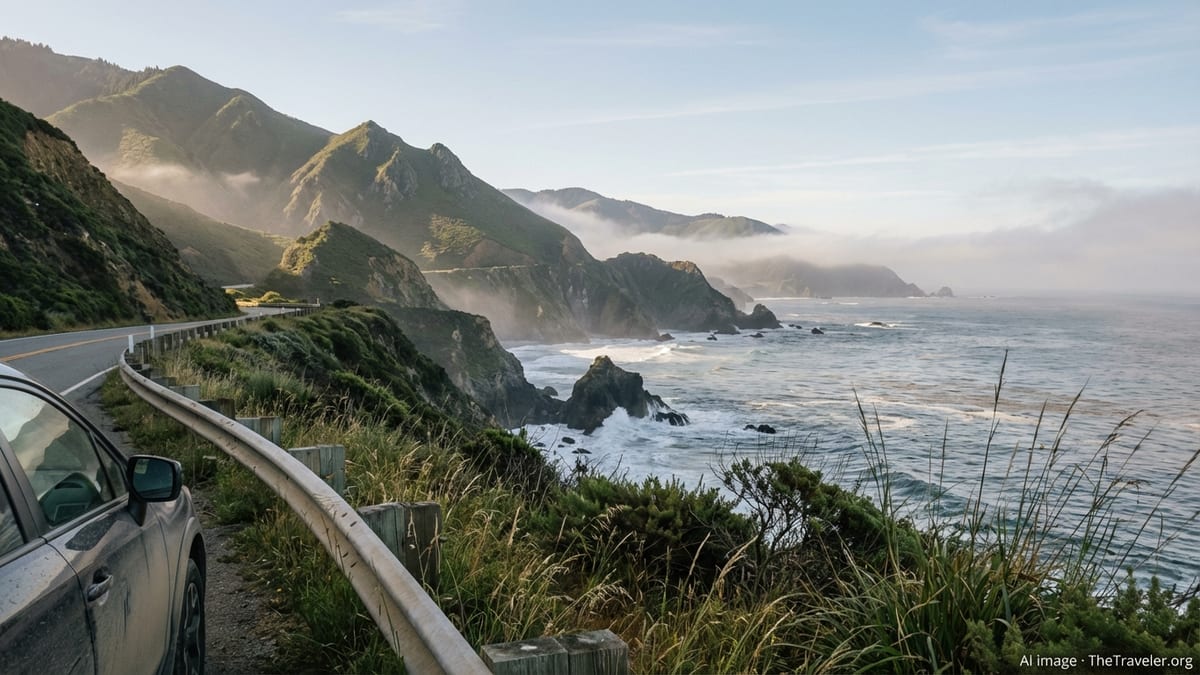
Big Sur is one of California’s signature coastal drives, where the Santa Lucia Mountains drop almost directly into the Pacific. The dramatic scenery along this section of Highway 1 includes high bridges, rocky coves, and pullouts where you can gaze at the ocean from cliffs hundreds of feet above the waves. Periodic landslides and storm damage, however, have made closures and detours along this stretch fairly common in recent years. Before committing to a Big Sur road trip, check the latest road status, and allow extra time for one-way traffic controls or unexpected delays.
Coastal conditions can change quickly with weather and tides. Even when the air feels warm, Pacific water temperatures are cooler than many visitors expect, especially north of Los Angeles. Rip currents are common, so it is safest to swim near staffed lifeguard towers and follow posted warnings. On rocky shorelines and tide pools, wear sturdy footwear and watch for incoming swells. California’s beaches are generally free to access, but some state and local parks charge day-use or parking fees that help fund maintenance and lifeguard services.
National Parks: Yosemite, Sequoia & Kings Canyon, and Beyond
California’s national parks are a major draw for first-time visitors, and recent years have seen record attendance across much of the system. Yosemite, perhaps the most famous, is known for its granite walls, waterfalls, and meadows framed by cliffs such as El Capitan and Half Dome. After experimenting with timed entry during the pandemic and again in 2024 and 2025, Yosemite announced in February 2026 that it will not require vehicle reservations this year. That makes spontaneous visits easier but also increases the likelihood of congestion, particularly on summer weekends and holiday periods.
Mountain weather still dictates access in Yosemite. Winter storms in early 2026 brought heavy snowfall and temporary full closures, with fallen trees, avalanche risk, and impassable roads in some areas. High-elevation routes such as Tioga Road and Glacier Point Road typically remain closed from roughly November into late spring or early summer, depending on snowpack. First-time visitors focused on the classic views may still have a rewarding trip by concentrating on Yosemite Valley, but those hoping to explore Tuolumne Meadows or cross the Sierra by car should time their visit for midsummer and verify road openings shortly before departure.
South of Yosemite, Sequoia and Kings Canyon National Parks protect groves of giant sequoia trees and deep glacial valleys carved into the heart of the Sierra Nevada. Visitor numbers have surged here as well, releasing fresh economic energy into nearby gateway towns. The parks’ main attractions include the General Sherman Tree, one of the world’s largest trees by volume, and scenic drives that climb from oak foothills into conifer forests and high overlooks. Roads are steep and winding, and snow or ice can linger at higher elevations well into spring. Tire chains may be required during and after storms, so rental car drivers should confirm policies and be prepared for winter driving if visiting outside the summer season.
Other California national parks offer very different landscapes. Joshua Tree, reachable in a half-day drive from Los Angeles or San Diego, spans high desert and low desert ecosystems scattered with namesake Joshua trees and rounded boulders. Summer heat can be extreme, often well above 100 degrees Fahrenheit, so spring and autumn are generally better for hiking and climbing. Death Valley, on the Nevada border, is one of the hottest places on Earth and requires careful planning around water, fuel, and heat exposure. Along the north coast, Redwood National and State Parks protect towering redwood forests in a cool, often misty climate that feels far removed from Southern California beaches.
Transportation, Driving the State, and Safety Considerations
Because of California’s size and limited long-distance public transportation, most visitors rely on a mix of flights and driving to cover ground. International travelers usually arrive through Los Angeles International, San Francisco International, or San Diego International, which handle millions of passengers a month and connect directly to major rental car facilities and regional rail lines. Domestic visitors may also enter through smaller airports such as Oakland, San Jose, Sacramento, or Orange County, especially when focusing on specific regions like the Bay Area, wine country, or coastal Orange County.
Once on the ground, the car remains the most flexible way to explore. The state’s freeway network links all major cities, while scenic highways, including sections of Highway 1 and mountain routes over the Sierra, reward slower travel. However, long distances and heavy traffic require realistic planning. A drive from Los Angeles to San Francisco can take six to eight hours or more, depending on whether you choose the quicker inland route or the slower, scenic coastal road. When possible, try to avoid peak commute hours around major metropolitan areas, when congestion can add substantial time to even short hops.
Safety and environmental conditions deserve special attention. California has invested in wildfire preparedness and response, but large fires still occur, especially from late summer into early autumn. Smoke can spread far beyond fire zones, affecting air quality in cities and national parks alike. During active fire periods, visitors should follow local news, heed evacuation notices, and avoid entering closed or restricted areas, even if they appear quiet. In winter and early spring, powerful Pacific storms can trigger mudslides and rockfalls that close coastal and mountain roads without much warning.
Visitors should also be prepared for local driving norms. Freeways often have multiple closely spaced exits, and traffic can move quickly when conditions are clear. Using navigation apps is helpful, but it is wise to review your route in advance and keep an eye on road condition alerts. In cities, parking can be expensive and heavily regulated, with street-cleaning days, time limits, and residential permit zones. In rural areas and national parks, fuel stations may be widely spaced, so topping off the tank before entering remote regions is prudent.
Budgeting, Lodging, and Crowds in a High-Demand Destination
California is one of the more expensive destinations in the United States, and prices in the most popular areas can surprise first-time visitors. Hotel rates in central San Francisco, beach neighborhoods around Los Angeles, and resort towns across the state often rise significantly during peak seasons and major events. Booking early can secure better options and reduce last-minute surcharges. Travelers on tighter budgets may want to look at inland neighborhoods with reliable transit connections, as well as midweek stays rather than weekend visits.
In and around national parks, lodging options range from historic park lodges and in-park hotels to private cabins, motels, and campgrounds in gateway communities. High demand means that reservations for summer and holiday periods can sell out months in advance. Camping requires even more forward planning, with popular campgrounds in Yosemite, Sequoia, and other parks filling quickly when reservations open. Some campgrounds and lodging areas also close seasonally, especially at higher elevations, so confirm operating dates before finalizing travel plans.
Restaurant prices and tipping practices are broadly similar to other major U.S. destinations, though coastal and resort areas can lean toward the higher end. Many cities have a strong casual dining culture built around tacos, food trucks, and neighborhood spots that offer more value than high-end waterfront or rooftop venues. Grocery stores and farmers markets are another way to manage costs, particularly for road trips and national park visits where food choices inside park boundaries can be limited and more expensive.
As tourism numbers have climbed, crowd management has become an ongoing challenge. Yosemite, for example, has alternated between reservation and no-reservation systems in recent years as officials balance access, traffic, and resource protection. With the current move away from timed entry, visitors should anticipate busy weekends and may need to arrive early to secure parking and trailhead access. Similar crowding can occur at famous viewpoints along Highway 1, in downtown San Francisco’s most-visited districts, and at Southern California’s most popular beaches. Off-peak travel, such as shoulder seasons and midweek stays, remains the most effective strategy for a quieter experience.
Practical Tips for a First-Time California Itinerary
For a first trip of about 10 to 14 days, many visitors find it easiest to focus on either Southern California plus one national park, or a loop that combines the San Francisco Bay Area, the Central Coast, and Yosemite. Trying to include Los Angeles, San Diego, San Francisco, multiple coastal regions, and several national parks in a single short visit usually means more time spent in transit than actually enjoying the destinations.
A classic Southern California itinerary might include several days in Los Angeles, a few days in San Diego or Orange County’s beach towns, and a side trip inland to Joshua Tree or the desert. This balances urban sightseeing with beach time and a taste of California’s desert landscapes. A northern-focused itinerary could start in San Francisco, continue down the Central Coast through Monterey and Big Sur if roads are open, and then turn inland to Yosemite or Sequoia and Kings Canyon, returning to the Bay Area at the end. Either approach keeps driving segments manageable while still showcasing the variety that defines the state.
When stitching together cities, beaches, and parks, think about logistics as well as scenery. Check whether one-way car rentals carry extra fees if you plan to fly into one city and depart from another. Build in buffer days in case weather, wildfire, or road conditions force last-minute changes, especially for mountain and Big Sur segments. For national park days, aim to start early in the morning, both to secure parking and to enjoy trails and viewpoints before midday crowds and heat build.
Packing for California can be counterintuitive for visitors expecting endless heat. Even in summer, evenings along the coast can be cool and breezy, while days in the interior can be hot or even scorching. On a single trip that includes San Francisco, Yosemite, and coastal drives, you may need light layers, a warm jacket, and sun protection all in the same week. Comfortable walking shoes are essential for both city exploring and easy to moderate trails. A compact daypack, reusable water bottle, and sun hat will serve you well whether you are walking San Diego’s waterfront or hiking among giant sequoias.
The Takeaway
California rewards visitors who respect its size and complexity. Rather than a single destination, the state is a mosaic of distinct regions, each with its own climate, culture, and pace. From the freeways and film studios of Los Angeles to the hills of San Francisco, the sunny harbor of San Diego, the cliff-hugging roads of Big Sur, and the granite walls of Yosemite, it is possible to experience very different worlds within the span of a single well-planned trip.
As travel demand stays high, thoughtful planning matters more than ever. Checking current conditions, booking key accommodations early, and building flexibility into your schedule will help you navigate everything from traffic jams to snowstorms and wildfire smoke. In return, California offers a depth of experiences that can be hard to match, whether you are tasting wine on a Central Coast terrace, watching fog drift under the Golden Gate, or standing beneath a tree that has been alive for thousands of years.
For a first-time visitor, the goal is not to see all of California but to get a feel for its rhythm. Choose a manageable combination of cities, beaches, and at least one national park, allow time for detours and quiet moments, and you will leave with both vivid memories and a clearer sense of which corners of the state you want to explore more deeply on a future visit.
FAQ
Q1. How many days do I need for a first trip to California?
Most first-time visitors find that 10 to 14 days is enough for one region, such as Southern California plus a nearby park, or a loop that combines the San Francisco Bay Area, the Central Coast, and one Sierra Nevada national park. With less time, it is better to focus on just one major city and its surrounding day trips.
Q2. Do I need a car to explore California?
A car is not strictly necessary in a few areas, such as central San Francisco, but it is the most practical way to connect cities, beaches, and national parks on a single trip. If you prefer not to drive, consider choosing one city as a base and joining organized tours to nearby regions.
Q3. Is California safe for tourists right now?
California’s main destinations remain generally safe for visitors who take normal urban precautions. The bigger risks tend to be environmental, such as wildfire, storms, and heat in desert areas, so staying informed about local conditions and following official advisories is important.
Q4. When is the best time to visit Yosemite and other national parks?
Late spring through early autumn usually offers the broadest access to trails and roads in Sierra Nevada parks, though exact timing varies with snowfall and snowmelt. Early summer often combines strong waterfall flows with mostly open valley facilities, while mid to late summer is better for high-country routes once snow has melted.
Q5. Are there still reservation requirements for California national parks?
Policies have changed several times in recent years. As of early 2026, Yosemite has announced that it will not use a vehicle reservation system this year, but visitors should always confirm the latest rules for any park shortly before their trip, since management strategies can be adjusted based on crowding and staffing.
Q6. How expensive is California compared with other U.S. destinations?
California tends to be on the higher end for lodging, dining, and car rentals, especially in prime coastal areas and national park gateways. Costs can be moderated by visiting in shoulder seasons, staying slightly away from the most famous districts, and mixing restaurant meals with groceries and casual spots.
Q7. Can I combine Los Angeles, San Francisco, and San Diego in one trip?
It is possible but can feel rushed unless you have at least two to three weeks. Travel time between these cities is significant, so many first-time visitors choose two of the three or focus on one city plus nearby coastal and desert destinations to avoid spending too much of the trip on freeways.
Q8. What should I pack for a trip that includes cities, beaches, and national parks?
Plan for layers. Include breathable clothing for warm inland days, a light to medium jacket for cool coastal evenings, comfortable walking shoes, sun protection, and a small daypack. If you are visiting higher elevations or traveling in cooler months, add warmer layers such as a fleece or insulated jacket, gloves, and a hat.
Q9. How can I avoid crowds at popular sights?
Traveling midweek, visiting during shoulder seasons, and starting your days early are the most effective strategies. In national parks, consider exploring less-famous trails and viewpoints away from the main valley floors or canyon entrances, and in cities, look beyond the busiest waterfronts and historic districts to nearby neighborhoods.
Q10. Are wildfires a reason to postpone a California trip?
Wildfires are a recurring reality, but they rarely affect the entire state at once. Rather than canceling outright, many travelers monitor conditions as their dates approach and adjust itineraries if a specific region is impacted. Checking air quality, road closures, and park alerts will help you decide whether to reroute or reschedule particular segments.