

More news on this day
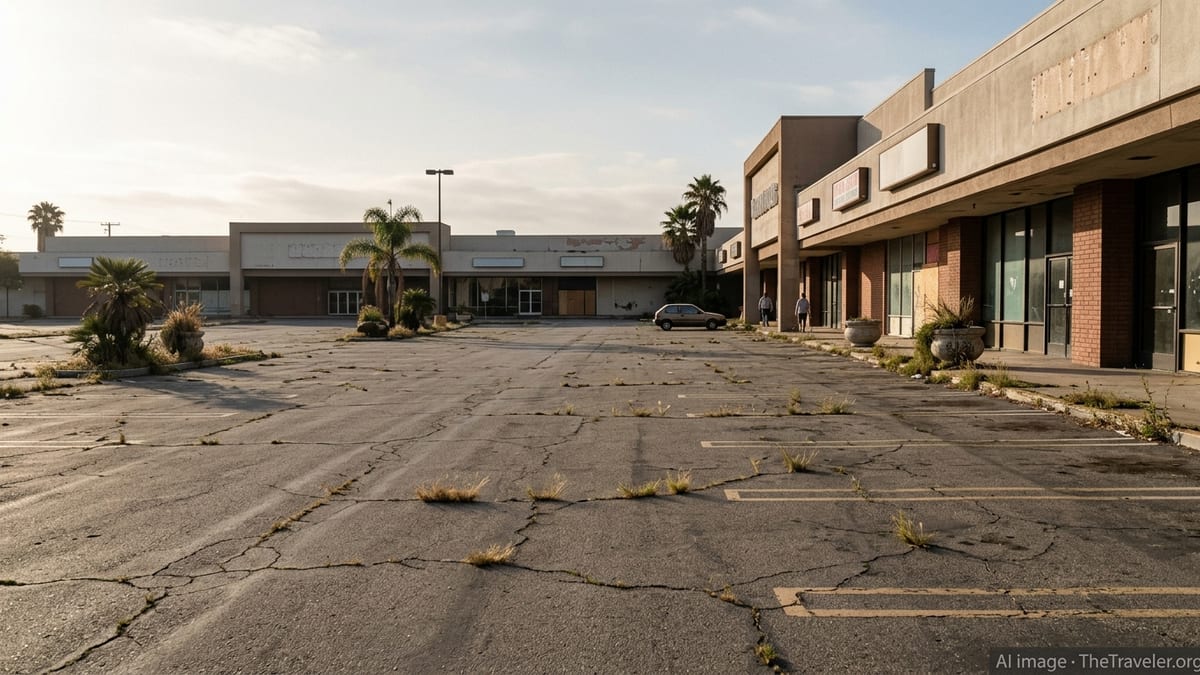
Once marketed as climate-controlled temples of luxury retail, many California shopping malls are now drawing a very different kind of crowd: travelers and urban explorers arriving not to shop, but to photograph vast, echoing corridors, shuttered storefronts and fading logos from a not-so-distant consumer era.
Get the latest news straight to your inbox!
From Retail Meccas to Quiet Concrete Shells
California helped define the American mall experience in the late twentieth century, with expansive centers promising fashion, entertainment and air-conditioned escape. In recent years, however, the state has become a showcase for a new retail reality, as several once-busy complexes have slipped into partial or near-total vacancy. Published coverage highlights how changing consumer habits, the dominance of e-commerce and shifting development priorities are converging to erode foot traffic at traditional enclosed malls, even as other types of retail remain comparatively healthy.
Market research from commercial real estate firms notes that, nationally, shopping center vacancy rates remain relatively low, with stable demand for open-air centers and neighborhood retail. Yet regional malls are a notable weak spot. Analysts point to department store closures, consolidation among national chains and a slowdown in luxury spending in some corridors as key drivers behind the shrinking roster of tenants at large enclosed properties.
California’s experience is uneven. Prime open-air districts in parts of Los Angeles, Orange County and San Diego still command high rents and low vacancy, according to recent Western U.S. retail market reports. At the same time, several enclosed malls that once anchored suburban life are either fully shuttered or operating with large swaths of darkened storefronts, creating a new category of post-retail landscape that is increasingly visible to travelers.
Hilltop, Westminster and Carousel: Case Studies in Decline
In the San Francisco Bay Area, Richmond’s Hilltop Mall illustrates the long arc from thriving shopping destination to dead mall. Opened in the 1970s and once home to multiple major department stores, the roughly million-square-foot complex saw vacancies mount over the 2000s and 2010s. Publicly available information shows that the center closed to traditional retail around 2020, leaving behind boarded entrances, an overgrown parking lot and a hulking, largely empty shell now earmarked for a mixed-use project under the Hilltop Horizon planning framework.
Southern California presents similar stories. In Orange County, Westminster Mall, a two-level enclosed center dating back to the 1970s, has lost most of its anchors and many interior tenants. Reporting from regional outlets and recent planning documents indicates that city leaders have approved a long-range redevelopment vision that would replace sections of the mall with housing, lodging and updated retail. Until demolition advances, however, the vast interior concourses and quiet food court spaces remain a visible symbol of the region’s changing retail priorities.
In the Inland Empire, San Bernardino’s former Carousel Mall has become another highly cited example. Once positioned as a central shopping hub, it struggled with vacancy and safety concerns before finally closing. Market overviews for the Inland Empire note that the mall’s hundreds of thousands of square feet are now being demolished as part of an effort to clear the way for new development. The process has left behind striking scenes of partly dismantled escalators, stripped signage and exposed concrete that are appearing with increasing frequency in online travel videos and photo essays.
San Francisco Centre and the New Urban Dead Mall
Downtown San Francisco, long a magnet for international visitors, is providing an urban twist on the phenomenon. San Francisco Centre, a multi-level mall connected to a major transit hub and famed for its grand central dome, was once positioned as a flagship luxury and mid-market destination. According to recent coverage, the complex has suffered a rapid tenant exodus since the pandemic years, with prominent brands closing one after another and leaving vacancy rates reported at well above typical levels.
In 2024, retail industry reporting described the mall as effectively defunct as a traditional shopping destination, with only a handful of tenants remaining amid shuttered boutiques and dark upper floors. Images circulating in travel blogs and social media posts show empty atriums where weekend crowds once queued for sales, as well as escalators running past closed security grilles and papered-over windows.
For visitors staying in nearby hotels or attending conventions, the near-empty interior has become an unexpected point of curiosity. Instead of crowded holiday displays, travelers now encounter a stark, almost museum-like atmosphere, where architectural flourishes and designer storefronts frame silence rather than commerce. The juxtaposition between the building’s polished finishes and its lack of activity is increasingly cited as a compelling, if unsettling, stop on urban walking tours.
From Shopping Trips to “Dead Mall” Tourism
The decline of certain California malls has given rise to a distinct form of niche tourism. Online communities dedicated to so-called dead malls, including video channels and photography forums, document the slow fade of retail complexes across North America. California locations feature prominently in this ecosystem, with Hilltop, Westminster and San Bernardino’s former Carousel Mall among the most frequently shared examples.
Travel-focused content creators now routinely incorporate these sites into broader itineraries, pairing iconic coastal viewpoints and theme parks with visits to nearly empty shopping centers. Publicly available posts often describe the surreal experience of walking through echoing corridors where only a handful of businesses remain open, or of standing in vast parking lots where nature is beginning to reclaim cracked asphalt.
This emerging form of urban exploration tends to emphasize atmosphere over amenities. Visitors seek photographs of abandoned food courts, faded directional signage and grand architectural gestures that no longer serve the surging crowds they were designed to handle. The aesthetic, sometimes described in coverage as “post-retail” or “late-capitalist ruin,” resonates with travelers interested in contemporary history, architecture and the visible aftershocks of economic transition.
Redevelopment, Community Tensions and the Future of Mall Land
Behind the eerie visuals that attract global curiosity lies an active debate over what comes next for these properties. Large mall sites often occupy dozens of acres of strategically located land with existing road and transit connections. Planning documents and developer announcements across California increasingly point toward mixed-use futures that blend higher-density housing with smaller-scale retail, offices, hotels and open space.
At Hilltop in Richmond, concept plans call for thousands of new residential units, parks and a more walkable street grid on the former mall footprint. In Westminster and San Bernardino, local planning materials similarly highlight opportunities to add housing and community services where department stores and expansive parking once dominated. These proposals reflect a broader policy shift in many California cities toward reusing underperforming commercial land to address housing shortages and modern urban design goals.
The transition is not without friction. Published reports describe concerns about blight, vandalism and public safety at long-vacant malls, particularly when redevelopment timelines stretch over years. Nearby residents sometimes express frustration at living beside decaying structures, even as a growing number of visitors arrive to document them. Balancing the interests of investors, local communities and the new wave of “ruin tourists” is becoming a recurring challenge for city planners.
For travelers, the window to experience these eerie, in-between landscapes may be limited. As demolition and construction accelerate, many of California’s most photogenic dead malls are likely to vanish, replaced by dense clusters of apartments, restaurants and offices. For now, however, they stand as stark, concrete landmarks of a shifting retail era, paradoxically drawing international attention just as their original purpose slips quietly into history.