

More news on this day
Cam Ranh International Airport on Vietnam’s south-central coast has been recognized by Skytrax among the world’s top 10 cleanest airports, a distinction that is reshaping perceptions of the country’s tourism gateways and spotlighting Nha Trang–Cam Ranh as a rising premium beach destination.
Get the latest news straight to your inbox!
Skytrax Recognition Puts Cam Ranh on the Global Airport Map
Cam Ranh International Airport, serving the resort city of Nha Trang and the broader Khanh Hoa coast, has been ranked among the world’s 10 cleanest airports in a Skytrax category for facilities handling up to 25 million passengers per year. The recognition, highlighted in airport and airline industry coverage of the 2025 World Airport Awards cycle, places Cam Ranh alongside long-established hubs that have traditionally dominated global cleanliness rankings.
Publicly available information from Cam Ranh’s terminal operator describes the accolade as a major milestone in the airport’s development, noting that it is Vietnam’s only representative in the top 10 of this Skytrax cleanliness category. The ranking builds on several years of investment in terminal upgrades, hygiene protocols, and passenger services as the airport has expanded from a largely domestic facility into an international gateway for beach resorts stretching along Cam Ranh Bay.
Regional travel media also draw a link between the award and Asia’s broader dominance in the cleanliness field, where Japanese, Korean, and Singaporean airports consistently feature at the top of Skytrax lists. For Vietnam, the emergence of Cam Ranh in these rankings signals that at least one of its coastal gateways is now competing in the same quality bracket as some of the region’s best-known hubs.
While Skytrax surveys rely on passenger feedback rather than technical audits, the results have become a widely referenced benchmark for cleanliness and service quality. Cam Ranh’s strong performance is therefore likely to influence traveler expectations as they compare Southeast Asian beach destinations and transit options.
A Clean, Compact Gateway for Nha Trang’s Resort Corridor
Cam Ranh’s rise has unfolded in parallel with the rapid build-out of high-end resorts along the coast between the airport and Nha Trang. Travel guides and airline briefings note that the terminal lies roughly 35 kilometers from Nha Trang city, with a dedicated coastal highway linking the runways to resort clusters that have attracted both package tourists and independent travelers.
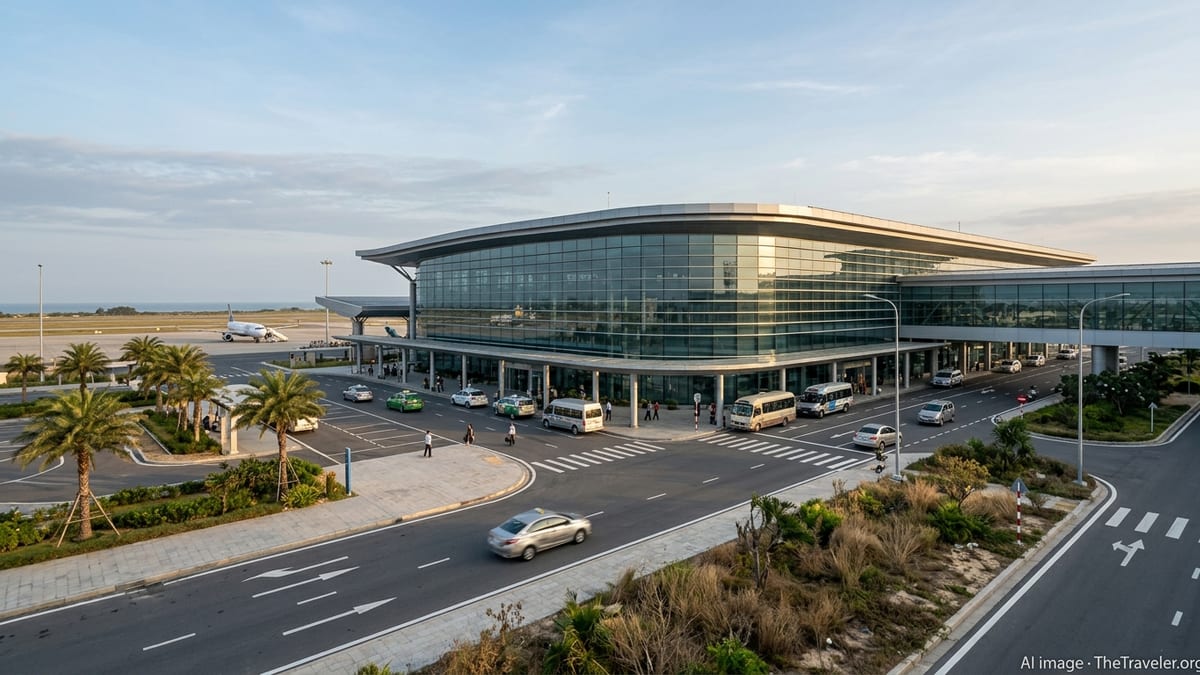
The airport’s international terminal, opened in recent years to handle growing charter and scheduled traffic from North Asia, Russia, and other markets, has been cited in industry profiles for its spacious check-in hall, glass-heavy architecture, and emphasis on natural light. Reports indicate that cleaning teams and facility managers have prioritized spotless floors, restrooms, and seating areas, which are among the key criteria Skytrax uses when compiling its cleanliness rankings.
Passenger accounts shared across travel forums and local media often describe Cam Ranh as quieter and more orderly than Vietnam’s largest hubs, with shorter queues and a more relaxed atmosphere. Although these impressions are anecdotal, they align with the idea that a smaller, leisure-focused airport can more easily maintain high hygiene standards, especially when daily passenger volumes remain below those of major business gateways.
At the same time, the airport has had to adapt to highly seasonal demand. Winter charter waves from colder markets test the capacity of arrivals halls and baggage systems, and sustaining top-tier cleanliness during peak waves has become a central operational challenge. The Skytrax ranking suggests that, at least in the eyes of many travelers, Cam Ranh has managed this balancing act effectively.
A New Benchmark for Vietnam’s Airport Experience
Cam Ranh’s performance is particularly striking when contrasted with the mixed reputations of Vietnam’s busiest airports. Coverage in domestic and international outlets frequently notes crowding and infrastructure pressures at Ho Chi Minh City’s Tan Son Nhat and Hanoi’s Noi Bai airports, where rapid passenger growth has outpaced terminal expansion and modernization efforts.
Industry commentary suggests that Cam Ranh’s recognition could serve as a benchmark for how Vietnam’s airports approach cleanliness, design, and passenger flow. The airport’s newer infrastructure, less constrained footprint, and focus on point-to-point leisure traffic have given it room to implement more systematic cleaning regimes and intuitive layouts, which in turn feed into stronger customer satisfaction scores.
The Skytrax accolade may also encourage other Vietnamese airports to place greater emphasis on visible cleanliness as part of their competitive positioning. With emerging projects such as Long Thanh International Airport near Ho Chi Minh City targeting regional hub status, the experience at Cam Ranh offers a reference point for how hygiene and ambience can be embedded into new terminals from the planning stage.
For travelers, the contrast within the same country underscores how airport experiences in Vietnam can vary widely. Cam Ranh’s rise illustrates that, even in a market still grappling with capacity constraints elsewhere, targeted investments and operational discipline can elevate a secondary gateway to global recognition.
Tourism and Investment Prospects Along Vietnam’s South-Central Coast
The cleanliness ranking arrives at a time when Vietnam is promoting its south-central coastline as a key growth corridor for tourism. Khanh Hoa province, home to both Nha Trang and Cam Ranh, has seen a wave of resort openings, branded residences, and golf courses designed to attract long-stay visitors and higher-spending international guests.
Travel industry analyses often highlight that a smooth, reassuring airport experience is critical for destinations competing in the long-haul beach holiday market. Cam Ranh’s Skytrax recognition signals to tour operators and airlines that the gateway can meet the expectations of travelers who are accustomed to the standards of leading Asian hubs, potentially making it easier to secure new routes and charter programs.
Improved air connectivity has already diversified Cam Ranh’s source markets, with services from Northeast Asia, Eastern Europe, and domestic hubs feeding into the region’s hotels and resorts. Observers suggest that the cleanliness accolade could further support marketing campaigns that position Nha Trang–Cam Ranh as an alternative to more established beach destinations in Thailand or Indonesia, particularly for travelers who prioritize comfort and ease of transit.
Local business press coverage also notes that upgraded airport standards can influence investment decisions beyond tourism. A well-regarded international gateway is often cited as a factor in attracting conferences, incentive groups, and foreign direct investment into supporting industries, from hospitality training to logistics.
Raising Expectations for Vietnam’s Next Generation of Gateways
Cam Ranh’s emergence among the world’s cleanest airports is likely to shape expectations for Vietnam’s next generation of aviation infrastructure. With new or expanded airports planned or underway in several regions, planners and operators face growing pressure to match or surpass the standards now associated with Cam Ranh’s international terminal.
Aviation analysts point out that the Skytrax ranking reflects not only cleaning practices but also design choices that make hygiene easier to maintain. Factors such as materials, airflow, restroom layout, and the placement of food and retail outlets all contribute to how clean an airport feels to passengers. Cam Ranh’s recognition therefore highlights the importance of integrating these considerations early, rather than relying solely on downstream maintenance routines.
For Vietnam’s tourism sector, the award reinforces a narrative of rising quality in both infrastructure and service. As travelers increasingly compare gateways when choosing where to spend their holiday budgets, the image of a bright, well-kept terminal framed by the coastline of Cam Ranh Bay becomes part of the country’s wider brand story.
While future Skytrax surveys will determine whether Cam Ranh can maintain or improve its position, the current top-10 placement already signals a new era for the airport and the destination it serves. For visitors flying in to explore Vietnam’s south-central shores, the journey now begins at an airport that stands among the cleanest in the world.