

More news on this day
Cambodia is entering 2026 with an ambitious tourism reset, pairing high-profile K-pop events and new infrastructure with an intensified crackdown on online scam compounds that have tarnished the country’s image.
Get the latest news straight to your inbox!
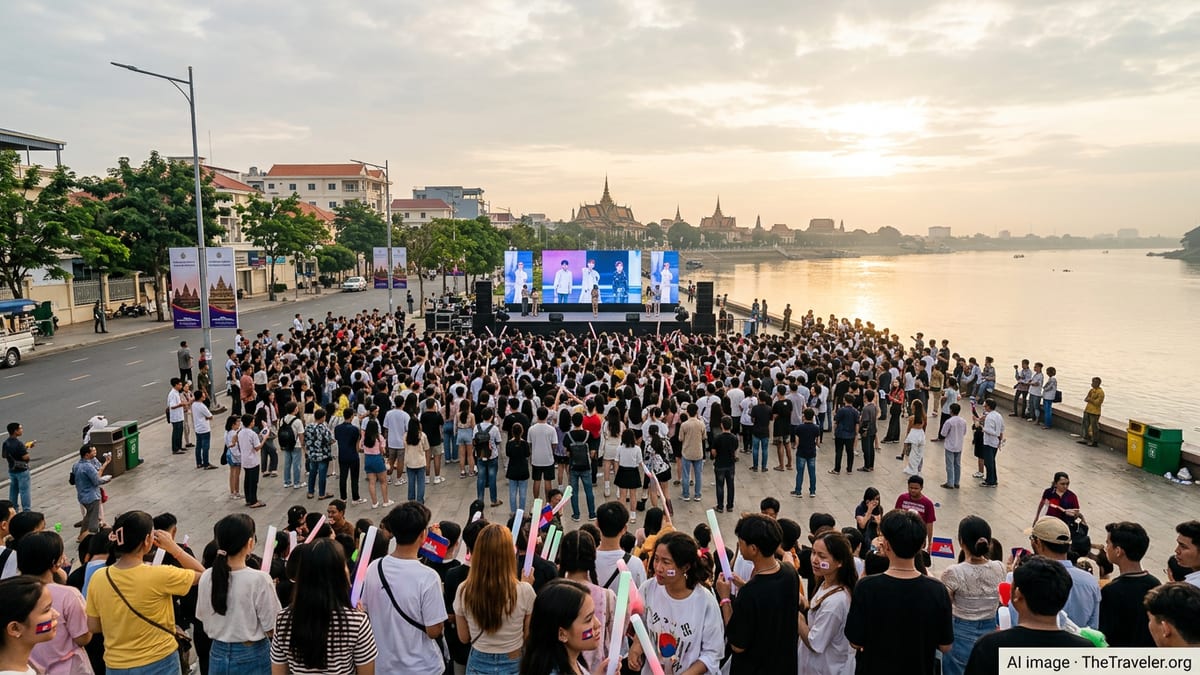
K-Wave Peace Concert Puts Cambodia Back in the Spotlight
Tourism and entertainment industry reports indicate that Cambodia is positioning a flagship K-Wave Peace Concert in 2026 as a symbolic centerpiece of its image makeover. Building on a steady flow of regional K-pop tours through Phnom Penh and Siem Reap in recent years, the planned event is expected to bring together leading South Korean acts and regional performers under a peace and cultural exchange theme.
The concept aligns with Cambodia’s broader push to tap the global popularity of Korean pop culture to attract younger, experience-driven travelers from Asia, Europe and North America. Event briefs circulating among regional promoters describe the concert as part music festival, part cultural showcase, designed to spotlight Cambodia’s temples, beaches and emerging creative scene alongside Korean talent.
Industry observers note that the K-Wave Peace branding is carefully chosen for a country that wants to move discussion away from cybercrime and geopolitical tensions, and toward cross-border friendship and youth culture. By hosting a large-scale, peace-focused concert rather than a conventional commercial tour date, Cambodia is seeking to signal that it is a safe, welcoming and outward-looking destination.
The event is expected to be staged in or near Phnom Penh, leveraging new transport infrastructure and hotel capacity, with pre- and post-concert packages promoting side trips to Angkor Wat, coastal Kampot and Kep, and eco-tourism sites in the Cardamom Mountains.
Tourism Recovery Gains Pace but Reputation Lags
Publicly available data from Cambodia’s Ministry of Tourism shows that the sector rebounded strongly through 2024, welcoming roughly 6.7 million international visitors and generating several billion dollars in receipts. This marked a sharp rise compared with the immediate post-pandemic years and put arrivals close to, and in some cases above, pre-2019 levels.
Regional coverage highlights that Thailand, Vietnam and China remain the top source markets, while arrivals from the United States, South Korea and Europe are gradually recovering. Travel industry analysis for 2025 and early 2026 points to growing numbers of Chinese, Thai and Russian visitors in particular, supported by more direct flights and extensive marketing around Angkor Wat and Cambodia’s coastal destinations.
Despite this growth, research papers and regional commentary continue to flag a reputational gap. Surveys cited in Cambodian and international media indicate that while cultural appeal and value for money rate highly, concerns about cyber scams, trafficking and corruption persist, especially among long-haul travelers booking independently. This perception risk is one of the key challenges the government and tourism businesses are now trying to address.
Promotional campaigns in late 2025 and early 2026 have therefore shifted tone, emphasizing safety, hospitality and responsible tourism alongside heritage. Materials promoting travel in 2026 portray Cambodia as a diversified destination, with new focus on food, rural homestays and nature tours in addition to the Angkor temples.
Crackdown on Online Scam Compounds Aims to Rebuild Trust
Over the past two years, Cambodia has come under intense global scrutiny for the proliferation of online scam centers and trafficking-linked “scam compounds,” many of them alleged to be run by foreign organized crime networks. Rights organizations, United Nations bodies and investigative media have documented cases in which workers were reportedly lured to Cambodia with legitimate job offers, only to be forced into large-scale online fraud operations.
In response to mounting diplomatic pressure and damaging coverage, the government has announced a series of raids and enforcement drives. International news reports throughout 2025 described thousands of workers being removed from suspected scam compounds and more than a thousand arrests in a matter of weeks during the most intensive phases of the crackdown.
By March 2026, Associated Press reporting indicated that Cambodia had drafted its first dedicated law targeting online scam centers and set a goal of shutting all known operations within weeks. The legislation, which is still being refined, is presented domestically as a turning point designed to protect the country’s reputation and create a safer environment for visitors and investors.
Rights groups and policy analysts remain cautious, noting past crackdowns that achieved limited long-term impact. However, the scale and visibility of recent operations, combined with formal legal reforms, suggest that Phnom Penh is conscious of the direct link between dismantling scam hubs and restoring confidence among foreign travelers, airlines and tour operators.
Infrastructure Upgrades Support a New Tourism Era
Alongside soft-power initiatives and law enforcement campaigns, Cambodia is investing heavily in physical infrastructure to underpin its tourism reset. A major new airport serving Phnom Penh, Techo International Airport, began phased operations in 2025 with three runways and capacity designed to accommodate long-haul widebody aircraft. The facility replaces the capital’s older single-runway airport and is intended to serve as a regional hub.
This follows the opening of the Chinese-financed Siem Reap-Angkor International Airport in 2023, which shifted international traffic away from the older airfield closer to the Angkor Archaeological Park. Aviation industry analysis notes that the two new gateways give Cambodia a dual-airport platform that can support higher visitor volumes and more diverse route networks in 2026 and beyond.
Tourism planners are also prioritizing connectivity between airports, cities and secondary destinations. Government and donor-backed programs are upgrading roads to coastal provinces and heritage towns, expanding power and water infrastructure, and promoting digital payment systems to support small businesses serving tourists.
These upgrades are framed, in domestic policy documents, as part of a longer-term strategy to push tourism’s contribution to gross domestic product back into double digits while encouraging investment that extends beyond casino and construction sectors.
Managing Perception: From “Scam Hub” to Culture and Creativity
A central question for 2026 is whether high-profile events such as the K-Wave Peace Concert, combined with visible crackdowns and new infrastructure, can shift Cambodia’s global narrative. Commentaries by regional think tanks argue that the country has been caught between two competing stories: one of world-class heritage, warm hospitality and emerging creative industries; the other of online scams, trafficking and opaque business networks.
Academic analysis of tourism sentiment around Cambodia in 2023 and 2024 found that coverage of the “scamdemic” had begun to influence traveler decision-making, particularly among Chinese and Western independent tourists sensitive to security and ethical concerns. At the same time, positive word-of-mouth from visitors to Angkor, Phnom Penh’s café and art scenes, and quieter rural provinces has continued to grow.
The 2026 strategy aims to amplify the latter narrative. Cultural festivals, marathons at Angkor, food and film events, and partnerships with regional influencers are being paired with stricter oversight of casinos, labor migration and special economic zones. Travel trade briefings stress that tackling abuses within scam compounds is not only a human rights obligation but also a prerequisite for sustainable tourism growth.
If the K-Wave Peace Concert draws the anticipated regional audience and proceeds without security incidents, travel marketers believe it could serve as a powerful proof point that Cambodia is prepared to host large-scale, youth-oriented international events. The coming peak seasons of late 2026 and early 2027 are likely to reveal whether these efforts are enough to finally push Cambodia’s tourism narrative beyond its recent association with online scams and towards a new era defined by culture, connectivity and confidence.