

More news on this day
Cambodia is sharpening its focus on Koh Kong, a sparsely populated coastal province of mangroves, islands and rainforest, as the next frontier for luxury tourism that blends upscale resorts with conservation and local culture.
Get the latest news straight to your inbox!
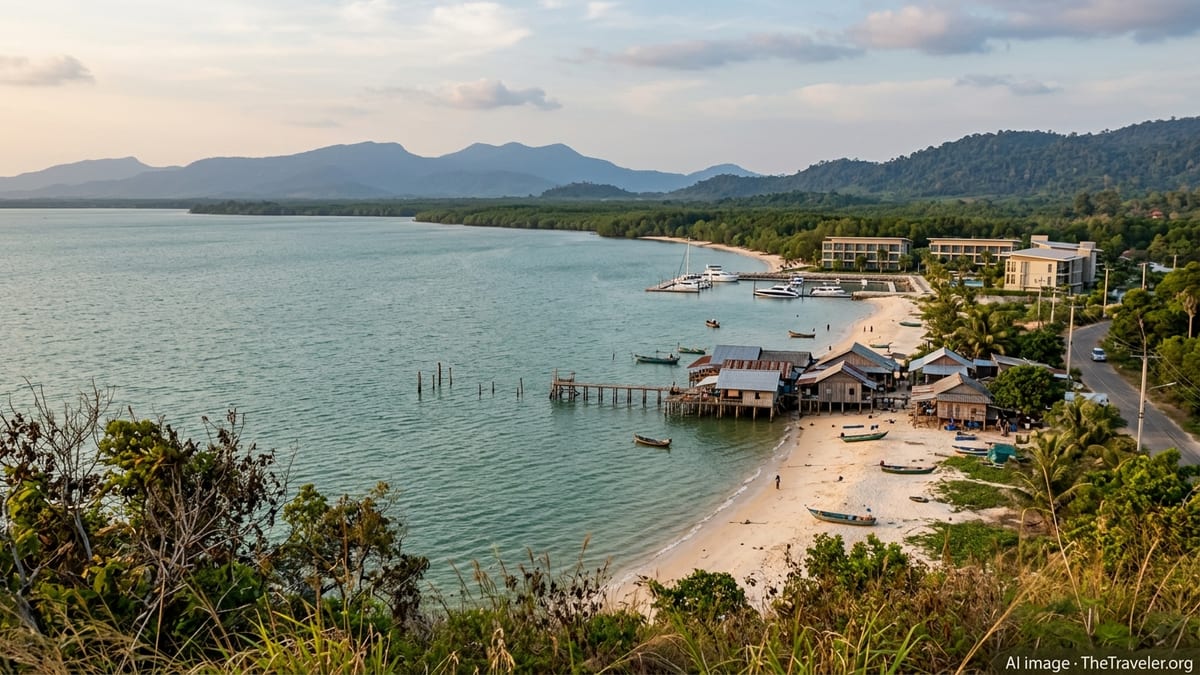
Coastal Master Plan Puts Koh Kong in the Spotlight
Publicly available planning documents show that Koh Kong has been designated a key pillar in Cambodia’s long-term coastal development strategy. Under a 15-year master plan for the country’s southwestern shoreline, the province is earmarked for 29 priority projects, alongside joint schemes with neighboring coastal provinces, to position it as a climate-resilient gateway for trade, tourism and green growth.
The vision centers on transforming Koh Kong into a world-class tourism and holiday destination while maintaining its reputation as one of Cambodia’s most biodiverse regions. The provincial roadmap highlights integrated coastal development, logistics upgrades and tourism infrastructure designed to support higher-spending visitors without sidelining environmental safeguards.
Planning materials emphasize that new roads, health and emergency response facilities, and urban renewal in the provincial capital of Khemarak Phoumin are intended to underpin this tourism shift. The goal is to create a coastal hub capable of hosting luxury resorts and marinas, while also functioning as a base for excursions into nearby national parks and island groups.
Within this framework, Koh Kong is being promoted as complementary to more established Cambodian beach destinations, offering a quieter, nature-led alternative to the intensive development seen in parts of Sihanoukville and other coastal centers.
High-End Resort Projects Reshape the Koh Kong Coastline
New and planned resort complexes are at the core of Koh Kong’s luxury tourism ambitions. The best known is the large-scale Dara Sakor development on the province’s coast, which has attracted multi-billion-dollar investment over more than a decade. Corporate announcements describe a vision of an integrated coastal city featuring high-end leisure facilities, hotels and residential areas designed for international visitors and long-stay residents.
Recent promotional material for Dara Sakor details a one billion dollar investment focused on the Stardream Lake area. The initiative aims to turn the lake and its surroundings into a high-end leisure resort that combines luxury vacation properties, cultural experiences and what promoters describe as ecological livability. The zone is positioned as a future central business district for the wider Dara Sakor area, with premium waterfront plots earmarked for resort and hospitality operators.
Elsewhere in Koh Kong, investment approvals recorded by Cambodian authorities highlight additional tourism schemes marketed as ecological and marine destinations. A Chinese-backed project branded as a tourism, ecological and marine international complex has been cleared with several hundred million dollars in capital, signaling continued investor appetite for large, master-planned resorts on the province’s coastline.
Together, these projects suggest a gradual shift from Koh Kong’s image as an off-the-beaten-path province to one that could host branded hotels, golf courses and high-end residential tourism products, even as much of the coastline and interior remains sparsely developed.
Balancing Luxury Growth With Forests, Mangroves and Marine Parks
Koh Kong’s tourism proposition is closely tied to its natural assets, including the Cardamom Mountains, extensive mangrove systems and coastal protected areas such as Peam Krasaop and Botum Sakor. Government-affiliated investment materials describe these areas as an “ecological belt” that anchors the province’s appeal and guides land-use planning around conservation zones.
International development programs are also backing a greener model. A World Bank-supported sustainable landscape and ecotourism project, which spans parts of Koh Kong and other western provinces, aims to channel investment into low-impact tourism products in and around the Cardamom Mountains and Tonle Sap landscape. Reports on the initiative highlight the potential for guided trekking, community-based tourism and wildlife experiences to generate income while reinforcing forest protection.
Tourism promotion material linked to the coastal master plan underscores a commitment to climate resilience and environmental safeguards. Concepts such as a “Smart Green Urban Spine” for Khemarak Phoumin and strict zoning around protected areas are presented as mechanisms to avoid some of the unchecked coastal sprawl seen elsewhere in Southeast Asia.
At the same time, environmental groups have long documented tensions between large concession-based projects and local communities in parts of Koh Kong, particularly around national parks. Observers note that ensuring the new wave of luxury and eco-resort development respects customary land rights, biodiversity corridors and coastal ecosystems will be central to the province’s credibility as a sustainable destination.
Infrastructure Links Support a Higher-End Visitor Mix
Improving access is another cornerstone of Koh Kong’s repositioning as an upscale tourism hub. The province is linked to Phnom Penh and the wider national road network via National Road 4 and National Road 48, with the Koh Kong Bridge playing a critical role in connecting the town to the rest of Cambodia. Travel industry information indicates that improved highways and expressway links elsewhere along the coast have already reduced journey times to the southwestern region.
Master plan documents for Koh Kong call for stronger “rapid transportation linkage” between the Dara Sakor area and regional tourist attractions, including the proposed international airport at Dara Sakor. Plans also reference the development of tourist ports and upgraded coastal roads intended to knit together islands, beaches and mainland hubs into a coherent high-end circuit.
Regional tourism coverage points to broader efforts to enhance access to the Cardamom Mountains and Koh Kong’s rivers and waterfalls, making it possible to move between inland ecotourism areas and the coast in a single travel day. These improvements, combined with Cambodia’s e-visa system and existing land border checkpoint at Cham Yeam, are expected to make Koh Kong more accessible for international travelers arriving via both Phnom Penh and Thailand.
Industry observers suggest that with better connectivity, Koh Kong has the potential to attract a visitor profile that mixes luxury beach tourists, nature enthusiasts and cross-border travelers looking for quieter alternatives to busier regional resorts.
Cultural Experiences and Community Tourism in a Changing Landscape
Beyond its beaches and forests, Koh Kong’s long-term positioning includes an emphasis on culture and community-based tourism. Planning documents and development project briefs reference opportunities to integrate local fishing villages, indigenous communities and traditional livelihoods into tourism circuits, creating cultural experiences that can complement high-end coastal resorts.
Examples from pilot projects elsewhere in Cambodia, particularly in protected areas and rural provinces, have shown that guided village walks, homestays, handicraft markets and food-focused tours can deliver additional income streams while encouraging visitors to stay longer. Koh Kong’s mix of coastal settlements, riverside communities and forest-edge villages is seen by tourism planners as fertile ground for similar initiatives.
National tourism promotion campaigns increasingly highlight culture and nature as joint pillars of Cambodia’s brand, signaling that future investment in Koh Kong may be assessed not only on financial returns but also on contributions to local employment and heritage preservation. Public information on upcoming coastal projects stresses requirements for environmental and social impact assessments that factor in community participation.
As large-scale resorts in areas such as Dara Sakor advance, analysts note that the extent to which developers incorporate local culture, partner with community enterprises and support training in hospitality and guiding will help determine whether Koh Kong emerges as a genuinely inclusive luxury destination or one that remains detached from its surrounding communities.