

More news on this day
Cambodia is moving to reposition Koh Kong, a sparsely developed coastal province near the Thai border, as a next-generation luxury tourism hub that mixes high-end resorts with cultural experiences and long-term environmental safeguards.
Get the latest news straight to your inbox!
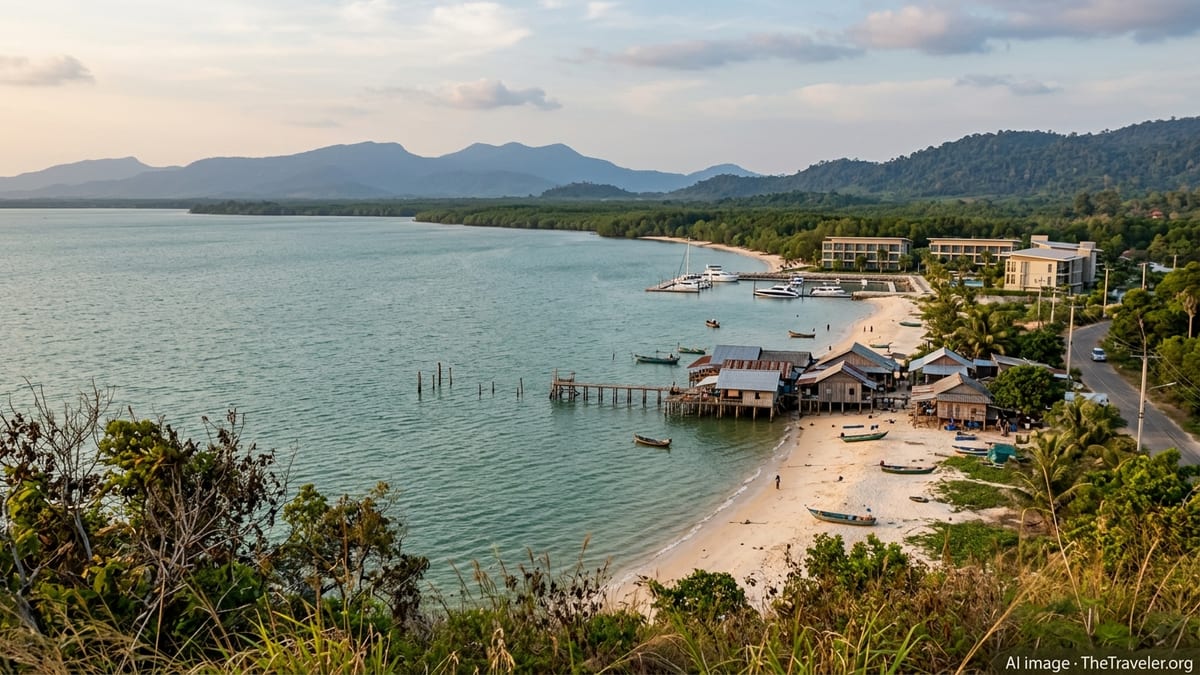
Image by Travel and Tour World – Tourism, Airline, Destination, MICE, Gobal Travel Market, Hotel news that you will find only over here.
A Strategic Pivot in Cambodia’s Coastal Tourism Map
Publicly available planning documents and recent coverage indicate that Koh Kong now sits at the heart of Cambodia’s broader coastal tourism master planning, alongside more established destinations such as Sihanoukville, Kampot, and Kep. The province’s long, relatively undeveloped shoreline and proximity to mangrove forests and protected areas are being framed as competitive advantages for a high-value, lower-density form of tourism.
Information released through national and provincial investment agencies describes a 15 year, three phase vision for Koh Kong that focuses on integrated coastal development. The approach aims to balance new resort infrastructure, transport links, and urban services with more careful management of fragile ecosystems, positioning the province as a test case for how Cambodia can scale up tourism while avoiding the congestion and reputational challenges seen in some earlier coastal projects.
Industry analyses also show that international hospitality and planning consultancies have been engaged to design master plans for large coastal tracts in Koh Kong. These plans typically promote mixed use destinations that combine beachfront resorts, marinas, and residential components with eco-tourism corridors and buffer zones intended to protect mangroves, seagrass meadows, and coral areas from overdevelopment.
At the national level, tourism has been identified as a strategic priority sector and an important engine for Cambodia’s ambition to reach high income status by mid century. Within that narrative, Koh Kong’s development is being presented as part of a shift toward “quality over quantity,” with an emphasis on higher-spend visitors, diversified source markets, and more resilient local economies.
Luxury Projects From Smart Cities to Integrated Resorts
Across Koh Kong, a new generation of large scale tourism investments is emerging, many of which are explicitly targeted at the upper end of the market. Project summaries circulated by investors and Cambodian institutions describe integrated coastal destinations that feature luxury villas, upscale hotels, branded residences, and recreational infrastructure designed to appeal to affluent regional and long haul travelers.
One of the most prominent concepts is a planned smart city in Koh Kong that combines high rise hospitality, waterfront leisure districts, and technology driven urban services. Promotional materials highlight ambitions to create a tourism led “new city” built around green building standards, renewable energy systems, and smart mobility, aiming to present Koh Kong as a showcase for modern, sustainable luxury living.
Elsewhere in the province, long running developments such as the Dara Sakor area continue to play a central role in the luxury tourism story. The zone, which includes resort complexes, an international airport project, and a deep water port component, has been positioned as a future gateway for upscale beach and golf tourism along Koh Kong’s coastline. Reports suggest that improved access and a clearer regulatory framework are seen as key to unlocking higher value visitor flows to these large concessions.
Recent approvals for new tourism, ecological and marine projects in Koh Kong underscore how capital is being directed toward integrated models that combine hospitality, residential, and environmental attractions. While many developments are still in early stages, the cumulative pipeline points to a province on the verge of a significant shift from frontier destination to structured luxury tourism zone.
Culture and Community at the Core of the Visitor Experience
Beyond bricks and mortar, Cambodia’s vision for Koh Kong places growing emphasis on cultural immersion and community benefits as part of the high end tourism offering. Policy papers and tourism promotion materials emphasize that future resorts are expected to connect visitors with local food traditions, crafts, and everyday life rather than operating as isolated enclaves.
In practical terms, this translates into encouragement for investors to integrate local markets, village excursions, and cultural performances into their guest programming. Koh Kong’s Buddhist temples, fishing communities, and ethnic minority groups are being highlighted as potential partners in curated experiences that move beyond standard beach holidays. High spending travelers are being targeted with narratives of authenticity and responsible engagement with host communities.
Stakeholder consultation has also been a feature of recent destination planning exercises in the province. Planning firms involved in Koh Kong master plans describe structured engagement with local authorities, community groups, and small businesses to identify priorities and concerns. While the depth of participation varies by project, these processes are presented as a way to build local support, safeguard cultural assets, and ensure that tourism led growth translates into employment and supply chain opportunities for residents.
For tour operators and hotels, this focus on culture and community is increasingly seen as a selling point in a crowded regional market. With travelers showing stronger interest in meaningful, place specific experiences, Koh Kong’s relatively intact social fabric and slower pace are being promoted as differentiators compared with more commercialized Southeast Asian beach destinations.
Sustainability, Mangrove Protection, and Low-Impact Design
Koh Kong’s rise as a luxury hub is closely tied to its environmental profile. The province contains some of Cambodia’s most extensive mangrove systems and coastal wetlands, including areas recognized in national adaptation and conservation plans as critical for biodiversity, fisheries, and climate resilience. These assets are central to the province’s emerging tourism brand and a key focus of policy discussions about how development should proceed.
Recent government and donor backed studies highlight mangrove protection, sustainable fisheries, and climate adaptation measures as priorities in Koh Kong. Proposals for eco and agro tourism in coastal communes aim to give communities direct incentives to conserve forests and estuaries, using guided river tours, boardwalks, and homestays to generate income while keeping ecological footprints low.
Within the hospitality sector, existing eco-lodges in Koh Kong’s riverine and island environments already provide reference points for low impact, higher yield tourism. Publicly available information about these properties describes elevated tented villas, renewable energy systems, and strict waste management practices designed to minimize disturbance to fragile habitats. Their commercial performance is often cited in industry analysis as evidence that visitors are willing to pay premium rates for verifiably sustainable stays.
Infrastructure projects are also being framed through a sustainability lens. Recent coverage of road upgrades in Koh Kong links new transport corridors to goals of boosting eco-tourism while ensuring that local communities share in the benefits. The emphasis on improved access to protected areas and resort zones is coupled with discussions about zoning, setback regulations, and environmental impact assessments intended to avoid unchecked sprawl along sensitive shorelines.
Connectivity, Competition, and the Road Ahead
Koh Kong’s transformation is unfolding within a rapidly evolving national tourism landscape marked by new airports, highways, and coastal master plans. The expressway connecting Phnom Penh and Sihanoukville, ongoing work on upgraded national roads toward the Thai border, and the development of new aviation gateways are collectively shrinking travel times to the province and making it more feasible for luxury visitors to combine Koh Kong with other Cambodian highlights.
At the same time, Koh Kong will be competing for investment and visitors with other Cambodian coastal projects that have also adopted a luxury and sustainability vocabulary. Sihanoukville’s reorientation, the emergence of high end island resorts off the southern coast, and new development plans for provinces such as Kep demonstrate that the race to capture upscale tourism is intensifying along the Gulf of Thailand.
Analysts note that Koh Kong’s relative late start offers both advantages and risks. The province can learn from earlier experiences of overconcentration and speculative building along parts of the coast, using stronger planning frameworks and environmental safeguards to steer growth in a more measured direction. However, delays in infrastructure delivery, regulatory clarity, or market positioning could see capital flow toward more established destinations instead.
For now, available evidence points to Koh Kong moving steadily from the periphery of Cambodia’s tourism story toward a more central role. If the province can maintain its environmental assets, ensure that local communities are integrated into the visitor economy, and deliver on promised high end infrastructure, it is likely to emerge over the coming decade as one of mainland Southeast Asia’s notable experiments in blending luxury travel with culture and sustainability.