

More news on this day
Camiguin, the compact volcanic island off the northern coast of Mindanao long known as a hard-to-reach paradise, is on the verge of a dramatic shift as a multi-phase runway expansion and realignment at Camiguin Airport advances, a project expected to welcome bigger aircraft, unlock cheaper fares, and reposition the island as one of the most accessible tropical escapes in the southern Philippines.
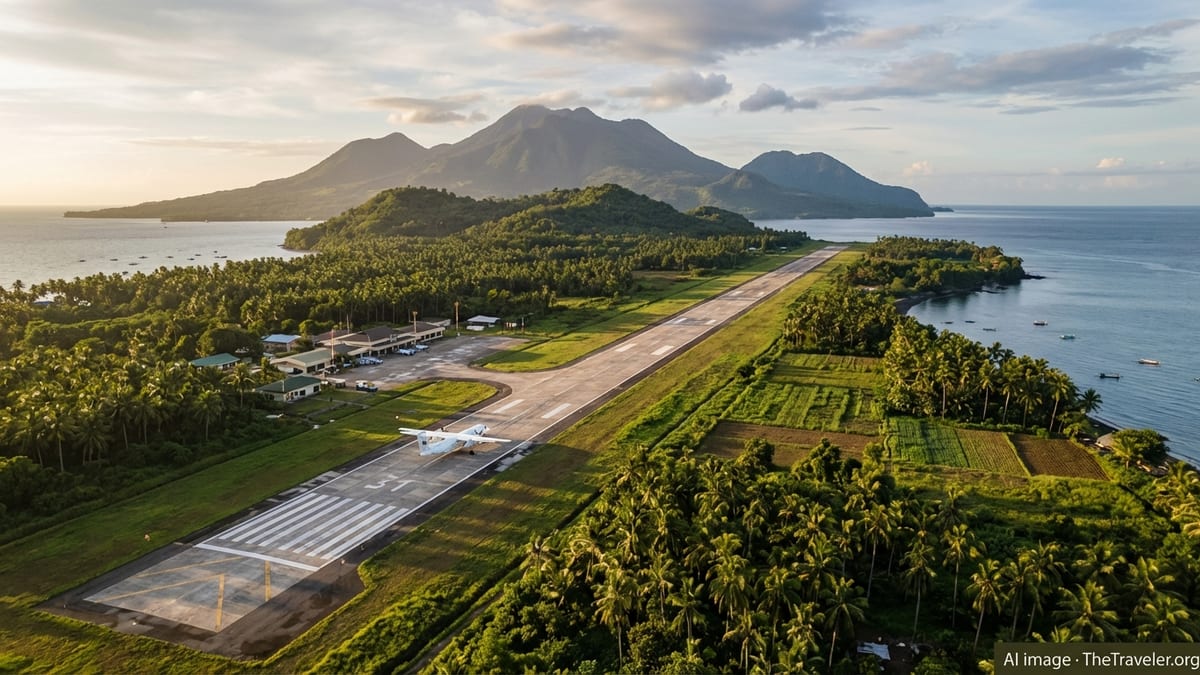
Runway Project Marks a New Phase for Mindanao’s “Island Born of Fire”
For years, Camiguin’s tourism story has been a paradox. The island’s powdery white-sand sandbars, hot and cold springs, and heritage churches have featured heavily in travel campaigns, yet air access has been limited to small turboprops on short, weather-sensitive schedules. The modest runway in Mambajao has constrained growth, keeping the island firmly in the “hidden gem” category even as other Philippine destinations scaled up to meet demand.
That calculus is set to change with the government’s runway expansion and realignment program for Camiguin Airport. Groundbreaking for a new runway alignment in Mambajao was held in September 2024, backed by national infrastructure funds and regional development support. Officials from the Department of Public Works and Highways (DPWH) framed the initiative as a catalyst for economic growth, positioning the airport upgrade alongside a major new bridge project as twin pillars for modernizing the island’s transport network.
Camiguin Airport already underwent a significant upgrade in 2021, when its terminal and runway surface were improved to support the reopening of tourism after pandemic closures. But technical constraints remained, most notably the runway’s length and slope profile and its proximity to mountainous terrain. The current expansion effort goes further, aiming to correct those limitations, accommodate larger turboprop aircraft more efficiently, and open the door to future operations by higher-capacity regional jets.
According to bid documents released in early 2026, the Department of Transportation (DOTr) has allocated roughly 174.6 million pesos for a new phase of runway works, including the construction of an initial runway centerline and correction of the runway’s slope. This package sits on top of a previously announced 675 million peso runway construction project, underscoring that Camiguin is no longer a peripheral concern but a priority node in the country’s push to improve Mindanao’s air connectivity.
Engineering Challenges: Building a Bigger Runway on a Small Volcanic Island
Expanding a runway on a compact volcanic island is more complex than simply pouring more concrete. Camiguin’s topography is dominated by steep slopes and peaks, earning it the moniker “Island Born of Fire.” The existing airstrip sits close to rising terrain, limiting both the physical extension of the pavement and the safe approach and departure paths for aircraft under international aviation standards.
Planners from DOTr, the Civil Aviation Authority of the Philippines (CAAP), and DPWH have had to balance safety and engineering constraints with the realities of limited land. Earlier government communications highlighted that the old configuration could not be significantly extended without confronting a mountain face, which in turn kept the airport restricted to smaller planes and constrained load factors during hot or wet-weather conditions.
The ongoing works involve both reprofiling and effectively creating a new runway alignment in stages, designed to accommodate larger turboprops and, in the longer term, make the facility “international in character” even if initial services remain domestic. Correcting the centerline slope, improving drainage, and expanding the runway strip are integral to enabling aircraft to operate at full performance and to reducing weather-related disruptions, which have historically affected flights in and out of the island.
Officials say the construction is being carried out in phases to minimize disruption to existing tourism traffic. With only 180 calendar days allotted for the current package of works, the approach suggests targeted, technically focused improvements aimed at quickly raising safety margins and operational efficiency before more extensive expansion takes shape over the coming years.
Bigger Aircraft, Denser Seats, and the Prospect of Cheaper Fares
While engineering details may seem distant to most travelers, the implications are clear: a better runway can support bigger or better-loaded aircraft, which in turn can bring fares down and frequency up. At present, Camiguin is typically served by small turboprop flights routed through larger Mindanao gateways such as Cagayan de Oro, limiting seat supply and often keeping ticket prices high relative to the short distance flown.
With a reconfigured, higher-standard runway, carriers can deploy newer, higher-capacity turboprops more confidently, and potentially plan for direct point-to-point services from major hubs like Manila or Cebu on denser schedules. Aviation planners in Mindanao point to developments at other regional airports, where longer runways and upgraded airside infrastructure have allowed airlines to operate planes closer to their optimal payload, reducing per-seat operating costs.
In Camiguin’s case, the expectation is that upgraded infrastructure will allow carriers to move more passengers per landing slot, smoothing out peak-season bottlenecks and making it commercially feasible to introduce more competitive fares. For an island where tourism demand often outstrips limited air supply during holidays and festivals, the ability to add capacity without overburdening the airport’s safety envelope is crucial.
Improved reliability could also underpin the development of niche travel segments, from weekend city breaks for Mindanao residents to longer-stay dive and wellness tourism targeting international visitors who connect via Cebu or emerging hubs in Northern Mindanao. As flight schedules stabilize and seat inventories grow, tour operators will find it easier to package Camiguin alongside nearby destinations, reducing the perceived risk and complexity for first-time visitors.
From Hidden Gem to Integrated Mindanao Gateway
The Camiguin runway project is unfolding as part of a broader push to reposition Mindanao in the country’s tourism and transport map. Northern Mindanao has seen a wave of aviation investments, including the opening of a new airport in landlocked Bukidnon and the expansion of Laguindingan Airport, which serves Cagayan de Oro and much of the region. National planners have repeatedly emphasized that enhanced air connectivity is central to unlocking the economic potential of the southern Philippines.
Camiguin’s upgraded airport will feed directly into this emerging network. The island sits just off the coast from Misamis Oriental and is already connected to the mainland by ferries. As Laguindingan expands with private-sector participation and aims to boost passenger throughput, Camiguin stands to benefit from improved domestic and, eventually, international links that funnel travelers through Mindanao’s main hubs before fanning out to secondary destinations.
Government agencies have also flagged Camiguin alongside other regional gateways, such as those in Busuanga and Surigao, in calls for feasibility studies and master plans aimed at either relocation or large-scale expansion. While each airport faces distinct constraints, the common denominator is the expectation of higher demand from both domestic and foreign tourists. For Camiguin, the runway expansion anchors the island’s role as a complementary destination within a multi-stop Mindanao itinerary.
Tourism and trade officials argue that improved air links will do more than simply boost visitor arrivals. Easier freight movement will help local producers ship high-value agricultural goods and seafood to larger markets more efficiently, while better connectivity will encourage investment in hospitality, food services, and adventure tourism infrastructure.
Tourism Stakeholders Prepare for a New Wave of Visitors
On the ground in Camiguin, resort owners, dive operators, and transport cooperatives are watching the runway works closely. Many recall how previous airport upgrades and marketing pushes brought spikes in visitor numbers but were tempered by limited capacity and inconsistent schedules. This time, local businesses are keen to align their expansion plans with the more substantial and long-term nature of the runway project.
Hotels and guesthouses in the island’s main town of Mambajao are already reporting growing domestic interest, particularly among travelers from Cebu, Davao, and Manila looking for less crowded alternatives to over-touristed beach destinations. The promise of more reliable flights is prompting some operators to refurbish rooms, expand amenities, and professionalize services to meet higher expectations from well-traveled guests.
Local authorities in Camiguin Province have emphasized the need for sustainable tourism planning as connectivity improves. The island’s small size and delicate ecosystems, including marine sanctuaries and volcanic landscapes, require careful management to avoid the pitfalls seen in other rapidly popularized destinations. Proper zoning, carrying-capacity studies, and community-based tourism initiatives are being discussed alongside infrastructure buildout.
For many residents, the runway expansion is both an opportunity and a responsibility. While increased tourist flows can bring jobs and higher incomes, they also demand stronger waste management, water resource protection, and cultural preservation measures. The challenge for Camiguin will be to harness better air access without sacrificing the tranquility and authenticity that made it a “hidden gem” in the first place.
Cheaper Travel and New Routes Across the Philippine Archipelago
Beyond the island itself, the Camiguin runway upgrade is expected to reshape travel patterns across the Philippine archipelago. With more capable airside infrastructure, airlines gain flexibility in how they design route networks, including the potential for direct flights that bypass Manila and connect secondary cities more efficiently. This is particularly significant for Mindanao, where travelers have long had to route through the capital or Cebu for many domestic and international connections.
If carriers choose to deploy larger or more efficiently loaded turboprops to the island, competition is likely to intensify on key routes, putting downward pressure on fares. For budget-conscious domestic tourists, that could make long-weekend escapes to Camiguin more accessible, while foreign travelers may see the island emerging more frequently in fare-search results as part of multi-city itineraries that include Cebu, Cagayan de Oro, or Davao.
Improved reliability is another key selling point. A runway that meets higher safety and performance standards reduces the frequency of weather-related diversions or cancellations, a persistent concern in a country regularly affected by monsoon rains and tropical storms. More predictable operations translate into better connections, shorter layovers, and higher confidence among travel agents and international wholesalers considering Camiguin for packaged tours.
Industry analysts note that the island’s enhanced air access dovetails with national efforts to distribute tourism flows more evenly across the country. As flagship destinations grapple with overcrowding and environmental pressures, places like Camiguin, with fresh capacity and upgraded infrastructure, stand ready to absorb travelers seeking quieter, more nature-focused holidays.
Balancing Growth With Environmental and Cultural Stewardship
As concrete is poured and survey markers line the future path of Camiguin’s runway, questions about sustainability loom large. The island’s compact size, volcanic slopes, and tightly knit communities mean that any surge in arrivals will be felt quickly in coastal barangays, dive sites, and pilgrimage spots. Environmental groups and local advocates are urging authorities to integrate conservation measures into every phase of the airport’s expansion.
Proposals circulating at the provincial level include stricter regulations on shoreline development, expanded marine protected areas, and incentives for resorts that invest in renewable energy and waste-reduction systems. There is also growing interest in promoting low-impact tourism segments such as birdwatching, trekking, and wellness retreats that emphasize longer stays and deeper engagement with local culture over quick, high-volume turnarounds.
Culturally, Camiguin’s residents are keen to ensure that growth does not eclipse local identity. The island’s religious festivals, traditional crafts, and small-scale agriculture contribute to its distinctive sense of place. As more flights bring in visitors from across the Philippines and abroad, community leaders are pushing for programs that channel tourism revenues into education, heritage preservation, and rural livelihoods.
For planners, the runway expansion is therefore part of a larger balancing act: transforming Camiguin from a hard-to-reach outpost into a well-connected Mindanao jewel, while safeguarding the landscapes and traditions that have long made the island feel like a world apart. The coming years, as concrete cures and new flight paths are charted, will determine whether Camiguin can achieve that delicate equilibrium.