

More news on this day
On a stretch of coastline where luxury yachts and designer boutiques often dominate the narrative, the Ligurian fishing town of Camogli is drawing attention as a quieter, more affordable way to experience the Italian Riviera.
Get the latest news straight to your inbox!
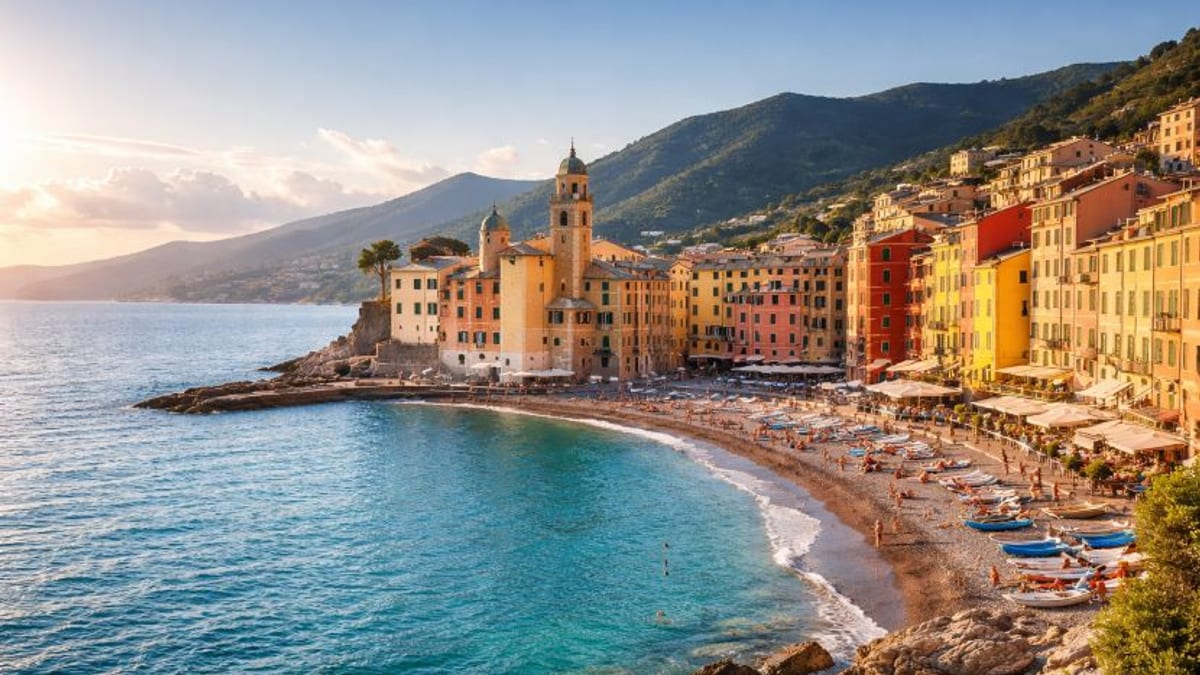
Image by Travel And Tour World
A Colorful Riviera Village Without the High Price Tag
Camogli sits on the western side of the Portofino peninsula, overlooking the Golfo Paradiso in Liguria. Publicly available information describes it as a traditional fishing village turned low-key resort, with tall pastel buildings lining a pebble beach and small harbor. Compared with nearby Portofino or the Amalfi Coast, coverage from travel industry outlets indicates that accommodation and dining here still skew toward mid-range rather than ultra-luxury pricing.
Recent travel commentary highlights Camogli as a value-focused alternative at a time when Italian seaside prices are under pressure. A report published in March 2026, for example, points to rising costs in famous resort areas and singles out Camogli as a “budget Riviera escape” where visitors can enjoy similar scenery for notably less than in marquee destinations such as Positano or Portofino.
Budget-travel guides tracking hotel data suggest that basic rooms in Camogli can start around the lower double digits in euros per person outside peak August dates, with simple guesthouses and apartments broadening options for cost-conscious visitors. While high summer and festival weekends still command premium rates, the overall range appears more accessible than many flagship Italian Riviera towns.
Observers also note that Camogli’s atmosphere remains tied to its working-port origins. Fishing boats continue to dock in the harbor, local families gather on the seafront promenade, and the evening ritual is more about gelato and aperitivo than exclusive nightlife. For many travelers, that combination of authenticity and moderate pricing is central to the town’s growing appeal.
Easy, Low-Cost Access by Train and Foot
Part of Camogli’s budget-friendly reputation stems from the way visitors arrive. The town lies on a main coastal rail line served by regional trains linking Genoa, Santa Margherita Ligure and other Riviera destinations. Travel guides updated for 2025 and 2026 describe Camogli as a roughly 30-minute train ride from Genoa, with tickets on standard regional services typically costing only a few euros.
According to transport planners and route aggregators, travelers can reach Camogli from Genoa’s Piazza Principe or Brignole stations, continuing on to the Camogli–San Fruttuoso stop, which is a short walk from the waterfront. This rail access allows visitors to avoid car rentals, highway tolls and coastal parking fees that can quickly add up in popular Italian resort areas.
Once in town, most of Camogli is navigated on foot. The compact center runs along the seafront and up a warren of stepped lanes. Public information about the Portofino Regional Natural Park shows that several well-marked hiking trails start near Camogli, leading to Ruta, San Rocco and on toward Portofino, offering panoramic views at little more than the cost of a picnic. Tour operators promoting self-guided walking holidays emphasize that these routes rely on frequent local trains and ferries instead of private transfers, keeping transportation expenses down.
Seasonal boat services provide another comparatively affordable way to explore. Schedules for regional ferries indicate that, in season, visitors can sail from Camogli to coastal points such as San Fruttuoso Abbey and, in some cases, on toward Portofino. While ticket prices vary by route, travelers typically pay far less than the cost of a private charter, yet still experience the Riviera from the water.
Free Views, Local Festivals and Low-Cost Attractions
Analysts of Italian tourism trends frequently point out that many of the country’s most memorable experiences are low cost or free, and Camogli appears to fit that pattern. Strolling the lungomare promenade, watching fishing boats return to port at dusk and admiring painted trompe-l’oeil facades incur no admission fee. The town’s main church rises directly above the sea on a rocky promontory, offering a viewpoint that features prominently in travel photography and does not require a ticket.
Nearby cultural sights add interest without heavy costs. Prominent guides describe the small Castello della Dragonara, perched beside the church, as a vantage point over the bay and the pastel town. During certain periods, its modest exhibits focus on local history and marine life, but many visitors arrive principally for the views from the ramparts.
Camogli is also known for traditional events that can be experienced on a reasonable budget. Among them is the annual fish festival, typically held in May, when a giant frying pan is used to cook and distribute fish portions in the harbor area. While exact prices for food and activities vary each year, coverage from past editions depicts the event as a community celebration rather than a high-end ticketed affair, drawing both Ligurian residents and international tourists.
For travelers planning longer stays, the town’s proximity to other Riviera highlights expands the list of low-cost excursions. Guides often recommend short, inexpensive train rides to Santa Margherita Ligure, Rapallo or even the Cinque Terre, using Camogli as a base. Combining off-peak train fares with self-guided walks and public beaches helps keep daily spending comparatively low.
Accommodation and Dining That Favour the Mid-Range
Recent data aggregating hotel prices across Italian coastal destinations shows that Camogli currently offers a spectrum of accommodation types, from small family-run hotels to apartments and a limited number of upscale properties. Budget analysis sites indicate that mid-range hotels make up a substantial share of the market, with a variety of rooms available outside the busiest summer weeks.
Regional tourism information also points to developments in the surrounding hills, including historic hotels above Camogli that have drawn interest for potential restoration and expansion. Industry reports in late 2024 and early 2025 describe new investment proposals for properties in nearby Ruta, suggesting future growth in capacity that could diversify choices for visitors, although details continue to evolve.
Dining in Camogli reflects its maritime traditions. Restaurant listings emphasize fresh seafood, focaccia from neighboring Recco and simple trattoria-style menus. Travelers posting budget breakdowns often highlight the availability of reasonably priced fixed-price menus and takeaway options, especially at lunch. Grocery stores and bakeries within walking distance of the waterfront allow self-catering guests to prepare meals, a strategy that various budget guides recommend for longer stays.
Observers note that, while waterfront tables at sunset naturally command higher prices, visitors willing to eat slightly back from the promenade or at lunchtime can keep meal costs in check. Shared plates of fried seafood, farinata and local wine are frequently cited as affordable staples for those seeking to experience Ligurian flavors without exceeding their daily budget.
A Growing Profile Among Value-Seeking Travelers
As international tourism to Italy continues to rebound and evolve, Camogli’s position on the travel map appears to be strengthening. Tour operators designing Riviera itineraries increasingly include day stops or overnights in the town, presenting it as a contrast to more commercialized resorts. Itineraries published for 2025 and 2026 show Camogli paired with Genoa, the Cinque Terre and the French Riviera, reinforcing its role as a scenic yet understated base.
Online travel communities also contribute to the town’s profile. Recent discussions among independent travelers frequently recommend Camogli for visitors seeking a slower pace, access to regional trains and hiking trails, and prices that have not yet reached the highest tier of Italy’s coastline. Many of these accounts portray the town as suitable for multi-night stays rather than a quick photo stop.
Publicly available tourism statistics for Liguria indicate that visitor numbers across the region are rising, driven in part by travelers searching for alternatives to congested destinations. Industry analysts argue that this shift is pushing attention toward towns like Camogli, where existing infrastructure can absorb demand without transforming the local character as quickly as in more widely publicized resorts.
For now, Camogli retains the scale and feel of a traditional Ligurian village, even as its reputation grows. With direct rail links, walking paths into the surrounding parkland and a harborfront of tall, weathered houses, it offers a version of the Italian Riviera that can still be experienced on a manageable budget, a factor likely to keep it in the spotlight as coastal prices elsewhere continue to climb.