

More news on this day
As Macau breaks tourism records and finally ends Air Macau’s decades-long monopoly, a new aviation era is taking shape in the city. The flag carrier has secured a fresh 20-year licence just as the government liberalises its skies, inviting competition from aggressive low-cost and full-service rivals based in Singapore, Malaysia and mainland China. For tourists planning a trip to Macau in the next few years, the shift could reshape how they get there, what they pay and which regional hub they choose to fly through.
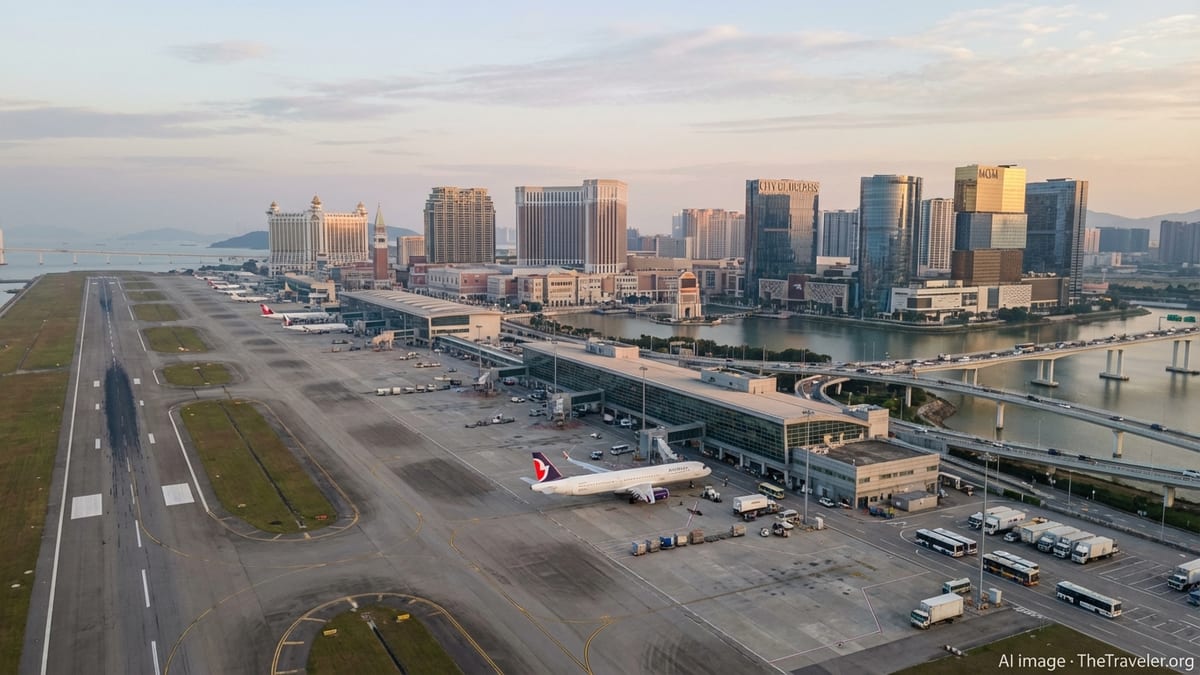
A New Law Ends a Long-Held Monopoly
From 1 February 2026, Macau’s Civil Aviation Activity Law comes into force, replacing Air Macau’s exclusive concession with a licensing regime that opens the door to additional carriers. Air Macau has been granted a new commercial air passenger transport licence valid for 20 years, but that licence will now sit alongside others rather than above them. The move formalises what officials have signalled for several years: that the era of a single designated airline controlling scheduled services in and out of Macau is over.
Air Macau’s monopoly, first granted in 1995 and extended during the pandemic, had already been slated for termination in 2020 before COVID-19 derailed liberalisation plans. With aviation demand now firmly recovered, legislators have pushed through reforms that align Macau’s small but strategically located airport more closely with the competitive markets seen in Hong Kong, Guangzhou and Shenzhen. For the government, the goal is explicit: greater connectivity, more international visitors and better integration with the booming tourism sector.
The new framework gives regulators the power to award licences to multiple passenger and cargo operators, subject to safety and service requirements. It also imposes five-year business plan obligations on Air Macau, reinforcing the expectation that the carrier must become more commercially disciplined in the face of rival airlines. In practical terms, this means that while Air Macau retains national-flag-carrier symbolism, it can no longer rely on legal exclusivity to fill its seats.
Tourism Surges While Air Travel Lags
Liberalisation arrives at a time when demand for Macau as a destination is stronger than ever. Authorities reported that the city welcomed more than 34.9 million visitors in 2024 and around 40 million in 2025, surpassing its pre-pandemic peak. The vast majority of those arrivals came via increasingly efficient land links with mainland China, particularly through Hengqin and the Border Gate, underscoring Macau’s integration into the Greater Bay Area.
Yet the boom on the ground has not fully translated into the skies. Macau International Airport handled about 7.52 million passengers in 2025, a slight decline compared with the previous year despite an increase in international routes and overseas passengers. The share of visitors arriving by air has slipped to single digits, with air arrivals accounting for a modest portion of total inbound travel compared with road and sea. This mismatch between tourism growth and aviation traffic is the backdrop against which Air Macau must reinvent itself.
For policymakers, enhanced competition is a tool to close that gap. By making it easier for foreign and regional airlines to link Macau directly with their hubs, officials hope to draw more long-haul and Southeast Asian travellers who currently route through Hong Kong or mainland airports. But it also puts Air Macau under pressure to defend and grow its portion of a market that is expanding without it, especially as new visitor segments such as families, event-goers and high-spending non-gaming tourists become a strategic focus.
Rivals from Singapore, Malaysia and Mainland China
Air Macau’s most immediate challenges do not come from across the Pacific but from its Asian neighbours. Full-service and low-cost carriers based in Singapore and Malaysia, alongside a wide array of mainland Chinese airlines, are building dense networks into southern China and the Greater Bay Area. Liberalisation of Macau’s skies increases the likelihood that some of these operators will seek more direct access to the city, either through scheduled routes or charter partnerships serving group and leisure markets.
Malaysian players are already moving. AirAsia has expanded its presence around Macau with direct and charter services, including new routes tying the city to secondary Malaysian destinations. Regional travel groups describe such connections as catalysts for deeper tourism and trade between Malaysia and China, with Macau positioned as both a gateway and a destination in its own right. As more Malaysians and Southeast Asians look beyond traditional Hong Kong itineraries, low-cost flights into Macau could prove particularly attractive.
From Singapore, competition may come less from point-to-point Macau flights and more from the city-state’s role as a powerful regional hub. Airlines such as Singapore Airlines and its affiliates can offer one-stop connections to Macau via partner carriers in mainland China or the Pearl River Delta, combining broad global reach with added frequency. For passengers choosing between routing via Hong Kong, Guangzhou, Shenzhen or Macau, the relative ease of onward air and land transfers will be critical.
Mainland Chinese airlines, meanwhile, loom largest. Carriers based in major cities such as Shanghai, Beijing and Chengdu already operate dense schedules into the Greater Bay Area and have resumed or launched services to Macau itself. As Macau attracts more international visitors and business travellers, these airlines see an opportunity to capture traffic with competitive fares and extensive domestic networks that Air Macau cannot easily match.
Air Macau’s Strategy: Partnerships, Niche Routes and Service
To survive and thrive without monopoly protection, Air Macau is leaning into partnerships and network adjustments. The airline has joined forces with regional travel and booking platforms to broaden its reach, including arrangements that allow travellers in Southeast Asia to book Air Macau services seamlessly alongside those of larger low-cost groups. Promotional campaigns have targeted key markets such as Kuala Lumpur, aiming to fill cabins with price-sensitive holidaymakers drawn by bundled fares and hotel deals.
On the network side, Air Macau has been adding and resuming routes to secondary cities in mainland China and selected points in Southeast and Northeast Asia. New and restored connections to destinations like Jinan, Cebu and Haiphong help the carrier tap into emerging tourist flows and diversify beyond the heavily contested trunk routes to Hong Kong and major mainland hubs. This strategy seeks to position Macau as an alternative gateway for travellers heading to or from these cities, with onward access to the Pearl River Delta by bus or ferry.
Service quality is another battleground. With travellers increasingly able to compare Air Macau directly against regional competitors, punctuality, in-flight standards and ground experience at Macau International Airport will matter more than before. While the airline operates a relatively small and aging narrow-body fleet, the expectation is that liberalisation and the security of a long-term licence will push management to consider renewal and cabin upgrades that bring the product closer to regional norms.
Air Macau also benefits from its local identity. For many travellers, particularly those connecting from mainland China, the flag-carrier status and direct association with Macau can be reassuring, especially when linked with government-backed marketing that bundles flights with events, gastronomy festivals and cultural offerings under the city’s tourism strategy.
What Competition Means for Fares and Connectivity
For tourists from Singapore, Malaysia and China, the most immediate impact of liberalisation and rising competition is likely to be on fares and route choice rather than safety or basic reliability. As more airlines compete to bring visitors into Macau, price promotions, seasonal discounts and package deals should become more common, especially outside peak holiday periods. Low-cost carriers in particular may use aggressive pricing on new Macau routes to quickly build market share.
Connectivity is set to improve as well. Travellers from Southeast Asia could see more direct or one-stop Macau options that do not require transiting through Hong Kong, reducing overall journey time and simplifying visa considerations where applicable. Chinese tourists from interior provinces may gain access to additional point-to-point flights into Macau or convenient same-day connections via nearby hubs, complementing the already strong flow of visitors arriving overland.
However, liberalisation does not automatically guarantee a permanent fare war. Capacity into a relatively small airport like Macau is constrained by slots, infrastructure and the need for airlines to remain profitable. Over time, some marginal routes may be tested and withdrawn if demand disappoints, leaving a more stable set of connections where price competition is present but less dramatic. Travellers planning trips several months ahead should still compare options across carriers and nearby airports before locking in flights.
Another likely outcome is greater variety in schedule patterns. As new operators enter, early-morning and late-night departures could become more common, aligning Macau with the 24-hour rhythms of neighbouring hubs. This may benefit short-break visitors from Singapore or Kuala Lumpur who want to maximise time on the ground while keeping hotel nights to a minimum.
Choosing Between Hong Kong, Zhuhai and Macau
The broader reality for most tourists is that Macau competes not only through its own airport but as part of a regional web of gateways. Many visitors from Singapore and Malaysia today still fly into Hong Kong or Guangzhou and connect by high-speed ferry, bus or bridge to reach Macau. Liberalisation will test whether more of that traffic can be captured directly by Macau International Airport or whether the city continues to rely heavily on neighbouring hubs.
For budget-conscious travellers, the decision often comes down to total trip cost and time. If low-cost carriers continue to offer significantly cheaper fares into Hong Kong or Shenzhen, many tourists may opt for a slightly longer ground transfer to Macau rather than pay a premium for direct arrival. Others may appreciate the chance to combine multiple cities in one trip, splitting time between Hong Kong’s shopping districts and Macau’s resorts, regardless of where they first land.
Business travellers and event delegates are more sensitive to schedule reliability and the convenience of arriving directly in Macau, particularly for conferences, exhibitions and performances centred on the Cotai Strip. For this segment, improved air services into Macau may tip the balance away from Hong Kong or Guangzhou, especially if airlines can guarantee efficient connections and baggage handling on complex itineraries.
Mainland Chinese visitors, who already account for a large majority of arrivals, will increasingly see air as just one of several options alongside high-speed rail and cross-border buses. Liberalisation may therefore play a larger role in shaping how international tourists from Southeast Asia, Europe and beyond access Macau than in altering travel patterns for residents of neighbouring Guangdong.
Practical Tips for Travellers Planning a Macau Trip
For tourists planning to visit Macau in the next two to three years, the evolving aviation landscape calls for a slightly more strategic approach to booking. Travellers from Singapore and Malaysia should monitor the offerings of both Air Macau and low-cost carriers based in Kuala Lumpur, Penang or Singapore, as new routes and promotional fares are likely to appear and change quickly while airlines test the market. Comparing fares into Macau, Hong Kong and nearby mainland airports can reveal significant savings, particularly during shoulder seasons.
Because airlines may adjust Macau capacity as competition intensifies, flexibility can be an asset. Those comfortable with connecting through regional hubs such as Singapore, Kuala Lumpur or major Chinese cities could find more options and better prices, while travellers with fixed dates or tight schedules may prefer to pay a premium for non-stop services where available. It is also wise to pay attention to arrival times at Macau International Airport: late-evening landings can limit onward ground transport choices, especially for visitors continuing immediately to Hengqin or Zhuhai.
Visitors should also be aware that Macau’s tourism authorities are actively working with airlines to bundle flights with hotel stays, shows and attractions. Package deals sold through major travel platforms can sometimes undercut stand-alone airfares, particularly for group travel from Southeast Asia. For independent travellers who value flexibility, booking flights early while leaving accommodation slightly more open can strike a balance between cost and choice as new discounts emerge.
For Chinese tourists within the Greater Bay Area, the impact may be more subtle. With land crossings already efficient and frequent, air liberalisation will add options for those coming from farther afield within China, while reinforcing Macau’s status as one of several interchangeable gateways for domestic journeys that mix air, rail and road.
Risks, Uncertainties and the Outlook for Air Macau
Even as liberalisation promises more choice for tourists, it introduces new uncertainties for Air Macau and the broader aviation market. Global economic headwinds, currency fluctuations and shifting travel preferences could complicate efforts to grow air traffic in line with surging visitor numbers. A downturn in discretionary spending, for example, might encourage travellers to cross into Macau overland from nearby Chinese cities rather than book flights directly into the territory.
For Air Macau, the end of monopoly protection is a double-edged sword. On one hand, the airline now has clarity in the form of a 20-year licence and the opportunity to participate in a larger, more dynamic marketplace. On the other, it must contend with leaner low-cost competitors and deep-pocketed full-service airlines that can afford to sustain promotional fares and experimental routes. The carrier’s response in terms of fleet renewal, route selection and digital sales will determine whether it can defend a meaningful share of Macau-bound traffic.
Regulators face their own balancing act. They must encourage competition without overwhelming the airport’s capacity or undermining the financial stability of essential operators. Slot allocation, infrastructure investment and coordination with tourism campaigns will be crucial to ensure that liberalisation translates into tangible benefits for visitors rather than confusion or congestion.
For tourists, the most likely scenario over the medium term is a more varied menu of flight options into a destination that continues to grow in popularity. Whether Air Macau remains the default choice or becomes one of several equally viable options will depend on how successfully it navigates this pivotal transition. What is clear is that Macau’s skies are no longer the domain of a single carrier, and that shift is poised to reshape how the city welcomes the world.