

More news on this day
Canada has quietly added the United States to a growing roster of low-risk destinations under a Level 1 travel advisory, while simultaneously warning citizens about heightened security sensitivities and increasingly complex passport and entry rules that could affect everything from snowbird getaways to Caribbean cruises and transatlantic city breaks.
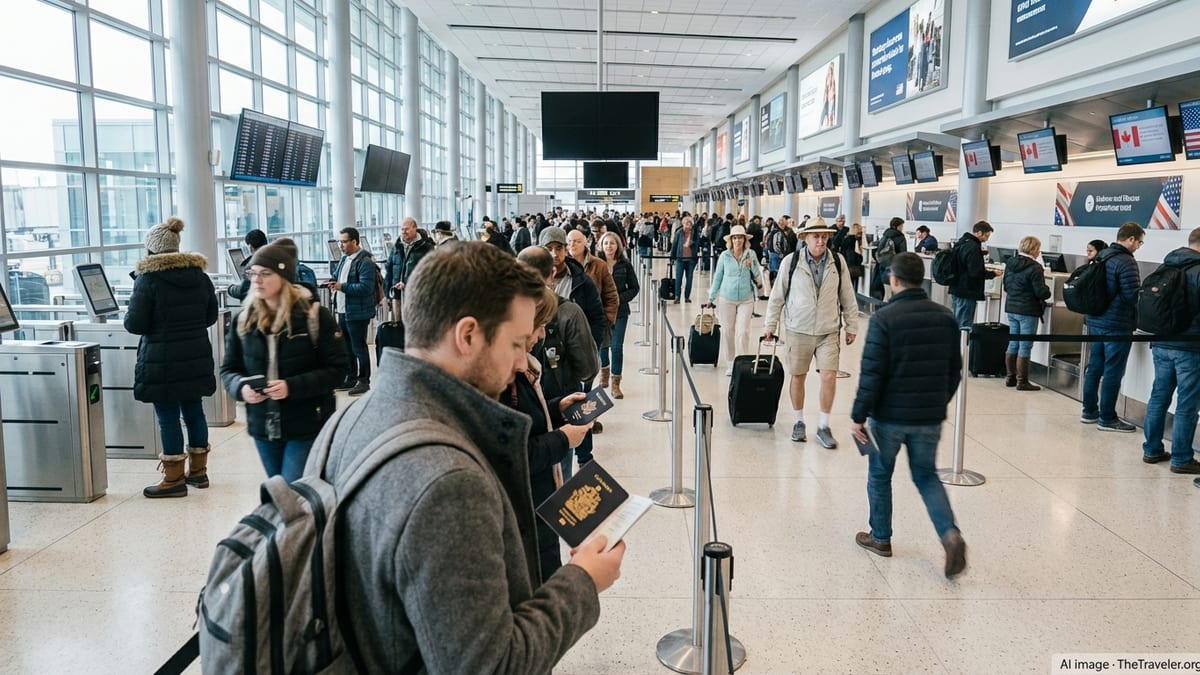
United States Joins Group of Low-Risk Destinations
In its latest update to Travel Advice and Advisories, Ottawa now places the United States in the same baseline risk category as Greenland, Saint Lucia, Barbados, Poland, Ireland and Saint Kitts and Nevis under a Level 1 advisory, described as a call to exercise normal security precautions. This is the lowest warning level used by the Canadian government and indicates that, in broad terms, travel can proceed as planned while remaining alert to local conditions.
Grouping the United States with traditionally low-risk destinations is notable given the volume of cross-border movement. Before the pandemic, more than 20 million trips were made annually between the two countries, and traffic has been rebounding strongly. Officials stress that a Level 1 label does not mean an absence of risk, but rather that current threats are not judged severe enough to warrant stronger warnings.
The inclusion comes as Canada undertakes a broader recalibration of its global advisory system, periodically reviewing countries and territories to reflect shifts in security, health and political stability. Several European and Caribbean destinations popular with Canadian vacationers, such as Ireland, Barbados and Saint Lucia, currently share the same Level 1 baseline, though Ottawa continues to spotlight specific local issues that travelers should monitor.
Security Environment: Low-Level Advisory, Higher Sensitivities
Despite the low overall rating, Canadian officials have been steadily expanding the fine print related to travel in the United States and other Level 1 countries. Updates over the past year highlight concerns about shifting immigration enforcement, protests around polarizing political events and a patchwork of local laws that can significantly affect visitors depending on where they travel and why.
Advisories emphasize that security risks are not uniform across the United States. While most popular tourism corridors and cross-border hubs function normally, travelers are urged to stay informed about demonstrations, large political gatherings and major sporting events that can draw a heavy law-enforcement presence. Authorities suggest that visitors monitor local news, follow instructions from security personnel and avoid confrontations with protest groups.
Canada has also drawn attention to the broad discretion afforded to United States border and immigration officers, an issue that has periodically surfaced in public debate when Canadians are denied entry or face lengthy secondary screening. Officials reiterate that decisions on admissibility rest solely with United States authorities and cannot be overturned by Canadian diplomats, even in cases involving long-time snowbirds or business travelers.
Complex Passport Rules and the Challenge of Dual Citizenship
Alongside the updated risk assessments, Global Affairs Canada and Immigration, Refugees and Citizenship Canada are devoting increasing space to entry rules on both sides of the border, particularly for travelers holding more than one nationality. The government reminds Canadians that many countries, including the United States, apply different rules to people they regard as their own citizens, irrespective of any Canadian passport they may carry.
Dual nationals of Canada and the United States are strongly encouraged to carry both passports when crossing the border, even though American authorities do not always explicitly require it. Canadian guidance warns that presenting the appropriate passport at each checkpoint can streamline questioning, help avoid confusion about residency or tax status and reduce the risk of being turned back or delayed at secondary inspection.
Canadians who unknowingly hold another citizenship through parents or ancestry may also encounter unexpected obligations abroad, ranging from mandatory military service to restrictions on consular assistance. Ottawa’s advisory pages now spell out in greater detail that some countries do not recognize dual citizenship and may treat Canadian travelers solely as nationals of that state, limiting Canada’s ability to intervene in disputes or detentions.
New Scrutiny Around Gender Markers and Identity Documents
One of the most sensitive recent changes concerns travelers with passports that carry an X gender marker. Canada has allowed citizens to choose an X designation on passports and other official documents for several years, but it now warns that such markers may not be recognized by all foreign authorities, including in the United States.
Updated guidance indicates that travelers with nonbinary identifiers could face extra questioning, delays or, in some cases, refusal of entry if border systems or regulations at their destination do not accommodate an X option. The advisory urges these travelers to carry supporting documentation, allow additional time at airports and consider potential complications when transiting through the United States en route to third countries.
Canadian officials stress that while Canada recognizes and supports diverse gender identities in its own documentation, it cannot guarantee how those documents will be treated at foreign borders. The issue is particularly acute where domestic legal changes or court challenges in partner countries have created uncertainty for airlines and immigration officers tasked with checking passenger manifests against government databases that may only accept male or female markers.
Caribbean and European Hotspots Remain Low Risk but Rule-Heavy
The same advisory cycle that placed the United States in the Level 1 category reiterates that favorite Canadian holiday destinations such as Saint Lucia, Barbados, Saint Kitts and Nevis, Ireland and Poland also remain rated at the lowest risk tier. For winter-weary travelers, that is a reassuring signal that beach resorts, historic city centers and cruise calls are expected to operate normally in the coming peak seasons.
Yet Ottawa’s travel pages also underscore that relaxed risk levels do not translate into relaxed documentation requirements. Several Caribbean islands now operate advanced passenger information systems and pre-arrival authorization programs that rely heavily on machine-readable, biometric passports. In Europe, tightening external border rules and new entry-exit tracking tools mean that data such as prior overstays or past visa refusals can surface quickly during routine checks.
For Ireland and Poland, both members of the European Union’s border framework, the emphasis falls on respecting short-stay limits, carrying proof of onward travel and being prepared to explain accommodation plans, even when no visa is required. In the Caribbean, visitors are often asked to show return tickets and in some cases evidence of sufficient funds or hotel reservations, all of which should match the details entered on arrival forms.
Electronic Travel Authorizations, Visas and Changing Exemptions
Canada’s own electronic travel authorization system has become an important part of the advisory conversation, because many of the countries listed with Level 1 risk ratings enjoy streamlined access to Canada but must still navigate pre-screening rules. Citizens of Barbados and several European states, for example, need an electronic authorization to board flights to Canada, even though they do not require a traditional visa for short stays.
At the same time, policy shifts affecting foreign nationals traveling in the other direction are complicating the picture for Canadians and their families. While United States citizens continue to be exempt from Canada’s authorization requirement, travelers from third countries who hold United States residency or visas are facing a more intricate patchwork of eligibility rules. Advisory updates urge all visitors to verify whether they need an authorization, visa or waiver well before travel and to rely only on official government portals.
Canadian authorities caution that possessing a valid authorization or visa does not guarantee admission at the border. Officers in both Canada and partner countries must still be satisfied that visitors meet health, security and financial criteria and intend to leave at the end of their permitted stay. Travelers are advised to carry documentation supporting their travel purpose, including conference invitations, business letters, proof of enrollment or evidence of family ties back home.
Heightened Enforcement and the Risk of Being Turned Away
Even within apparently low-risk destinations, heightened enforcement of immigration and customs rules has become a recurring theme in travel advisories. In the United States, for example, Canadian travelers may be questioned in detail about the length of their stay, their employment status and their access to funds. Ottawa notes that authorities have been increasingly diligent in scrutinizing visitors who appear to be using repeated tourist entries to live, work or study without proper status.
Advisories warn that travelers who overstay or breach the terms of their entry in any Level 1 country can face serious consequences, including immediate removal, future entry bans and, in some cases, detention. That message is directed not only at backpackers and working holidaymakers, but also at retirees and remote workers whose stays can blur the line between tourism and residence.
Canadian travelers are urged to keep written records of entry stamps, authorized periods of stay and any correspondence with immigration officials. If circumstances change and a longer stay becomes necessary, the preferred course is to apply for an extension or a new status through official channels rather than hoping that leniency will be granted at the border on departure or re-entry.
What Travelers Should Do Before They Go
Officials are using the latest advisory updates to encourage a more proactive approach to trip planning, even for destinations that appear in the lowest risk category. Travelers heading to the United States, Greenland, the Caribbean or Europe are urged to verify their passport validity, check whether their names, gender markers and birth dates are consistent across travel documents and ensure that they understand the entry rules that apply to their specific citizenship and residency status.
Canadians with dual nationality or complex family circumstances are encouraged to seek information well in advance of departure, particularly when traveling with children who may have rights or obligations in more than one country. Guidance suggests carrying custody documents, consent letters from non-traveling parents and copies of birth certificates that clarify relationships, as many border agencies scrutinize adult travelers accompanying minors more closely than in the past.
Finally, despite the Level 1 designation for the United States and several other popular destinations, Ottawa continues to recommend that travelers register their trips online, purchase comprehensive travel insurance and keep emergency contact details accessible while abroad. The underlying message is that while global travel is very much open for business, the rules governing who can cross a border, on what terms and with which documents have rarely been more intricate.