

More news on this day
Canada and Japan are stepping up efforts to redirect tourists away from crowded hotspots and toward lesser known regions, backing a campaign that offers free regional flights within Japan to eligible Canadian travelers and highlights a growing push to showcase the country’s hidden gems.
Get the latest news straight to your inbox!
A New Cross-Pacific Push to Redistribute Tourism
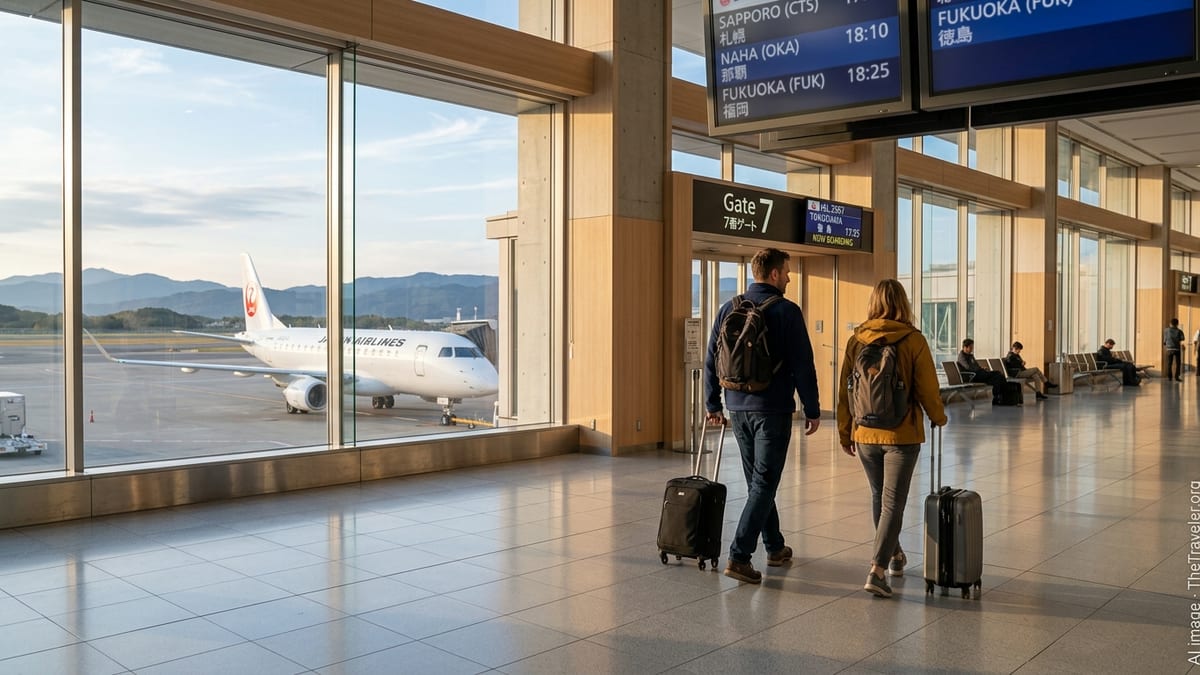
The latest initiative builds on a broader collaboration between Canadian travel partners and Japanese tourism bodies to expand access to regional Japan. Publicly available information shows that Canadian travelers who book round trip international itineraries to Japan on Japan Airlines can now receive a complimentary domestic sector within the country, effectively turning a single long haul trip into a multi destination journey across Japan’s archipelago.
Reports indicate that this free flight offer is designed to support a long running objective known within Japan’s tourism strategy as regional circulation. Rather than concentrating visitors around Tokyo, Kyoto and Osaka, the program encourages travelers to use domestic air routes to reach secondary cities and rural prefectures that have traditionally seen far fewer international arrivals.
Travel trade coverage in Canada describes the campaign as a way to reduce the friction and cost of adding an extra stop within Japan. By bundling the domestic leg into the same reservation as the transpacific flight, Canadian visitors are able to connect onward to regional airports without a fare surcharge on the internal sector, as long as they meet eligibility conditions such as booking on a single ticket.
The move comes as Japan posts record visitor numbers, with government data cited in Japanese airline and tourism releases pointing to foreign arrivals surpassing pre pandemic highs. At the same time, officials have documented mounting pressure on a narrow set of famous districts and landmarks, prompting new efforts to disperse travelers more evenly.
How the Free Regional Flights Work
According to airline and travel trade documentation, the free domestic flight component is available to Canadian residents who purchase a qualifying international ticket to Japan with Japan Airlines and add an internal flight segment under the same booking reference. Separate domestic tickets booked later are not eligible, which means travelers need to plan their onward journey at the time of purchase.
The complimentary sector is offered across a large domestic network that spans more than 60 airports and over 100 routes, connecting gateway cities such as Tokyo and Osaka with destinations from Hokkaido in the north to Okinawa in the south. Travel industry summaries note that the domestic leg functions as a stopover-style add on rather than a short transfer, allowing visitors to spend time exploring their chosen region.
While full fare rules vary by ticket type and point of sale, publicly available guidance indicates that travelers must hold non Japanese passports and reside in designated overseas markets, including Canada, for the offer to apply. Some coverage also points to restrictions on extended stays in the initial gateway city before taking the free segment, a measure intended to nudge visitors onward to regional airports.
Industry observers are positioning the free flights as an air based counterpart to Japan’s well known rail passes for foreign tourists. Instead of relying solely on shinkansen or limited express services, travelers can now pair a long haul itinerary with an internal flight that quickly covers large distances, particularly useful for island destinations and remote coastal regions.
Opening the Door to Japan’s Lesser Known Destinations
Japanese tourism campaigns referenced in airline press materials frequently invoke the idea of hidden gems, promoting destinations that remain unfamiliar to many first time visitors. Examples include the snow bound landscapes and ski resorts of Hokkaido, the dramatic sand dunes of Tottori on the Sea of Japan coast, and the subtropical islands of Okinawa with their coral reefs and distinct Ryukyu heritage.
Other spotlighted regions range from Niigata’s rice terraces and sake breweries to Tokushima’s vine bridges and river gorges on Shikoku. Travel marketing targeted at the Canadian market also highlights rural onsen towns, lesser known castle cities, and art islands along the Seto Inland Sea as beneficiaries of improved air connectivity from major hubs.
Tourism boards and private sector partners have been layering new itineraries and packages onto these routes. Recent Japanese announcements describe collaborations between Japan Airlines, major travel companies and resort operators that bundle regional flights with stays at traditional ryokan or nature focused properties, positioning the free flight as the initial gateway to deeper cultural and outdoor experiences.
For communities outside the established Golden Route, the campaign is framed as a chance to capture more overnight stays and tourism spending while spreading the benefits of Japan’s visitor boom. Local governments and operators in these areas have invested in multilingual signage, upgraded trail infrastructure and new cultural programming to be ready for a potential surge in overseas guests.
Tackling Overtourism While Supporting Local Economies
Overtourism in marquee destinations has become a central policy concern for Japan as visitor numbers climb. Public data cited in recent Japanese tourism surveys show that a small group of prefectures, including Tokyo, Osaka, Kyoto, Hokkaido and Fukuoka, account for a majority share of international overnight stays, leaving other regions comparatively under visited.
By tying free domestic flights to international arrivals from markets such as Canada, Japanese stakeholders are seeking to rebalance that distribution. The program supplements other measures, including promotional websites focused on regional travel by air, ferry and rail, and targeted campaigns encouraging visitors to explore beyond major city centers at different times of year.
For Canadian travelers, the initiative aligns with a growing appetite for slower, more immersive trips centered on food, nature and local culture. Trade coverage points to strong interest in multi stop itineraries that combine a few days in Tokyo with time in lesser visited prefectures, especially during shoulder seasons when crowds are thinner and prices can be lower.
Travel economists suggest that shifting even a fraction of long haul visitors into regional circuits can have outsized economic effects. Increased occupancy in small inns, higher demand for local guides, and new markets for artisanal food and craft producers may contribute to rural revitalization efforts, particularly in areas facing aging populations and declining domestic tourism.
What Canadian Travelers Should Know Before Booking
Consumer facing information from airlines and tourism partners emphasizes that the free regional flight is not an open ended air pass but a one segment benefit linked to a specific qualifying ticket. Travelers are encouraged in public guidance to confirm eligibility conditions, including residency, booking channels and permitted routes, before finalizing their plans.
Because the offer is tied to flights marketed by Japan Airlines, availability may vary by departure city in Canada and by season. Industry analysts note that peak travel periods such as cherry blossom season and year end holidays often see heavier demand across both international and domestic services, which could limit seat options on popular regional routes if travelers book late.
Travel planners also advise paying attention to airport combinations and minimum connection times. Some itineraries may involve arriving at one Tokyo airport and departing from another or connecting through Osaka, which can affect same day transfer plans. In addition, weather related disruptions in winter, particularly in northern regions like Hokkaido and the Tohoku coast, can occasionally impact domestic schedules.
Even with these caveats, Canadian tour operators and online travel agencies are already incorporating the complimentary segments into sample itineraries and promotional packages. As awareness grows, the Canada Japan initiative around free regional flights is likely to play an increasingly prominent role in how first and second time visitors design trips that reach far beyond Japan’s best known city skylines.