

More news on this day
Canada and Japan are deepening tourism ties through new free regional flight offers that make it easier for Canadian visitors to pair transpacific trips with explorations of Japan’s lesser known corners.
Get the latest news straight to your inbox!
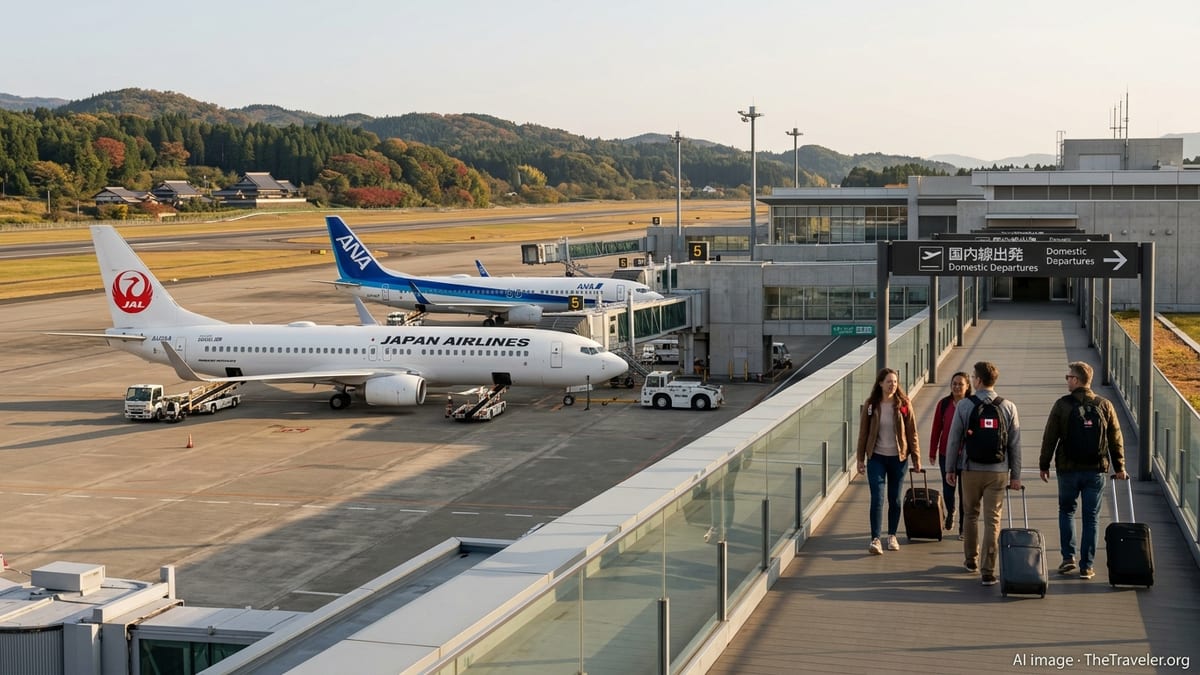
Free Domestic Flights Become a Key Tourism Tool
Publicly available information from Japanese tourism and airline campaigns shows that complimentary domestic flights are emerging as a central incentive in Japan’s strategy to spread visitors beyond the country’s busiest gateways. Japan Airlines has introduced offers that grant international passengers a free one way flight within its domestic network when they book a qualifying long haul ticket, including routes originating in Canada. Separate reporting on All Nippon Airways details a similar concept for travellers from the United Kingdom and Europe, signalling a broader shift in how Japan uses air connectivity to manage tourism flows.
For Canadian travellers, promotional material indicates that booking an international ticket to Japan on Japan Airlines can unlock a no fare domestic leg to destinations across the carrier’s network, from Hokkaido in the north to Okinawa in the south. Taxes and fees still apply, and the free sector must be issued on the same itinerary as the transpacific flight, but the base fare on the regional hop is set to zero. Travel trade coverage notes that the initiative has been positioned as a way to encourage visitors from Canada to go beyond Tokyo or Osaka and build multi stop trips at a lower overall cost.
These Japan based incentives sit alongside the wider recovery in air capacity between Canada and Japan. Schedules show that non stop services linking Canadian gateways such as Vancouver and Toronto with Tokyo have been rebuilt after the pandemic, giving travellers more options for pairing a transpacific journey with domestic sectors that reach secondary cities, hot spring regions and island chains that rarely appear on first time itineraries.
A Joint Focus on Overtourism and Regional Revitalisation
Japan’s embrace of free domestic flights is closely tied to concerns about overtourism in marquee destinations. Visitor statistics compiled by Japanese agencies and cited in recent coverage indicate that the country welcomed a record number of international arrivals in 2024, surpassing pre pandemic highs and placing renewed pressure on districts in Tokyo, Kyoto and Osaka. At the same time, government and industry surveys show that while most visitors express interest in regional areas, only a fraction actually ventures far from the main cities.
Canada’s role in this picture is significant. Canadian travellers are considered valuable long haul visitors, tending to stay longer and spend more per trip than some regional markets. By giving this audience easier access to regional airports via complimentary flights, Japanese tourism planners aim to direct a portion of that spending toward rural prefectures and smaller cities that have been working to revive local economies through tourism. Official documents outlining Japan’s tourism strategy highlight regional revitalisation and dispersion of visitor flows as core objectives through the mid 2020s.
The free flight initiatives therefore function as a bridge between national policy goals and airline network strategy. Carriers gain an appealing differentiator on competitive North Pacific routes, while communities outside the main tourist corridors gain a realistic chance of attracting Canadian visitors who might otherwise remain in Tokyo and Kyoto. Analysts following the industry suggest that such incentives can also help balance seasonal peaks, for example steering winter travellers toward snow resorts in Tohoku or Hokkaido rather than concentrating solely on urban sightseeing.
How the Free Flight Offers Work for Canadian Travellers
Details compiled from airline announcements and trade press show that the mechanics of the free flight offers are relatively straightforward, though subject to conditions and availability. For campaigns focused on Canada, travellers typically need to purchase a round trip or qualifying international ticket to Japan on the participating carrier. During the booking process, they can then add a domestic segment on the same reservation, selecting from cities across the airline’s Japanese network.
In many cases, the base fare for that domestic leg is waived, while taxes, airport charges and any applicable fuel surcharges remain payable. Some promotions include restrictions on stopover length, with additional surcharges applying if a traveller remains in a connecting city for more than a defined number of hours. Codeshare flights and award tickets are often excluded, and seat inventory for the complimentary sectors may be limited on peak dates or heavily trafficked routes.
For Canadian travellers planning complex itineraries, the structure of these offers effectively turns Japan’s domestic network into an extension of the transpacific fare. Instead of buying a separate ticket to reach regions such as Kyushu, Shikoku or remote island chains, eligible visitors can roll that journey into a single booking and focus on aligning dates and routes. Travel advisors in Canada have been promoting the offers as a way to reduce the cost barrier associated with reaching smaller airports that would normally require pricey add on flights.
Opening Doors to Japan’s Hidden Gems
The expansion of free domestic flight campaigns has practical implications for lesser known parts of Japan that are eager to welcome more international guests. Destination marketing organisations and local governments from Hokkaido to Okinawa have spent recent years developing English language signage, upgraded transport links and new tourism products, yet have often struggled to gain visibility against household name sites in Tokyo or Kyoto. By eliminating the base fare on at least one domestic leg, the new offers give curious travellers a concrete prompt to add a side trip beyond the usual circuit.
Regions that stand to benefit include the hot spring towns and rural landscapes of Kyushu, the art islands of the Seto Inland Sea, and coastal communities along the Sea of Japan that see far fewer foreign visitors than their Pacific side counterparts. In many of these places, small scale guesthouses, family run ryokan and locally owned tour operators see international tourism as a way to stabilise employment and preserve cultural practices that might otherwise fade. The ability for a Canadian visitor to reach such destinations without paying an additional domestic fare could make the difference between a two city trip and a multi region journey.
The campaigns also encourage slower, more immersive travel that aligns with current trends among long haul visitors from Canada. With the cost of internal flights reduced, travellers can allocate more of their budget to experiences such as onsen stays, regional cuisine, cycling tours and cultural workshops hosted by local communities. Industry observers note that this type of spending tends to have a higher local impact than quick visits to crowded urban landmarks, reinforcing the policy objective of spreading tourism benefits more evenly across the country.
What the Initiative Signals for Future Canada Japan Travel
The growing use of free regional flights as a promotional tool suggests that cooperation between Canada and Japan on tourism is entering a more targeted phase. Instead of focusing solely on restoring seat capacity and visitor numbers, both sides are increasingly attentive to where within Japan Canadian travellers spend their time and money. Air service agreements, marketing partnerships and destination campaigns are being designed with an eye toward dispersal, sustainability and year round demand rather than short term volume gains.
Industry commentary points out that Japan’s approach is being watched by other destinations facing similar overtourism challenges, and that Canada’s inclusion among the markets eligible for complimentary domestic flights reflects its importance as a stable, high value source of visitors. If the current offers prove successful in nudging travellers toward lesser known areas, analysts expect to see refinements such as seasonal route targeting, tie ins with regional rail passes, and collaborative campaigns that spotlight specific prefectures to the Canadian market.
For now, the presence of these offers gives Canadian travellers a timely opportunity to rethink how they structure a trip to Japan. Instead of treating domestic flights as a costly add on, eligible visitors can use them as an invitation to explore hidden gems across the archipelago, from coastal fishing towns and mountain onsen villages to island art hubs and volcanic landscapes. The result is a model of cross border collaboration that seeks to balance booming demand with a more thoughtful, geographically diverse style of travel.