

More news on this day
Canada is facing mounting travel disruption and growing concern over building safety as a powerful late-winter storm dumps deep, heavy snow across key population corridors, raising the risk of roof damage and localized infrastructure failures just as the busy spring break travel period gets underway.
Get the latest news straight to your inbox!
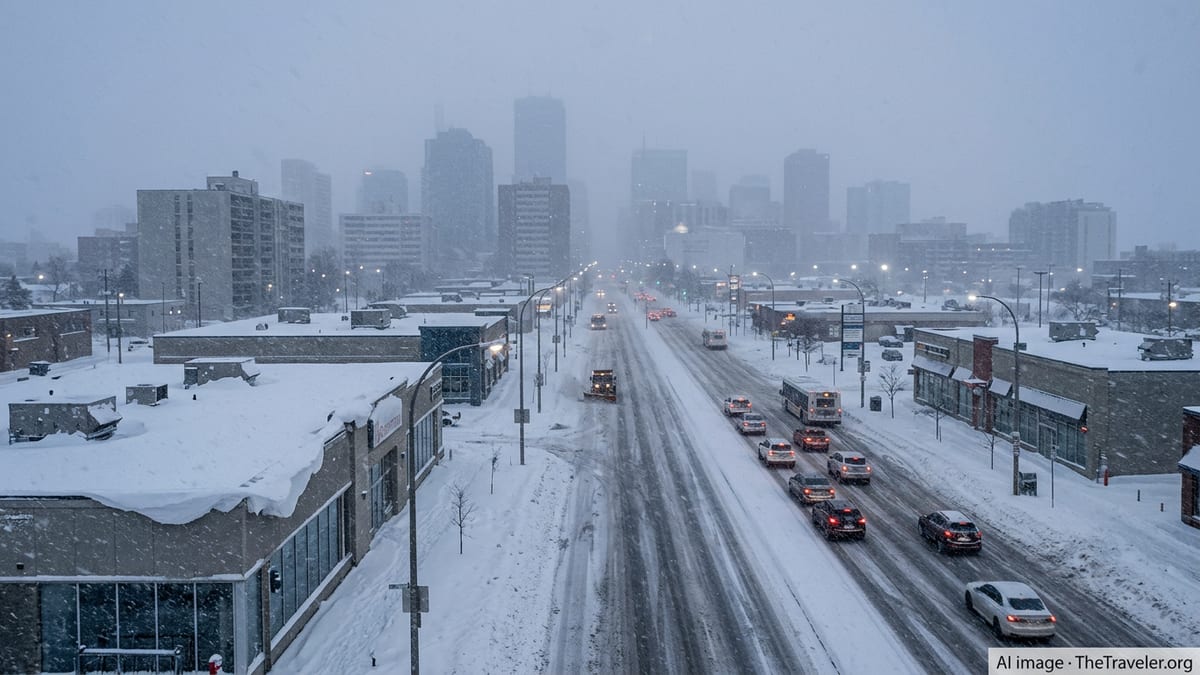
Storm System Slams Key Travel Corridors
A sprawling winter weather system is tracking across Canada, combining heavy, moisture-laden snow with gusty winds and rapidly changing temperatures. Forecast discussions from national meteorological services and regional alerts indicate that the most acute impacts are being felt along heavily populated corridors in Ontario and Quebec, the Atlantic provinces, and select parts of the Prairies where bands of intense snow are setting up.
Reports indicate that snowfall totals in some communities are already rivaling or surpassing earlier storms this season, with localized amounts climbing due to lake-enhanced bands and stalled frontal boundaries. In several urban areas, snow has arrived after a stretch of relatively mild weather, creating slushy, compacting accumulations that add significant weight to roofs and overhead structures.
Publicly available aviation data and airline advisories show mounting delays and cancellations at major Canadian hubs as the storm reduces visibility and complicates de-icing operations. Secondary airports and regional carriers have been particularly affected where shorter runways, limited equipment, and crew availability make it harder to maintain schedules in near-continuous snowfall.
On the ground, highway agencies and municipal transportation departments are reporting slow-going conditions amid persistent snow and blowing drifts. Sections of major highways in Ontario, Quebec, and the Atlantic region have seen reduced speed limits and intermittent closures, especially in open rural stretches where crosswinds and whiteouts are common.
“Snow Apocalypse” Fears Focus on Roof Load and Structural Safety
Beyond immediate travel headaches, the storm’s signature risk is the accumulation of heavy, wet snow on roofs, parking structures, and aging commercial buildings. Technical bulletins from Canadian insurers and risk-management groups published over recent winters have repeatedly highlighted how dense snow, ice crusts, and trapped meltwater can combine to exceed design loads, particularly on flat or low-slope roofs.
Recent guidance from Canadian insurance associations and building risk specialists describes snow load as a cumulative hazard, where successive storms without significant melt periods can push structural systems toward their limits. Case studies referenced in these materials show that even buildings constructed to modern codes can experience distress when snow is layered with ice and rain, especially around rooftop mechanical units, parapets, and areas with poor drainage.
Published coverage of past severe winters in Eastern Canada documents a pattern of partial roof failures and collapses involving warehouses, barns, older arenas, and retail buildings after prolonged episodes of heavy snow. In several instances, observers reported telltale signs such as sagging ceilings, interior cracking, or unusual structural noises in the hours or days before a failure, underscoring the importance of early detection and proactive snow removal.
With the current storm arriving late in the season and depositing particularly wet, compacting snow in some regions, safety advisories circulating in the public domain are urging building owners, managers, and condo boards to pay close attention to roof conditions, drainage outlets, and any visible signs of strain.
Travel Disruption: What Air, Rail, and Road Passengers Can Expect
For travelers, the immediate effects of the storm are already evident. Airline status dashboards for Canada’s largest airports show waves of delays, with knock-on impacts expected to ripple through the network over the next 24 to 48 hours. Even where runways remain open, crews face extended turnaround times as aircraft undergo repeated de-icing and ground operations slow under low visibility and slick surfaces.
Rail passengers are seeing similar disruptions as passenger and freight operators contend with snow-clogged switches, reduced speeds, and occasional power or signaling issues along exposed stretches of track. In previous severe storms, published reports have documented multi-hour delays and, in some corridors, the substitution of bus service when tracks became temporarily impassable.
Motorists across affected provinces are being warned of rapidly deteriorating road conditions as fresh snow covers earlier plow passes and drifting reduces sightlines. Transportation updates from provincial agencies and local police services frequently highlight a surge in minor collisions and vehicles sliding off roads during comparable events, even where overall snowfall totals are modest.
Travelers with flexible plans are being advised in publicly shared guidance to consider postponing non-essential journeys, build in additional buffer time, and monitor real-time conditions through airline notifications, transit alerts, and provincial road condition services before setting out.
How Snow Load Builds and Why Some Roofs Are at Higher Risk
Technical documents on winter risk in Canada emphasize that not all snow is equal from a structural perspective. Light, powdery snow imposes less load per centimetre than dense, wet snow or snow that has partially melted and refrozen. When storms arrive with temperatures hovering near freezing, the resulting accumulation can be far heavier, especially if combined with rain or ice pellets.
Flat and low-slope roofs, which are common on commercial plazas, industrial buildings, and modern infill housing, tend to be more vulnerable because they allow snow to accumulate in deeper, more uniform layers. Design details such as parapets, rooftop patios, solar panels, and mechanical penthouses can create drifts and localized piles that add significant, uneven weight to specific structural elements.
Risk bulletins from Canadian engineering and insurance organizations describe a number of warning signs that can indicate excessive snow load, including new cracks in walls or ceilings, doors and windows that suddenly stick, unexpected interior leaks, or audible groans and creaks from structural members. In past winters, publicly reported incidents of roof failure in Canada and the northern United States often occurred after a sequence of storms in which snow was not adequately cleared and melt-freeze cycles created dense, layered slabs.
Guidance available to property owners stresses safe snow-removal practices, recommending that only qualified personnel work at height and that removal be carried out in a way that avoids creating unbalanced loads or damaging roof membranes. The current storm is renewing attention on those recommendations, particularly among owners of older commercial buildings, farm structures, and large-span roofs.
Practical Advice for Travelers and Property Owners
With the storm still working its way across the country, travelers are being encouraged by publicly shared advisories to adopt a cautious and flexible approach. For air passengers, that means checking flight status repeatedly before leaving for the airport, packing essentials in carry-on luggage in case of overnight disruptions, and being prepared for long lines at rebooking desks as operations recover.
Those traveling by road are being urged to equip vehicles with full winter kits, including blankets, food, water, and charged mobile devices, in addition to winter tires and adequate fuel. Provincial guidance from previous severe storms highlights the value of avoiding non-essential driving during the peak of heavy snow and whiteout conditions, when plows and emergency services may struggle to keep up.
For homeowners and building managers, the focus is on vigilance and prevention. Insurance and risk-management publications recommend visually checking roofs from the ground for unusually deep accumulations, ensuring that downspouts and roof drains are clear of ice, and monitoring interior spaces for any signs of distress. Where snow removal from roofs is necessary, experts advise using professional contractors with fall protection and knowledge of local building practices.
As Canada rides out what some residents are describing as a late-season snow apocalypse, the combination of disrupted travel and heightened concern over structural safety is a reminder of how closely the country’s transportation networks and built environment are tied to the volatility of winter weather. For now, the focus remains on staying mobile only when necessary and keeping people, homes, and critical infrastructure safely ahead of the storm’s heaviest impacts.