

More news on this day
Canada has joined Singapore, the United States, Britain, Morocco and South Africa in a loosely coordinated "spring bloom" push, as tourism boards and travel brands spotlight floral seasons to lure nature focused visitors in 2026.
Get the latest news straight to your inbox!
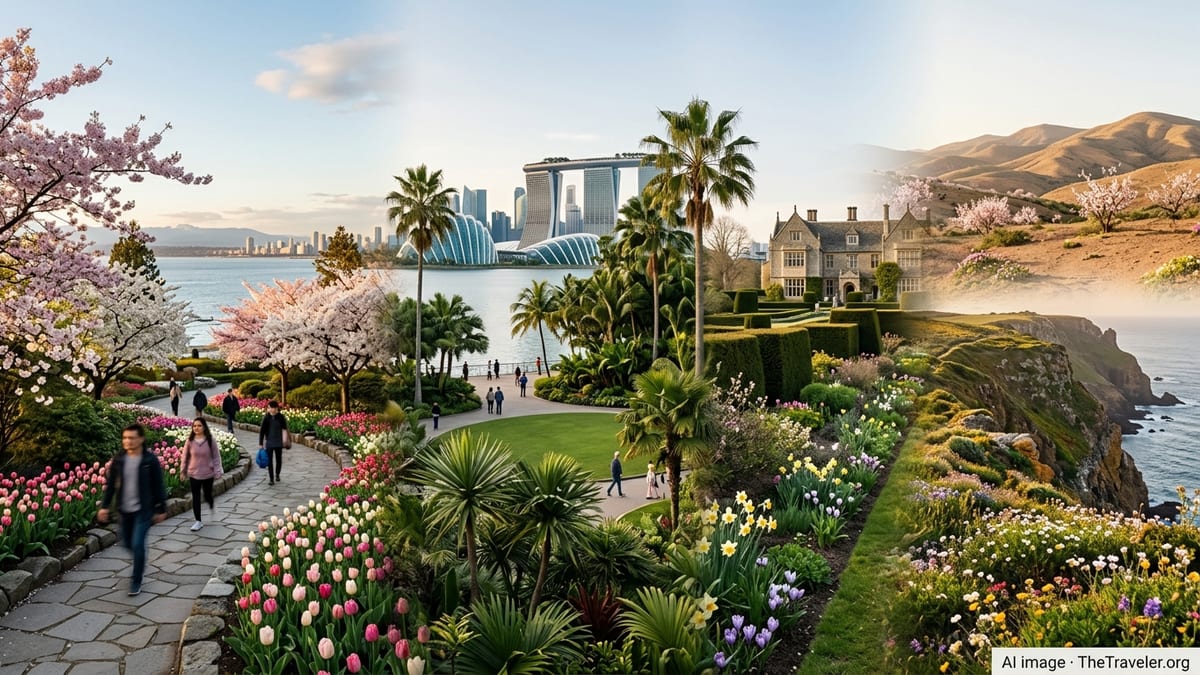
A Cross Continent Bet on Blossoms
The emerging alignment links destinations spread across both hemispheres but united by vivid spring displays, from cherry and tulip festivals to wildflower routes and botanic showcases. Publicly available information from national and regional tourism campaigns indicates that Canada is moving to position its urban parks and coastal gardens alongside Singapore’s tropical blooms, America’s festival circuit, Britain’s heritage estates, Morocco’s desert oases and South Africa’s famed wildflower regions.
The informal alliance is less a formal treaty and more a synchronized marketing moment, as destinations respond to traveler interest in seasonal, outdoor experiences. Travel planning data for 2026 already highlights strong demand for nature rich itineraries in North America, Europe, Africa and Asia, with tour operators programming multi stop journeys that connect spring landscapes across several continents.
Industry materials show that many of these destinations are leaning into imagery of blossoms, botanical diversity and temperate weather as a counterpoint to overcrowded peak summer travel. For long haul visitors, the ability to stitch together multiple bloom seasons within one extended trip is being framed as a distinctive draw.
Canada’s Coastal Gardens and Urban Parks Step Forward
Within Canada, promotional efforts are emphasizing coastal British Columbia, the temperate pockets around Vancouver Island and the carefully curated gardens and parks that tend to reach their peak bloom earlier than much of the country. Travel calendars for 2026 highlight rail journeys across Canada paired with regional garden visits, signaling that spring scenery is becoming a more central storytelling device for itineraries that once focused primarily on autumn foliage or winter sports.
Urban destinations such as Vancouver, Victoria, Toronto and Ottawa are also being framed as spring gateways, where cherry trees, tulip displays and riverfront parks offer an attractive shoulder season alternative. Public information from tour catalogs shows spring programs that pair city stays with excursions to coastal inlets, island gardens and nearby wine regions, all marketed around blossom timelines and softer weather.
For Canada, aligning with a broader spring bloom narrative offers a way to diversify beyond winter icons and summer lake escapes. It encourages travelers to consider earlier departures, potentially easing pressure on peak dates while generating new opportunities for hotels, rail services and regional attractions.
Singapore, America and Britain Synchronize Their Seasons
Singapore’s role in the alliance centers on its year round tropical gardens and highly managed green spaces, which can be showcased as dependable backdrops for travelers chasing color and foliage. Destination content points to waterfront parks, elevated garden spaces and heavily planted streetscapes that remain lush when northern zones are just beginning to thaw.
In the United States, tourism calendars highlight a dense run of spring festivals, from cherry blossoms in major cities to flower shows and garden tours across several states. Travel research for 2026 underscores the appeal of combining these events with longer rail or river cruise itineraries, giving visitors a way to track the advance of spring across multiple regions.
Britain, meanwhile, continues to rely on its historic estates, royal parks and countryside gardens that open their gates to visitors as snowdrops, daffodils and later roses progress through the season. Brochures and digital guides promote garden themed journeys that can be dovetailed with long haul flights between North America, Africa and Asia, effectively tying the country into the broader spring bloom circuit.
Morocco and South Africa Showcase Desert and Coastal Blooms
On the African side of the alliance, Morocco and South Africa bring strikingly different but complementary landscapes to the table. Moroccan travel coverage draws attention to oasis towns, valley orchards and coastal stretches where spring greenery and blossoms briefly transform otherwise arid settings. These visuals are increasingly used to market itineraries that pair cultural cities with time in the mountains or along the Atlantic.
South Africa continues to leverage its wildflower regions and coastal routes, particularly in areas where spring carpets of blooms attract photographers and hikers. Tour directories for 2026 identify journeys that link Southern African landscapes with North African ports and onward routes to Europe and North America, making floral seasons a thematic thread across long distance voyages.
For both Morocco and South Africa, the spring bloom message is tied closely to climate and seasonality. Operators and destination marketers are emphasizing the relatively mild conditions, outdoor activities and clear visibility that tend to characterize these months, positioning them as optimal windows for safaris, hikes and coastal drives.
New Itineraries and Longer Spring Journeys
The practical outcome of the spring bloom alignment is a noticeable rise in itineraries that cross several of the participating destinations in a single season. Tour directories and cruise programs for 2026 feature routes that link North American cities to European capitals, then continue south toward Moroccan ports or Southern African coasts, often framed around changing light, temperature and floral displays.
For independent travelers, the alliance narrative offers a scaffold for do it yourself route planning. Available resources now make it easier to chart a path from Canada’s coastal gardens to Singapore’s tropical parks, or from Britain’s estate grounds to South Africa’s wildflower regions, timing stays to coincide with local peak bloom periods.
Travel industry observers note that this coordinated focus on spring could gradually reshape traditional high season patterns, encouraging visitors to spread trips over more months and distribute spending across a wider set of destinations. If the experiment succeeds, similar thematic alliances built around autumn foliage, stargazing or coastal wildlife could follow, further blurring the lines between national campaigns and shared global travel seasons.