

More news on this day
Canada’s latest push to tackle its housing crisis is zeroing in on New Brunswick, where the new Build Canada Homes agency and a suite of federal and provincial programs are converging on a rapid build-out of as many as 1,500 affordable units across the province.
Get the latest news straight to your inbox!
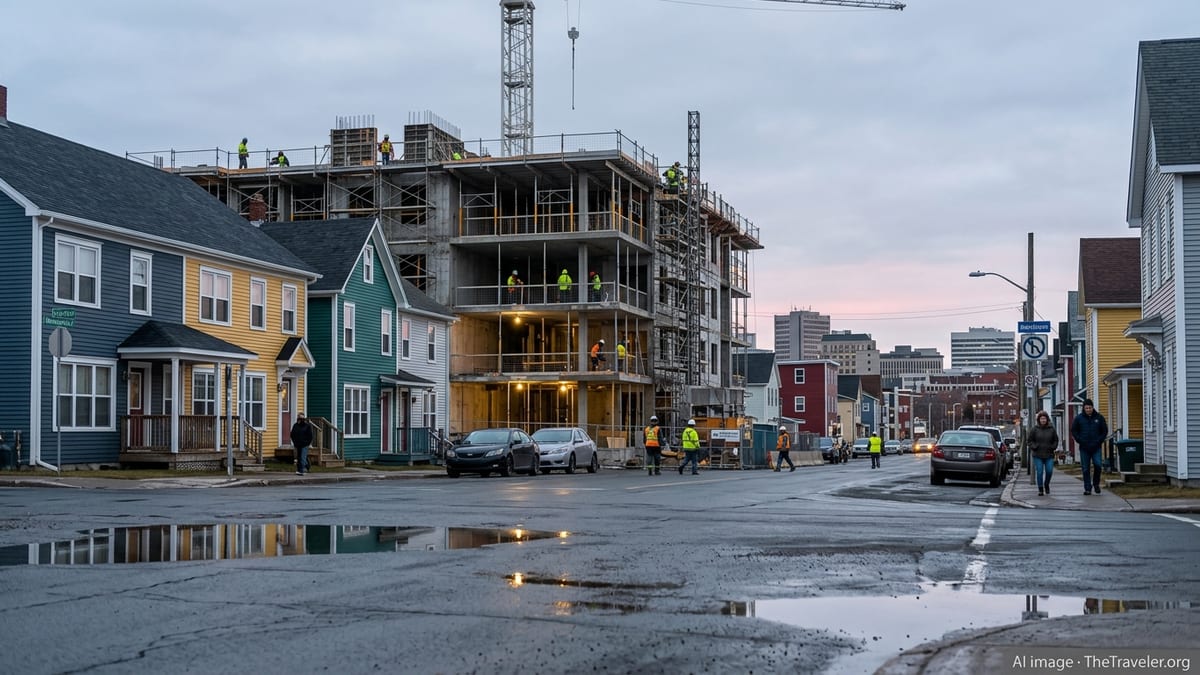
A National Housing Tool Focuses on New Brunswick
Build Canada Homes, a federal agency launched in September 2025 to construct and finance affordable housing at scale, is emerging as a central driver of new construction in New Brunswick. Publicly available federal material describes the agency as a key instrument in Canada’s broader housing plan, with a mandate to support factory-built homes, leverage public land and unlock new financing streams for both affordable and middle-income rental projects.
Recent federal communications on housing and infrastructure highlight New Brunswick as a priority region, with Build Canada Homes positioned to complement existing initiatives such as the Rapid Housing Initiative and the Canada Housing Infrastructure Fund. Taken together, these programs are calibrated to speed up delivery by lowering borrowing costs, supporting modern construction methods and targeting projects that can move quickly from planning to site preparation.
Reports on Canada’s housing strategy indicate that federal targets now hinge on smaller provinces like New Brunswick boosting output above historic norms. With relatively more available land around its urban centres and a growing base of modular and prefabricated builders, the province is seen as well placed to pilot the kind of standardized, repeatable designs that Build Canada Homes is seeking to promote nationwide.
Partnership Deals Point to 1,500 Rapid Units
While national housing announcements tend to emphasize headline totals for the entire country, more detailed program documents and regional coverage point to an emerging New Brunswick pipeline approaching 1,500 new affordable homes. These figures reflect a combination of direct Build Canada Homes support, infrastructure funding tied explicitly to housing outcomes and co-funded provincial projects aligned with federal design and affordability criteria.
One strand of this pipeline involves shared-cost agreements in which Ottawa and Fredericton split capital commitments for new builds, with provincial material outlining multi-year plans to expand the stock of non-market and deeply affordable units. Discussions in public forums, backed by references to federal documentation, describe a framework in which New Brunswick aims to deliver more than 1,200 affordable homes under a single agreement, with additional projects bringing the total close to the 1,500-unit mark.
These targets sit on top of earlier New Brunswick housing announcements that were smaller in scale but significant as proof-of-concept. Past funding envelopes supported just over 200 homes through a mix of new construction and rehabilitation, laying the groundwork for a much larger, more integrated build program as Build Canada Homes and the latest infrastructure tools came online.
Infrastructure Spending Clears the Way for New Builds
A key feature of the current push is that housing dollars are being paired with investments in water, wastewater and related infrastructure so that land can actually be built on at the pace governments are seeking. The Canada Housing Infrastructure Fund, which will channel roughly 150 million dollars to New Brunswick over the next decade, is explicitly tied to enabling housing supply by upgrading critical systems and encouraging higher-density development in serviced areas.
Specific project announcements illustrate how this approach works on the ground. In the Acadian community of Tracadie, joint federal and provincial funding has been allocated to water infrastructure upgrades that are expected to support up to 300 new homes. Publicly available information on similar projects in other municipalities indicates that these upgrades are being prioritized where planners can quickly convert pipes and pumps into shovels in the ground.
Complementary funds, such as the Canada Community-Building Fund and regional innovation programs, are being aligned with the housing agenda so that roads, transit and community facilities keep pace with new units. For New Brunswick, a province whose largest cities are still relatively compact, this bundling of infrastructure and housing is intended to avoid bottlenecks that might otherwise slow or scale back ambitious unit targets.
Modular Construction and Local Industry Take Center Stage
The drive to reach 1,500 affordable units quickly is pushing New Brunswick further into modular and prefabricated construction, a sector that has been expanding across Atlantic Canada. Regional development reports point to manufacturers in the province positioning themselves as leaders in factory-built homes, with dedicated plants able to turn out standardized units that meet energy-efficiency and accessibility standards while keeping per-unit costs lower than traditional builds.
Federal and provincial agencies are channeling support into this manufacturing base, with funding agreements framed around productivity gains, climate resiliency and the capacity to deliver repeatable designs at scale. A recent federal initiative for Atlantic Canada highlighted nearly 13 million dollars in investments across the region to modernize how homes are built, including support for research and training at the University of New Brunswick focused on advanced construction technologies.
New Brunswick’s local industry ecosystem, which includes multiple modular and prefabricated home producers as well as smaller builders versed in offsite construction, is increasingly being integrated into the Build Canada Homes model. The agency’s emphasis on factory-built housing and predictable production runs aligns with the province’s interest in creating year-round employment in rural areas while shortening timelines for urban and suburban projects.
Urban Growth, Affordability Pressures and Travel Impacts
For travelers and prospective newcomers, the housing build-out is unfolding against a backdrop of rising demand in New Brunswick’s main urban centres, notably Moncton, Fredericton and Saint John. Rental markets in these cities have tightened significantly in recent years, and published coverage has documented increased pressure on lower-income households, students and recent arrivals drawn by the province’s growing tech and services sectors.
New construction supported by Build Canada Homes and related programs is expected to ease some of that strain over the medium term by expanding the supply of purpose-built rental units and mixed-income communities. Projects near downtown cores and public transit corridors are designed to absorb population growth while preserving the walkable character that visitors often cite as a key attraction of New Brunswick’s cities.
As new neighbourhoods and infill developments come online, local tourism boards and municipal planners are watching how additional housing might interact with demand for short-term rentals and hotel rooms. More stable and affordable long-term housing is seen as a prerequisite for sustaining the service workforce that supports the province’s growing visitor economy, from coastal tourism in the Bay of Fundy region to cultural festivals in urban hubs.
For now, the measure of success will be how quickly announced agreements translate into keys in doors. If New Brunswick can hit or approach the 1,500-unit affordable housing target with the help of Build Canada Homes and its supporting infrastructure programs, the province could become a leading example of how smaller jurisdictions can punch above their weight in Canada’s wider housing reset.