

More news on this day
Canadian regulators have fined WestJet and Porter Airlines a combined $160,000 for failing to properly look after passengers during significant travel disruptions in Canada and the United States, underscoring mounting pressure on carriers to comply with toughened consumer protection rules.
Get the latest news straight to your inbox!
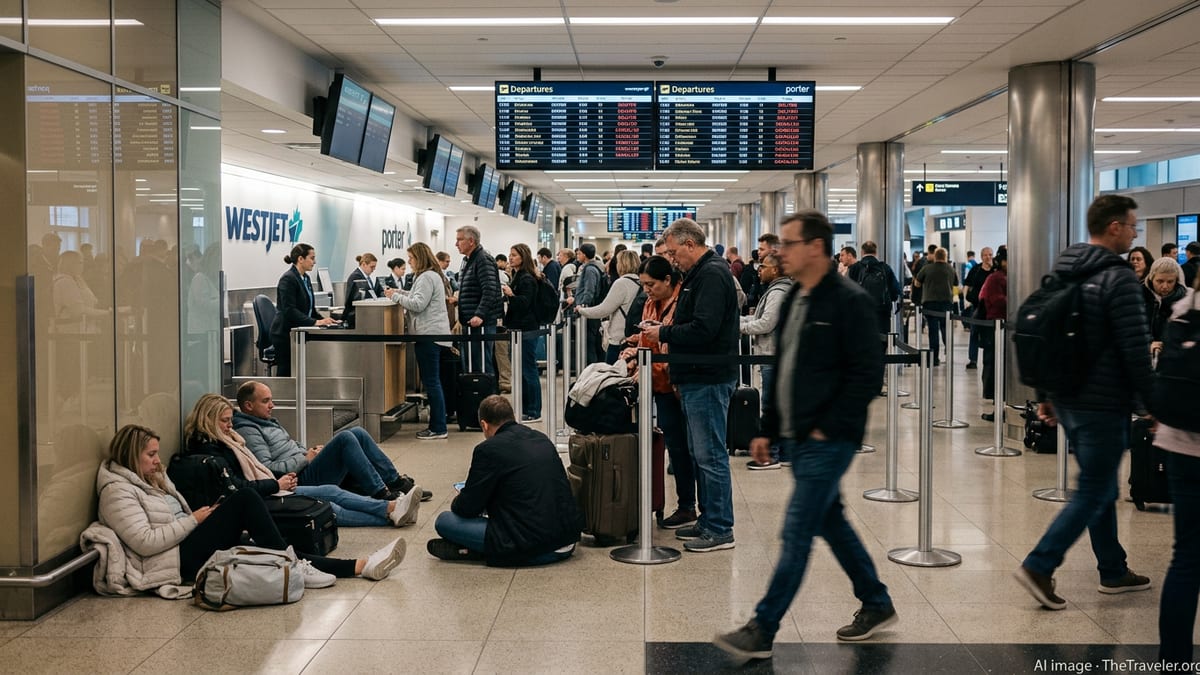
Regulators Target Gaps in Passenger Care
The Canadian Transportation Agency (CTA) announced the administrative monetary penalties after determining that both WestJet and Porter breached obligations under Canada’s Air Passenger Protection Regulations, which require airlines to provide timely assistance, accommodations and communications when flights are delayed or cancelled for reasons within the carrier’s control.
According to the regulator’s enforcement records, WestJet accounts for the larger share of the combined penalties, with infractions tied to multiple instances where delayed and stranded passengers were not provided adequate food, hotel stays or ground transportation over extended waits. The fines also reflect situations in which communication about available options and compensation fell short of standards.
Porter Airlines was cited in separate cases for similar shortcomings in caring for passengers affected by cancellations and lengthy delays, including on transborder routes linking Canadian cities with U.S. destinations. In these instances, investigators concluded that passengers were left to arrange their own overnight lodging or essential care despite being entitled to assistance from the carrier.
The combined total of $160,000 marks one of the more visible recent enforcement rounds focused specifically on passenger care, as opposed to operational or safety violations, and is part of a broader tightening of oversight following years of mounting complaints about air travel disruptions.
Cases Span Domestic and Canada U.S. Disruptions
While the fines were issued in Canada, several of the investigated disruptions involved cross-border itineraries to or from the United States, where winter weather, staffing constraints and congestion at major hubs have repeatedly rippled across airline schedules. Regulators concluded that, in a number of these cases, the root causes of the disruptions were within the airlines’ control, triggering heightened obligations under Canadian rules.
For affected WestJet customers, that meant they should have received meal vouchers or equivalent food and drink in reasonable quantities during multi-hour delays, as well as hotel rooms and transportation when rebooked flights pushed departure to the following day. Instead, the CTA found that many passengers either received no support or were offered assistance insufficient for the length and timing of the delays.
Porter passengers on certain domestic and Canada U.S. routes reported comparable experiences. Travelers described being rebooked much later than their original arrival times without being provided overnight accommodation or clear guidance on their rights. The regulator cited these gaps in care, rather than the disruptions themselves, as the basis for the financial penalties.
Because Canadian rules apply to flights departing from Canadian airports, even U.S.-bound passengers are covered when their trips begin in Canada. That jurisdictional reach has allowed the CTA to scrutinize episodes in which travelers bound for American destinations were stranded on the Canadian side of the border for long periods with limited assistance.
Growing Scrutiny of Airline Conduct
The latest penalties come as both Canadian and U.S. authorities ramp up enforcement efforts aimed at airlines that fall short of consumer protection standards. In Canada, complaints lodged with the CTA have surged in recent years following pandemic-era disruptions, with WestJet and Porter among carriers attracting heightened attention from passenger advocates.
The CTA has increasingly used fines, formal warnings and binding decisions to push airlines to meet obligations for compensation and care. Passenger-rights groups argue that penalties must be large and frequent enough to act as a real deterrent, particularly after periods when airlines struggled to rebuild schedules and capacity while dealing with crew shortages and volatile demand.
In parallel, the United States Department of Transportation has pursued major cases against carriers operating to and from U.S. airports, highlighting tarmac-delay violations and failures to provide timely refunds and rebooking options. This cross-border regulatory climate has set clear expectations that airlines serving North American markets must maintain robust contingency plans and passenger-care protocols.
Industry analysts note that while the $160,000 total will not materially affect the bottom line of either WestJet or Porter, it sends a message that individual cases of poor treatment can accumulate into high-profile enforcement actions, potentially affecting brand reputation and customer loyalty in an increasingly competitive market.
What the Fines Mean for Travelers
For passengers, the enforcement action is a reminder that Canadian rules offer specific rights when flights are delayed or cancelled for reasons within an airline’s control, including maintenance issues and crew scheduling problems. In such cases, travelers may be entitled not only to compensation but also to concrete care measures such as meals, hotel rooms and transportation, depending on the length of delay and whether an overnight stay is required.
The WestJet and Porter penalties highlight that regulators are prepared to step in when airlines do not voluntarily honour those commitments, especially in situations where passengers are stranded far from home or in unfamiliar cities after last-minute cancellations. Passengers who document their experiences, keep receipts and file formal complaints can prompt investigations that lead to sanctions like those announced in this case.
Travel experts say the latest fines should encourage airlines to improve frontline training, ensuring agents and crew understand when care obligations apply and what assistance must be offered on the spot. That could include proactively arranging hotels, distributing vouchers and providing clear written information about rights, rather than leaving passengers to navigate complex rules on their own during stressful disruptions.
For travelers planning trips between Canada and the United States, the developments underscore the value of checking an airline’s policies on delays and cancellations, as well as carrying travel insurance that can supplement regulatory protections when disruptions stem from events outside the carrier’s control, such as severe storms or air traffic control constraints.
Pressure Mounts for Stronger Consumer Protections
The fines against WestJet and Porter are likely to feed into ongoing debates in both Canada and the United States about whether existing passenger protections go far enough. Advocates have called for higher maximum penalties and faster complaint-handling timelines, arguing that meaningful financial consequences are necessary to change airline behaviour.
In Canada, lawmakers and regulators have already introduced reforms aimed at streamlining the complaint process and clarifying when airlines must pay compensation versus when only care obligations apply. The latest enforcement news may bolster support for further changes that shift more of the burden from passengers to carriers when travel goes awry.
U.S. officials, meanwhile, have publicly pressed airlines to adopt customer service commitments that go beyond legal minimums, including guaranteed meal and hotel vouchers during carrier-controlled disruptions. With many Canadian airlines relying heavily on transborder traffic, coordinated pressure from both sides of the border could accelerate improvements in how disruptions are managed.
For now, the $160,000 in penalties sends a pointed signal: failure to provide basic care to stranded passengers is no longer viewed as an unfortunate side effect of irregular operations, but as a compliance issue with real regulatory and reputational consequences for airlines that do not meet their obligations.