

More news on this day
Canada has added Ecuador to a growing list of popular destinations where travelers are urged to exercise a high degree of caution, aligning its latest advisories with broader global concern over crime, civil unrest and terrorism risks in countries that attract millions of tourists every year.
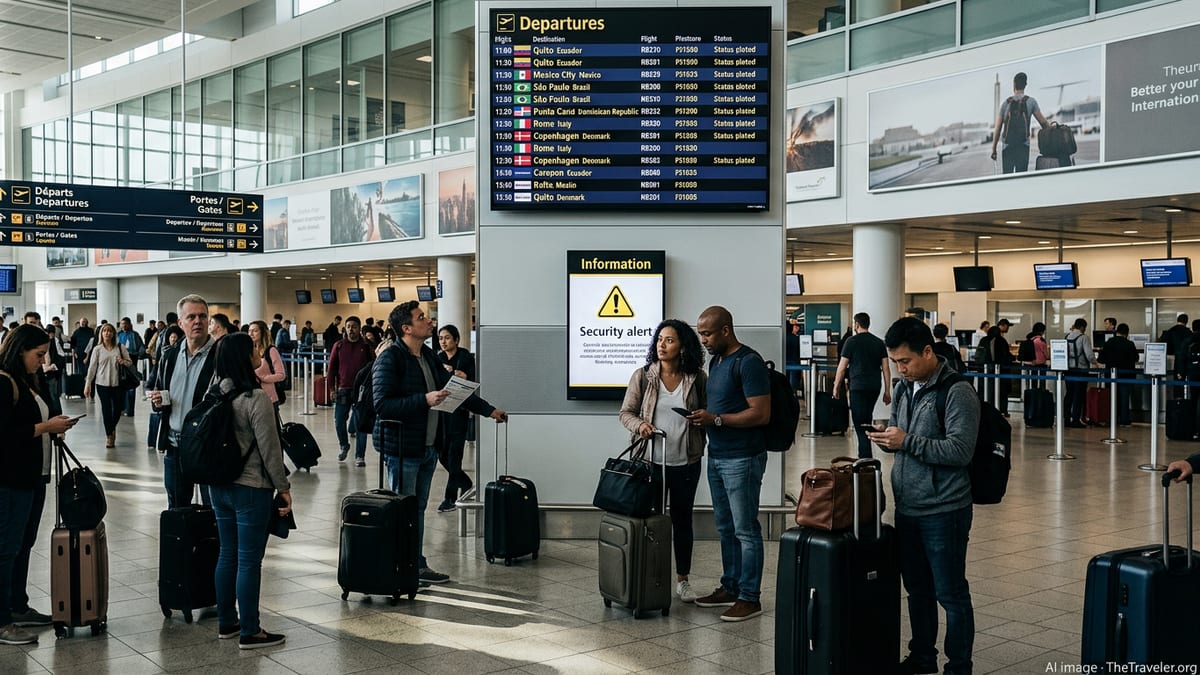
Ecuador Joins a Growing Roster of High-Caution Destinations
The Government of Canada’s official travel advice now places Ecuador in the “exercise a high degree of caution” category, with additional regional warnings reflecting persistent gang violence, organized crime and security operations in recent months. The advisory points to crime and civil unrest as key threats, particularly in urban centers and along certain corridors popular with both tourists and business travelers.
Ecuador’s shift into the spotlight follows a series of security crises, including states of emergency and high-profile attacks blamed on criminal groups. While major visitor hubs such as Quito, Cuenca and the Galápagos Islands remain open and continue to welcome international arrivals, officials stress that conditions can change quickly and that travelers should closely monitor local developments and follow the guidance of authorities.
By explicitly highlighting Ecuador alongside other high-profile destinations, Canadian officials are signaling that perceived “bucket list” status no longer shields a country from being labeled higher risk. For travelers, that means standard pre-trip planning must now include a detailed review of neighborhood-level conditions, transit routes and the latest on protests or security operations.
Mexico, Brazil, Dominican Republic, Italy and Denmark Under Tighter Scrutiny
Ecuador is far from alone. Canada’s advisory pages now show a cluster of widely visited destinations, including Mexico, Brazil, the Dominican Republic, Italy and Denmark, categorized under elevated caution levels tied to crime, unrest or terrorism concerns. For Mexico and Brazil, the emphasis is on violent crime, gang activity and kidnapping in certain regions, with stronger language for specific states and border areas where security forces remain heavily deployed.
In the Dominican Republic, Canadian officials cite crime and occasional incidents targeting tourists as reasons to remain alert, particularly in resort zones and urban neighborhoods away from controlled hotel compounds. Travelers are advised to keep valuables out of sight, arrange airport transfers in advance and rely on vetted transportation rather than informal taxis or ride offers.
Italy and Denmark, long seen as low-risk European getaways, now appear with cautions centered mainly on terrorism and opportunistic crime in busy public spaces. The advice reflects concerns shared by other Western governments about crowded transport hubs, major tourist attractions and large public events, where authorities warn that any attack, even if unlikely, could have serious consequences.
Across these countries, the language may differ in nuance, but the message is consistent: even in destinations with strong infrastructure and thriving tourism industries, travelers should expect a more complex security environment than they might have encountered a decade ago.
How Canada’s Travel Advisory System Works
Canada’s advisories are built around distinct risk levels, ranging from routine security precautions to avoid-all-travel warnings. Most of the destinations in focus, including Ecuador, Mexico, Brazil, the Dominican Republic, Italy and Denmark, fall into the mid-tier category where Canadians are urged to exercise a high degree of caution, sometimes with additional regional restrictions that can rise to “avoid non-essential travel” or higher.
Officials at Global Affairs Canada monitor security incidents, political developments, crime trends and health concerns before updating a country’s status. That process can be triggered by events such as states of emergency, significant terrorist attacks, spikes in gang-related violence or major protests that disrupt transportation and essential services.
Once a country is flagged, updates tend to be frequent, which means the advisory a traveler saw when booking may not match the situation on the eve of departure. Canada’s guidance explicitly warns that safety and security conditions can shift quickly and encourages travelers to review advisories both at the planning stage and again just before flying, and to register their trip so they can be contacted in an emergency.
Although the advisories are not binding bans, they carry practical weight. Insurance policies, tour operators and airlines may reference the government’s assessed risk level when determining coverage, operating schedules or cancellation options, making it critical for travelers to understand the implications of a higher-risk designation.
What These Rising Risk Levels Mean for Travelers
For Canadian tourists and others who reference Canada’s advisories, the clustering of popular destinations under elevated risk levels signals a changing baseline for international travel. Trips that once required little more than a passport and a hotel booking now demand careful attention to neighborhood safety, transport choices and timing, particularly when moving between airports, bus terminals and city centers.
In practical terms, travelers heading to places like Ecuador, Mexico, Brazil or the Dominican Republic are being urged to book reputable accommodation with robust security, arrange trusted transfers in advance, avoid flashing cash or expensive electronics and stay clear of demonstrations or large gatherings. In some areas, authorities recommend avoiding night travel by road and checking in regularly with family or friends back home.
Even in European destinations such as Italy and Denmark, the focus is increasingly on situational awareness: watching for pickpocketing in crowded squares, keeping bags zippered and close to the body, and noting emergency exits and security instructions in transport hubs and venues. Travelers are also encouraged to build extra time into itineraries in case security checks, protests or transport disruptions affect planned routes.
Experts note that the goal of these advisories is not to deter travel entirely, but to encourage a more informed, layered approach to risk. That includes purchasing comprehensive travel insurance, sharing itineraries, maintaining copies of key documents and being prepared to change plans if the local situation deteriorates.
Balancing Wanderlust With a New Era of Risk Awareness
The rise in cautionary language for destinations as diverse as Ecuador, Mexico, Brazil, Italy, Denmark and the Dominican Republic reflects a broader global trend: travelers are navigating a world where security threats are more diffuse and less predictable, and where national governments are competing to provide clearer warnings and guidance.
Surveys cited by industry observers show that official advisories now play a decisive role in shaping where people are willing to go, with younger travelers and women particularly attuned to safety information from government sources. For many, a high-caution label prompts closer research and route planning rather than outright cancellation, but it does change expectations about what a trip might entail.
For tourism-dependent economies, the challenge is to reassure visitors that they can still experience beaches, cities and cultural attractions safely, even as governments like Canada highlight real and evolving risks. Local authorities and travel providers are responding with visible police patrols in resort zones, better lighting, expanded surveillance and clearer communication with international guests about what to avoid.
As Canada’s advisories continue to evolve, seasoned travelers increasingly view them as one crucial input among many, complementing local news, on-the-ground reports and advice from trusted operators. The result is a more cautious, better-prepared style of travel that aims to preserve the freedom to explore, while acknowledging that even the most familiar destinations now come with a more complicated security calculus.