

More news on this day
Canada’s latest update to its Australia travel advice is drawing new attention to the escalating cyclone and flooding risk in Far North Queensland in early 2026, urging travelers to closely reconsider itineraries that take them into the state’s tropical north as the severe weather season peaks.
Get the latest news straight to your inbox!
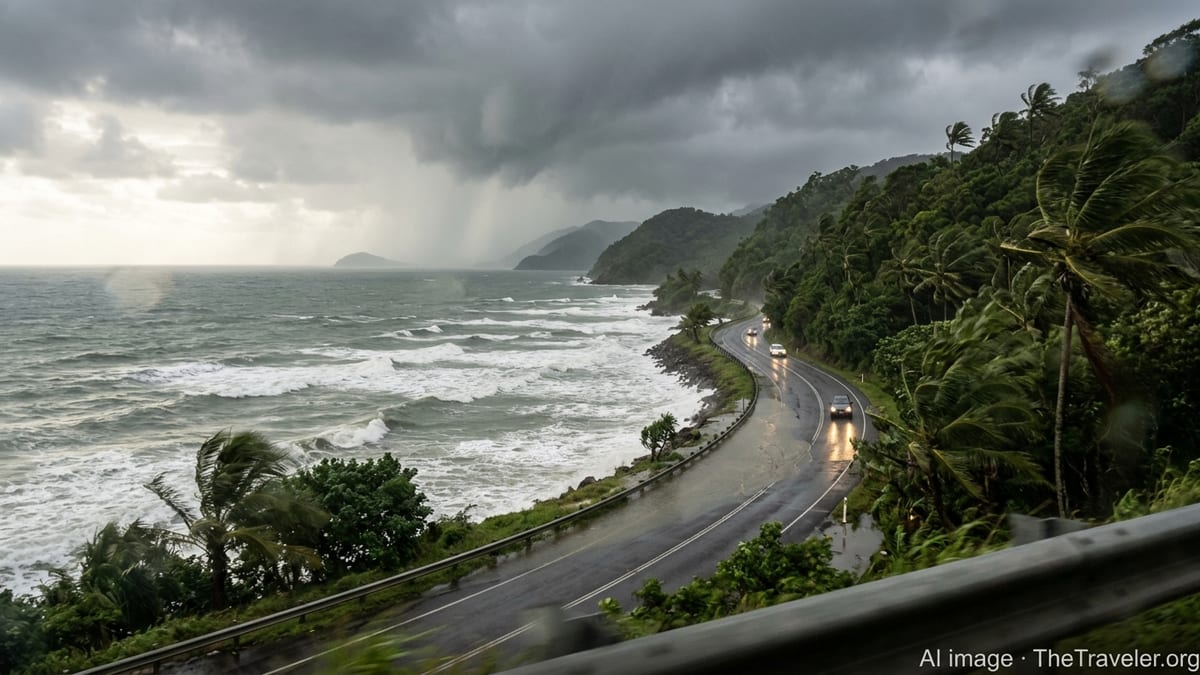
New Advisory Highlights Tropical North Vulnerabilities
Canada’s official travel advice for Australia, revised in early March 2026, again underscores that coastal Queensland is among the country’s most hazard-prone regions, particularly during the Southern Hemisphere summer cyclone period. The guidance notes that tropical cyclones, flooding and associated infrastructure disruption are recurring risks along the Queensland coast and can rapidly alter travel conditions, especially in remote and regional communities in the far north.
Publicly available information from Canada’s travel advice site describes how sudden changes in weather can cut access to outlying areas, including sections of highway, regional airports and smaller towns that depend on a limited number of road and air links. It warns that access to some remote locations may be impossible during severe weather and encourages travelers to monitor local forecasts and be prepared for rapidly evolving situations that can last days or longer.
While the advisory does not single out individual tourist centers by name, its language on coastal Queensland coincides with heightened concern about the current cyclone season. This alignment between broad government guidance and on the ground conditions in Far North Queensland is prompting many prospective visitors to re evaluate whether now is the right time to visit the tropical north in 2026.
Severe Tropical Cyclone Narelle Targets Far North Coast
The renewed focus on Far North Queensland comes as Severe Tropical Cyclone Narelle intensifies in the northern Coral Sea. Bulletins from the Australian Bureau of Meteorology, summarized in local reporting and public discussions on 19 March 2026, describe Narelle as a category 4 system that is expected to move steadily west and approach the far northeast Queensland coast between Lockhart River and Cooktown, with landfall forecast for Friday morning.
Forecasters indicate that Narelle is likely to bring destructive winds, heavy rain and dangerous seas to a long stretch of coastline, including sparsely populated communities, Indigenous homelands and important tourism gateways that connect visitors with the Great Barrier Reef and Daintree region. Heavy rain bands are expected to extend well beyond the cyclone’s core, raising concern for flash flooding inland and along key river systems that drain the rainforest clad ranges into the Coral Sea.
As Narelle approaches, Queensland emergency updates describe an elevated risk of road closures, power interruptions and isolation of smaller towns and outlying accommodations. Travelers relying on self drive itineraries, coastal ferries or small regional flights may face last minute cancellations or multi day delays. For Canadians and other international visitors with tight schedules or non flexible bookings, this combination of hazards significantly increases the likelihood of disrupted trips.
Flooding, Road Closures and Stranded Tourists
Far North Queensland’s vulnerability is not limited to direct cyclone impacts. The region has a documented history of extreme rainfall and flooding that can persist long after a storm weakens or moves inland. Recent examples include cyclones that have stalled or decayed over the ranges yet continued to dump hundreds of millimetres of rain, leading to major river floods, prolonged highway closures and isolation of communities for days at a time. Reports on previous events describe critical north south road corridors, such as the main Bruce Highway, being cut by floodwaters, restricting the flow of food, fuel and essential supplies into tourist hubs.
Australian disaster reporting and state government summaries depict Queensland as the most disaster impacted state in the country, with repeated flooding and cyclone damage along the north and far north coast. During past wet seasons, travellers have described being stranded in popular tourism towns as surrounding districts flooded, with tours suspended, attractions closed and onward journeys postponed until waters receded and roads were cleared.
The current 2025–26 severe weather season has been flagged by federal and state agencies as higher risk, with national preparedness briefings stressing an elevated chance of flooding, cyclones and severe thunderstorms from October through April. For visitors planning reef trips, rainforest excursions or coastal drives in March and April 2026, this means a greater probability that itineraries will collide with dangerous conditions or the long tail of recovery work after a major storm like Narelle.
Government Guidance Urges Flexible, Cautious Travel
Canada’s general advice on storm season travel abroad encourages citizens to research severe weather risks, monitor local forecasts and maintain flexible plans when visiting hazard prone regions. In the context of Far North Queensland, where tropical systems can form and intensify quickly in the warm Coral Sea, this translates into a recommendation that travelers be ready to postpone, reroute or cancel journeys if conditions deteriorate.
Australian agencies likewise advise visitors to treat the far north’s wet season as a period requiring extra caution. Guidance from Queensland’s disaster management and visitor safety resources stresses the need to check official weather warnings, local road information and tourism operator updates before setting out. Travelers are urged to have contingency plans, carry sufficient supplies on longer drives and avoid entering floodwaters, which remain a leading cause of fatalities and rescues during heavy rain events.
The combination of Canada’s updated advisory, Australia’s own seasonal warnings and the immediate threat posed by Severe Tropical Cyclone Narelle adds up to a particularly challenging window for tourism in Far North Queensland. For many prospective visitors, the prudent choice in early 2026 may be to focus on less exposed parts of Australia or to shift northern itineraries into the drier months, when weather related disruption is less likely and emergency services are not stretched by concurrent events.
What Travelers Should Consider Before Heading North
For Canadians and other international travelers still weighing a trip to Far North Queensland in the coming weeks, risk tolerance and trip flexibility are central factors. Those with fixed cruise departures, pre paid packages or limited vacation windows face a higher chance of significant disruption if Narelle or subsequent systems damage infrastructure or extend the current pattern of heavy rain and flooding. In that scenario, even areas spared the worst winds may experience closed attractions, suspended reef operations and strained local services as communities focus on recovery.
Travel insurance policies often treat named cyclones and declared weather emergencies as known events once formal warnings are issued, which can limit coverage for new bookings or late changes. Publicly available advisories from insurers and consumer groups recommend that travelers review policy wording carefully and obtain written confirmation of coverage where possible, particularly when planning trips into regions that are already under seasonal severe weather watch.
Ultimately, Canada’s reiterated concerns about coastal Queensland, together with Australia’s own severe weather messaging and the immediate threat from a powerful cyclone, reinforce the view that Far North Queensland is a high risk destination in March 2026. Those seeking a safer and more predictable Australian holiday experience this year may wish to delay their visit to the tropical north until after the current cyclone season ends and local authorities have had time to assess and repair any damage to essential tourism infrastructure.