

More news on this day
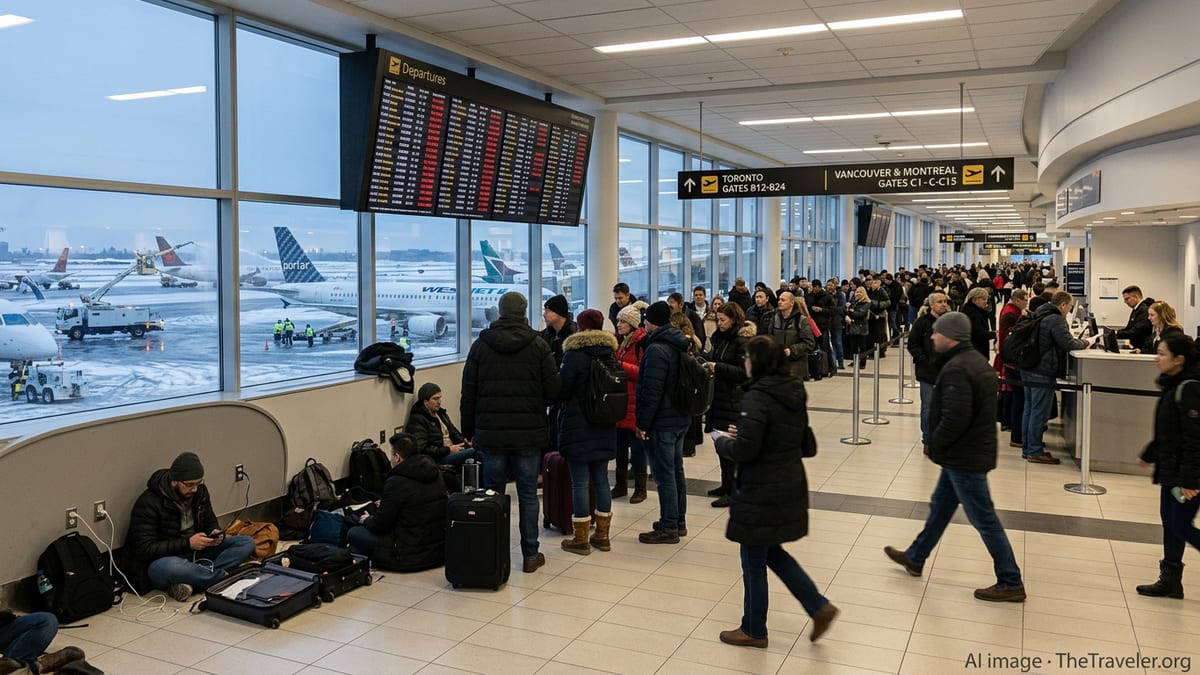
Thousands of travellers across Canada are facing long lines, missed connections and overnight airport stays today as more than 100 flights are cancelled and hundreds more delayed at major hubs including Toronto, Vancouver, Montreal and Halifax, disrupting operations at Air Canada, Jazz, WestJet, Porter, Qatar Airways and other carriers.
Get the latest news straight to your inbox!
Widespread Disruption Across Major Canadian Hubs
Real-time flight-tracking data for Thursday, March 12, 2026 shows 111 cancellations and 726 newly reported delays across Canada’s commercial network, hitting the country’s largest gateways hardest. Toronto Pearson, Vancouver International and Montreal–Trudeau have seen the most severe knock-on effects, with Halifax, Calgary, Edmonton and Ottawa also reporting clusters of grounded or late-running services as the day progresses.
Air Canada and its regional affiliate Jazz are bearing much of the load as the country’s largest operators, but WestJet, Porter and several international carriers, including Qatar Airways, have also scrubbed departures or pushed them back by hours. Passengers report departure boards “flashing red” with delay notices and cancellation tags on key domestic routes such as Toronto–Vancouver, Toronto–Montreal and Vancouver–Calgary, as well as on transborder and transatlantic services.
The disruption comes at the tail end of a winter marked by repeated storm systems, extreme cold snaps and operational strain on Canadian airlines. In January and February, successive Arctic outbreaks and blizzards forced airports from Toronto and Montreal to Halifax and St. John’s to shut runways and de-ice aircraft around the clock, already stretching crews, aircraft availability and schedules.
While today’s figures are lower than the worst days of midwinter, the high number of same-day cancellations suggests airlines are still operating on thin margins for crews and spare aircraft, leaving little cushion when weather, congestion or technical issues arise.
Weather, Staffing and Aircraft Constraints Converge
A mix of lingering winter weather, tight staffing and aircraft positioning issues appears to be driving the latest wave of disruption. Freezing rain and snow earlier in the week across parts of Ontario and Atlantic Canada triggered schedule changes that continue to ripple through today, while strong winds and low visibility at times have forced spacing between takeoffs and landings at Toronto and Vancouver.
Airlines have also struggled to rebuild schedules after a season of intense storms. When multiple days of operations are curtailed, aircraft and crew often end up out of position. Bringing the system back into balance can require targeted cancellations, especially on routes with multiple daily frequencies between the same cities. Flights between Toronto and Vancouver, Toronto and Montreal, and Vancouver and Calgary have been particularly vulnerable today, as carriers consolidate passengers onto fewer departures.
Staffing remains another pressure point. Ground handlers, de-icing crews and maintenance teams have faced sustained overtime during the harsh winter, while flight and cabin crews are operating under strict duty-time rules. When a morning departure is delayed for de-icing or an unscheduled maintenance check, it can quickly push crew toward their daily limits, forcing later flights in the sequence to be delayed or cancelled altogether.
Industry analysts note that Canadian airlines, like many carriers worldwide, have not fully rebuilt their buffers of spare aircraft and staff to pre‑pandemic levels. As a result, relatively routine weather or technical issues can still cascade into widespread disruption across multiple hubs, as seen today.
Airlines Detail Options as Passengers Queue for Answers
At Toronto Pearson and Vancouver International, long lines formed early in the day at airline service desks as passengers sought rebookings, hotel vouchers and meal credits. Travellers described scenes of crowded concourses, with many sitting on the floor near power outlets as they refreshed airline apps in search of updated departure times.
Air Canada, Jazz and WestJet have urged passengers whose flights have been cancelled or significantly delayed to use digital tools for rebooking where possible, noting that call centres and airport counters are experiencing heavy volumes. Many affected travellers are being rebooked onto later same-day flights or departures on Friday, while some longer-haul international passengers are being rerouted via alternate hubs such as Calgary or European gateways.
Porter Airlines, which has expanded rapidly from Toronto and Ottawa into Western Canada, is also juggling aircraft and crew to protect its core services. Some passengers on east–west connections involving Vancouver and Halifax reported being moved to itineraries with additional stops or overnight layovers as the airline attempts to preserve limited capacity on its busiest routes.
Qatar Airways and other foreign carriers whose aircraft overnight in Canada have had to adapt as well. When inbound services arrive late or outbound slots are constrained by congestion, ground time for refuelling, catering and maintenance shrinks, increasing the risk of knock-on delays to onward journeys through Doha and other global hubs.
Key Routes and Regional Airports Hardest Hit
Today’s disruption is especially acute on Canada’s most heavily trafficked domestic corridors. Flights linking Toronto with Vancouver, Montreal, Calgary and Halifax, as well as services between Vancouver and Edmonton, Calgary and Winnipeg, account for a large share of the cancellations and delays. Many of these routes operate at or near full load factors in March as business travel picks up and winter holiday traffic remains strong.
In Atlantic Canada, Halifax Stanfield has reported multiple cancellations to and from Toronto, Montreal and Ottawa, leaving some communities with limited same‑day alternatives. Travellers connecting from smaller regional airports through Halifax, such as Moncton or Charlottetown, face heightened risk of missed onward flights if even minor delays occur on their first leg.
Montreal–Trudeau, a key hub for both domestic and transatlantic traffic, has also seen a cluster of delayed departures toward Western Canada and the United States. This has led to missed connections for passengers heading onward to European destinations and Caribbean sun spots, with some forced to spend the night in Montreal hotels or at the airport.
Even when flights operate, on‑time performance has suffered. Average departure delays of 45 to 90 minutes were reported on several trunk routes by mid‑afternoon, with some evening services already forecast to depart well behind schedule as airlines attempt to work through the backlog.
What Travellers Can Do If Their Flight Is Affected
Experts recommend that passengers flying to, from or within Canada today monitor their flight status frequently and build in additional time at the airport. Travellers whose flights are cancelled are generally entitled to a refund if they choose not to travel, or to rebooking on the next available flight, although specific rights and compensation levels depend on the airline, the cause of the disruption and the length of the delay.
Passengers are urged to check their carrier’s travel alerts page and mobile app for self‑service rebooking options before joining long lines at the airport. Many airlines also allow travellers booked on affected dates to move their trip within a limited window without paying change fees, subject to fare differences and seat availability.
For those already at the airport, keeping boarding passes, receipts and any written communication from the airline is important, particularly if they plan to seek reimbursement for meals, hotels or alternative transportation. Travel insurance policies and premium credit cards may provide additional coverage for extended delays and missed connections.
With winter conditions and operational challenges likely to persist into the coming weeks, aviation observers say travellers should brace for continued volatility in Canadian flight schedules, even on seemingly routine travel days. Today’s wave of 111 cancellations and 726 delays is a reminder that the country’s air travel system remains highly sensitive to weather shocks and operational strain, especially at its busiest hubs.