

Thousands of air travellers across Canada are facing another bruising day of disruption as WestJet, Air Canada, Air Inuit, Jazz and other carriers grapple with 216 flight cancellations and delays affecting key hubs from Calgary and Toronto to Montreal, Edmonton and Yellowknife.
Stormy Weather and Strained Networks Collide
The latest wave of disruption is unfolding against a backdrop of repeated winter storms and already fragile airline schedules across Canada. Over recent days, carriers including WestJet, Air Canada, Jazz and regional northern operators have struggled to keep aircraft, crews and de icing operations aligned with published timetables, leading to rolling delays and cancellations at major airports.
Data compiled from recent operational updates and airport reports indicate that, on this most recent difficult day, 216 flights across the country have either been cancelled outright or significantly delayed. The rough tally echoes patterns seen in earlier February storms, when hundreds of flights were affected at Toronto Pearson, Calgary, Montreal Trudeau and other hubs as snow, ice and high winds repeatedly forced runway closures and slowed ground handling.
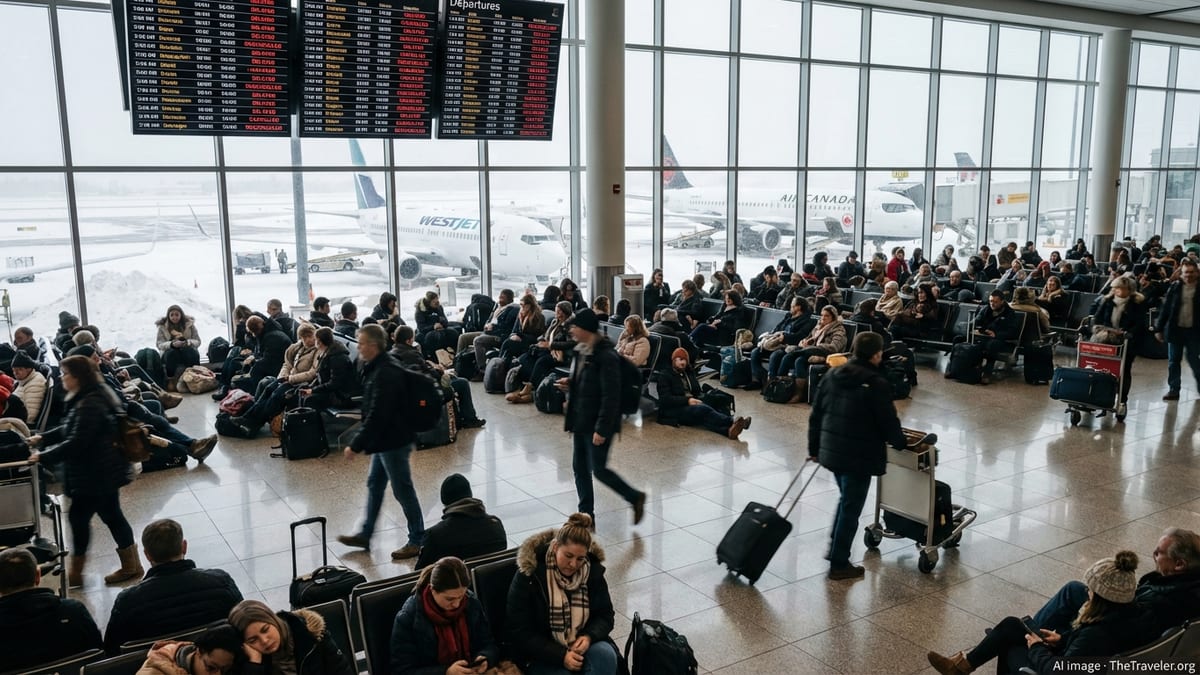
For passengers, the numbers translate into long queues at check in counters, fully booked customer service desks and terminal concourses crowded with people camping out on the floor near power outlets. Many travellers are facing missed connections, lost hotel nights and disrupted holiday or business plans, with some forced to wait until later in the week for the next available seats out of Canada’s biggest cities.
Airlines insist that safety remains the dominant factor in every decision. De icing procedures, runway clearing and restrictions on takeoff and landing in poor visibility can dramatically reduce the number of flights an airport can safely process each hour, which in turn cascades into network wide schedule problems as aircraft and crews fall out of position.
Calgary and Toronto Bear the Brunt
Calgary and Toronto have once again emerged as two of the hardest hit airports in the current wave of disruption, reflecting their roles as central hubs in the national air network. Recent storm systems sweeping across the Prairies and southern Ontario have repeatedly hit these cities with heavy snow and gusty winds, creating difficult operating conditions just as travel demand begins to build into late winter.
At Calgary International Airport, WestJet in particular has seen a cluster of cancellations and delays, building on a pattern reported earlier this month when the carrier was forced to scrap around 20 flights and delay more than 80 others in a single day as winter weather snarled operations. That earlier disruption left travellers stranded not only in Calgary but also in Toronto, Vancouver, Ottawa and Edmonton as the airline’s aircraft and crews struggled to get back on schedule.
In Toronto, Pearson International continues to reel from the lingering effects of a powerful storm in early February that brought more than 300 delays and dozens of cancellations over a 48 hour period. Those issues have now been compounded by fresh weather and capacity challenges, with Air Canada and its partners, including Jazz, facing renewed pressure to rebook passengers and re time flights through the country’s busiest airport.
The strain on Toronto’s hub operations extends beyond passenger travel. Logistics analysts note that earlier disruptions at Pearson triggered knock on effects for air freight flows, with delayed aircraft affecting cargo schedules to major markets in the United States, Europe and Asia. The current wave of flight changes is expected to add further complexity for time sensitive shipments moving through southern Ontario.
Montreal, Edmonton and Yellowknife Caught in the Ripple Effect
While Calgary and Toronto absorb much of the attention, airports in Montreal, Edmonton and Yellowknife are also confronting significant fallout from the latest round of flight disruptions. In Montreal, a series of recent days marked by winter weather and constrained capacity has produced a steady drip of delays and cancellations across multiple carriers, including Air Canada, Jazz, WestJet and several international operators.
Montreal Trudeau has already experienced multiple episodes of heavy disruption in February, with earlier reporting pointing to dozens of delays and cancellations in a single day as snow and freezing rain complicated operations. Those repeated events have left airline schedules unusually tight, so even moderate additional weather or technical issues can quickly tip the airport back into irregular operations.
Edmonton is dealing with its own set of challenges. Although it is a smaller hub than Calgary or Toronto, it plays a vital role for western Canada and northern connections. Earlier this month, WestJet’s broader network adjustments and weather related delays meant Edmonton based passengers saw a higher proportion of disrupted flights, forcing many to route through Calgary or other cities instead of taking once convenient nonstop services.
Farther north, Yellowknife and other regional airports in Canada’s territories are grappling with both harsh seasonal weather and the knock on impacts of disruption further south. Smaller airports often have limited spare capacity, fewer alternative flights and constrained accommodation options, meaning that even a handful of delays or cancellations can leave travellers stranded for extended periods with few options beyond waiting for the next available departure.
Regional and Indigenous Carriers Under Pressure
The disruption is not confined to the country’s biggest airlines. Regional operators, including Indigenous owned carriers serving remote communities, are also coming under pressure as winter weather and tight schedules converge. Airlines such as Air Inuit, which provides critical links across Nunavik and into northern Quebec, must manage both the operational hurdles of severe conditions and the essential nature of many of their flights for local residents.
Recent travel advisories from northern focused airlines have highlighted the risk of weather related disruptions across parts of Nunavut and northern Manitoba, warning passengers to expect potential delays and cancellations when Environment Canada issues advisories for high winds, blowing snow or extreme cold. These notices often advise travellers that rebooking options will be offered but may be limited by aircraft availability and airport infrastructure.
Jazz, operating primarily as a regional partner for Air Canada, is simultaneously navigating network wide winter pressures and its own structural changes. The company’s plan to close its Halifax cabin crew base at the beginning of March is part of a broader re alignment of resources to major hubs such as Toronto, Vancouver and Montreal. While not directly tied to the current weather disruptions, such moves underline the way regional carriers are adjusting their operations to cope with shifting demand and tighter margins.
For many small and Indigenous communities in northern and Atlantic Canada, these regional carriers are not just an option but a lifeline, providing access to medical services, education, food supplies and economic opportunities. When flights are cancelled or significantly delayed, the effects can reverberate far beyond individual holiday plans, highlighting the delicate balance between commercial viability and social responsibility in Canada’s aviation system.
WestJet and Air Canada Struggle to Stabilise Schedules
WestJet and Air Canada, the country’s two dominant airlines, are both working to stabilise their operations after a turbulent start to the year. For WestJet, the latest day featuring dozens of cancellations and delays adds to a difficult stretch that has included major schedule changes, particularly on routes to the United States, and repeated weather related disruptions at western hubs.
In recent weeks, schedule data has revealed that WestJet plans to cut roughly a quarter of its Canada to United States flights in the early summer 2026 season, trimming frequencies or suspending some routes entirely from cities such as Calgary and Edmonton. Those structural changes are separate from day to day weather events, but they illustrate how finely balanced the airline’s network has become, with relatively little slack available to absorb irregular operations when storms strike.
Air Canada, meanwhile, continues to recover from a series of storms and incidents that have periodically constrained capacity at its Toronto and Montreal hubs going back to last winter. The airline has emphasised that safety and reliability remain its top priorities and that it is investing in operational resilience, but it also acknowledges that extreme weather can quickly overwhelm even well prepared systems, especially during peak travel periods.
Both carriers face the difficult task of communicating rapidly changing information to passengers. As flight status boards shift from on time to delayed to cancelled, operations teams must co ordinate crew duty time limits, aircraft maintenance requirements and gate availability, while customer service staff work to secure hotel rooms, meal vouchers and alternative itineraries for those who are stranded.
Economic and Tourism Impacts Mount
The rolling disruptions have implications that extend well beyond stranded individual travellers. Tourism boards, hotel operators and local businesses in cities from Calgary and Toronto to Montreal and Yellowknife are all feeling the effects as visitors arrive late, change plans or cancel trips altogether. For destinations that rely on winter tourism, such as ski resorts in Alberta and Quebec, poorly timed storms and airline disruptions can mean lost revenue that cannot easily be recovered later in the season.
Business travel is also being hit. Corporate travellers attempting to move between major Canadian cities or connect through hubs to international destinations are facing heightened uncertainty, with some companies opting to postpone in person meetings or shift to virtual alternatives rather than risk employees being stuck in transit. This in turn reduces high yield ticket sales for airlines and lowers ancillary spending on airport retail, ground transport and accommodation.
Air freight and belly hold cargo services are another piece of the puzzle. When passenger flights are cancelled or heavily delayed, shipments of everything from fresh seafood to time sensitive manufacturing components may miss key connections, adding further stress to supply chains that are still adapting to post pandemic patterns. For northern communities served by combination passenger cargo flights, this can mean delays in the delivery of groceries, medication and other essentials.
Economists point out that a single day with more than 200 flight cancellations and delays may not shift national economic indicators on its own, but a series of such days across a winter season can chip away at productivity, confidence and the reputation of Canadian gateways as reliable transit points for global travel and trade.
What Stranded Travellers Can Do Now
For passengers caught up in the current wave of disruption, immediate practical steps can make a significant difference. Airlines and airport authorities advise travellers to check flight status frequently using official airline apps or airport information screens, as schedules can change at short notice when weather conditions improve or further deteriorate. Those who receive cancellation notices are urged to rebook through digital channels when possible rather than waiting in long in person queues.
Consumer advocates recommend that passengers familiarise themselves with their rights under Canadian aviation regulations, which lay out compensation and care requirements in cases of flight disruption, although the obligations differ depending on whether the cause is within the airline’s control. When weather is the primary driver, airlines may not owe financial compensation, but they often provide meal vouchers, hotel accommodation and rebooking at no extra charge when disruptions are severe.
Travellers are also encouraged to hold onto receipts for unexpected expenses such as food, ground transport or emergency accommodation, in case they are later able to claim reimbursement either from the airline, travel insurance providers or credit card protection programmes. In some cases, particularly with regional and northern carriers, flexible travel waivers may allow customers to change their plans without penalty when advisories are in effect.
As Canada moves through the remaining weeks of the winter season, both airlines and passengers are bracing for the possibility of more volatile weather and further days of widespread disruption. For now, the 216 cancellations and delays logged across the country serve as another reminder of how exposed the aviation system remains to the combined pressures of climate, capacity and complex national networks.