

More news on this day
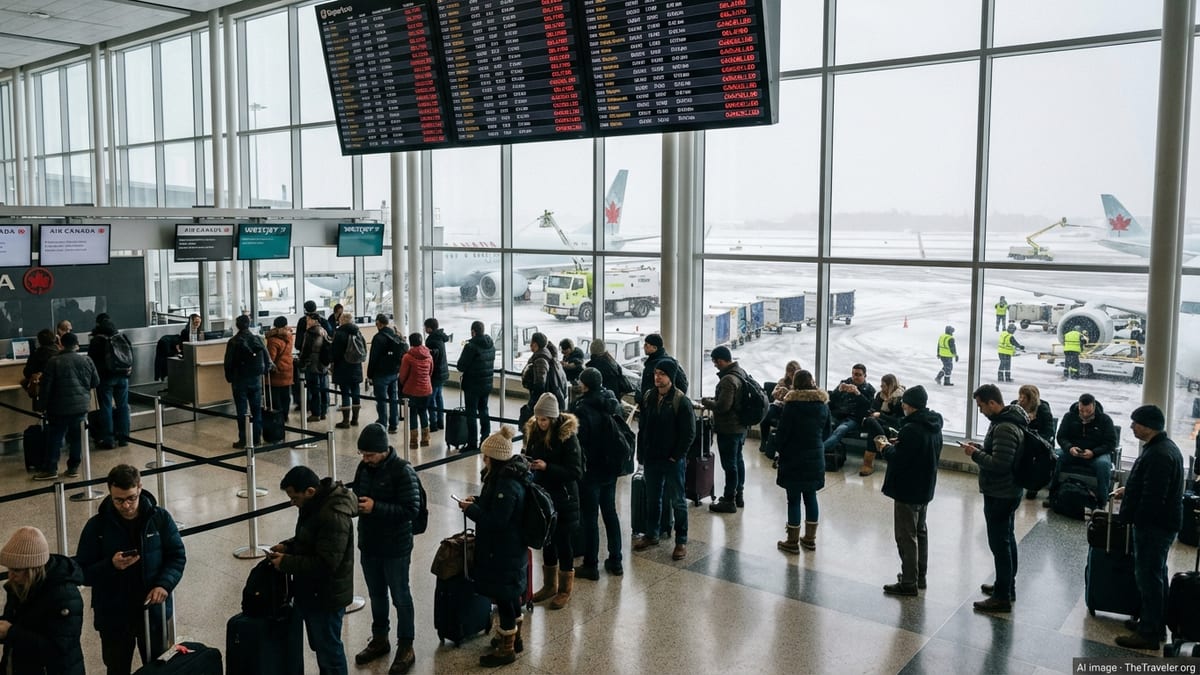
Passengers across Canada faced a fresh wave of disruption on Thursday as 76 flight cancellations and 511 delays rippled through the country’s air network, snarling operations at major hubs from Vancouver and Calgary to Toronto, Montreal and St. John’s and leaving travellers stranded in terminals or scrambling to rebook.
Storm System and Operational Strain Collide
The latest bout of flight chaos comes as a sprawling winter system continues to sweep across large parts of Canada, combining with already stretched airline operations to create significant bottlenecks. Blowing snow, freezing rain and shifting winds have reduced visibility and complicated runway and deicing operations at several of the country’s busiest airports, particularly in Ontario, Quebec and Atlantic Canada.
At Toronto Pearson and Montreal Trudeau, where even a brief slowdown in ground handling can cascade through the day’s schedule, airlines struggled to keep services on time. Crews cycled aircraft through deicing bays while snowplows moved repeatedly across runways and taxiways, forcing departures into holding patterns and delaying arrivals. Similar conditions at St. John’s and other Atlantic gateways further tightened the system, leaving little spare capacity to recover from disruptions.
In Western Canada, Vancouver and Calgary contended with their own mix of winter conditions and knock-on effects from delays elsewhere in the network. Aircraft arriving late from central and eastern Canada left outbound passengers waiting at gates as operations teams attempted to rework rotations and crew pairings. The result was a patchwork of cancellations across the day and hundreds of flights that operated well behind schedule.
Aviation analysts noted that the situation reflects the thin margins on which many carriers now operate. With fleets and staffing tuned closely to demand, there is little room to absorb weather or technical issues without widespread impact. When a storm front shifts or a hub slows, the repercussions can be felt hundreds or even thousands of kilometres away.
Major Carriers Bear the Brunt
Canada’s largest airlines, including Air Canada and WestJet, absorbed the most visible share of Thursday’s disruption, alongside regional affiliates such as Jazz and PAL Airlines that connect smaller communities to the national network. Together, these carriers accounted for a significant proportion of the 76 cancelled flights and more than 500 delayed services reported nationwide.
Air Canada, which anchors long haul and domestic trunk routes at Toronto, Montreal and Vancouver, saw multiple morning and midday departures pushed back as aircraft awaited deicing slots and revised takeoff times. In some cases, the airline opted to proactively cancel select frequencies, consolidating passengers onto remaining services to preserve overall reliability and create space in a crowded schedule.
WestJet, with a strong presence in Calgary, Edmonton and Vancouver, also reported a high volume of delays as it worked through a busy midwinter schedule. The carrier has already been contending with weather-related cancellations in the Prairies, and any additional slowdown in Calgary or Toronto quickly reverberated across its western and transcontinental routes.
Regional operators were not spared. Jazz, which flies under capacity purchase agreements and feeds major hubs from smaller markets, faced rolling delays as inbound aircraft arrived late and connection banks disintegrated. PAL Airlines, a key player in Atlantic Canada and parts of Quebec, saw departure and arrival times slide as conditions worsened at St. John’s and Halifax and as late-running inbound flights from other provinces squeezed tightly timed turnarounds.
Key Hubs From Vancouver to St. John’s Disrupted
While the disruption was national in scope, several airports emerged as hotspots as the day progressed. Toronto Pearson, Canada’s busiest hub, once again experienced the kind of gridlock that has become familiar during intense winter weather, with waves of delayed departures and arrivals crowding departure boards and forcing passengers to linger near gate podiums waiting for updates.
In Montreal, gusty crosswinds and blowing snow narrowed the operating window for takeoffs and landings, prompting air traffic controllers and airport operations teams to slow movements at key periods. Ground crews were periodically forced to pause activity to safely reposition deicing trucks and snow-clearing equipment, adding precious minutes to already stretched turnaround times. Passengers on transatlantic and transcontinental flights arriving behind schedule often found their onward domestic connections already boarding or long gone.
Further east, St. John’s International faced typical Atlantic winter conditions, with strong winds, low cloud and intermittent snow showers disrupting a relatively small but vital schedule of flights. For many travellers in Newfoundland and Labrador and other Atlantic provinces, air service to hubs like Halifax, Montreal and Toronto is the only practical way to reach the rest of the country, leaving them especially vulnerable when weather halts or slows operations.
On the West Coast, Vancouver dealt with its own weather-related challenges and the cascading effect of delays on transcontinental services. Flights inbound from Toronto, Montreal and Calgary often arrived late, placing strain on tightly scheduled turnarounds for aircraft due to operate onward to smaller British Columbia and U.S. destinations. Calgary, meanwhile, served as both a source and recipient of delays, with snow and low visibility at times forcing short-term curtailment of departures and arrivals.
Passengers Face Long Queues and Missed Connections
For travellers on the ground, the statistics of 76 cancellations and 511 delays translated into missed meetings, disrupted holidays and sleepless hours camped out in terminals. Check in counters at major hubs saw steady lines of passengers seeking to rebook or reroute, while self service kiosks and airline mobile apps faced heavy use as people tried to secure scarce alternative seats.
Security lines and boarding areas grew crowded as passengers waited for rolling departure times that sometimes shifted multiple times in the span of an hour. Some travellers reported staying near their gate for much of the day to avoid missing sudden boarding calls, particularly when airlines advanced departure times to take advantage of brief breaks in weather or deicing backlogs.
Missed connections were a recurring theme, especially for those arriving on late running long haul flights from Europe, the Caribbean and Asia. Tight domestic connections through Toronto, Montreal and Vancouver quickly became impossible when inbound aircraft landed an hour or more behind schedule. With many last departures of the evening already full or cancelled, families and solo travellers alike scrambled for hotel rooms and meal vouchers or chose to wait overnight in terminal seating areas.
Some passengers opted to abandon air travel altogether where alternatives existed, turning to rental cars, intercity buses or rail to complete their journeys between major cities. However, for many communities in northern, prairie and Atlantic regions, there was no viable substitute for air links, leaving residents and visitors dependent on rebooked flights that could be hours or even a full day later than originally planned.
Mitigation Efforts and Travel Waivers
Faced with the scale of disruption, Canada’s airlines sought to ease the burden on affected travellers by relaxing some of their normal rules and encouraging passengers to adjust itineraries in advance. Change fee waivers, already in place at certain hubs because of earlier winter storms, were extended or expanded to cover additional routes and dates as operational forecasts worsened.
Passengers departing from or connecting through Toronto, Montreal, Calgary and Vancouver were urged to check flight status repeatedly before leaving home, as schedules that appeared intact in the morning often showed delays or cancellations by midday. Airlines reminded customers that rebooking through websites and mobile apps was often quicker than waiting in line at airport counters, particularly during peak disruption when call centres and in person agents were overwhelmed.
Airports also played a role, using social media channels and terminal announcements to communicate runway conditions, deicing backlogs and expected recovery times. In some cases, airport authorities deployed additional staff to help direct passengers, manage queues and answer basic questions, leaving airline agents to focus on complex rebookings and irregular operations procedures.
Despite these efforts, capacity constraints limited how quickly the system could recover. With most carriers operating tightly utilised fleets and with limited spare aircraft or crews available at short notice, particularly in regional networks, some passengers were rebooked onto flights departing many hours or even a full day after their original plans.
Regional Communities and Smaller Airports Feel the Impact
The disruption was particularly acute for smaller airports and the communities that depend on them. Regional cities in Atlantic Canada, northern Quebec and the Prairies rely heavily on operators such as Jazz and PAL Airlines to maintain links to major hubs where onward domestic and international connections are made. When weather or congestion at those hubs forces cancellations, local travellers often have no alternative flights the same day.
Communities in Newfoundland and Labrador, as well as in parts of Nova Scotia and New Brunswick, saw key departures delayed or cancelled as winter weather fluctuated across St. John’s, Halifax and other regional fields. Residents travelling for medical appointments, education, or essential business found themselves rescheduling plans at short notice, while visitors heading home after holidays or family visits waited out conditions in small terminal buildings.
In the West, smaller airports in Alberta and British Columbia experienced follow on delays as aircraft and crews scheduled to arrive from Calgary or Vancouver did so hours late. This often forced operators to combine lightly booked flights or cancel rotations outright, concentrating remaining capacity on routes with the greatest demand or with limited alternative access by road.
Local tourism businesses, from hotels and car rental agencies to tour operators, reported mixed effects. Some properties near major hubs saw a spike in last minute bookings from stranded passengers, while operators in affected regional destinations grappled with late arrivals and shortened stays, particularly among leisure travellers with limited time.
Broader Pressure on Canada’s Aviation System
The latest day of mass disruption underscores the broader pressures facing Canada’s aviation sector in early 2026. Airlines have been adjusting schedules and route networks in response to shifting demand patterns, higher operating costs and changing travel behaviour, including a noticeable pullback in some transborder and long haul markets.
Carriers such as WestJet and Air Canada have already trimmed or suspended a number of U.S. routes from cities including Vancouver, Calgary, Edmonton, Halifax and Toronto, reallocating aircraft to markets seen as more resilient or profitable. At the same time, staffing and training pipelines remain under strain after several years of volatility, limiting how quickly airlines can add spare crews or build redundancy into their schedules.
Industry observers note that these structural challenges mean weather has an outsize effect on day to day reliability. Where airlines once maintained greater slack in their fleets and route maps, they now operate closer to the edge of available capacity, making it more difficult to absorb even routine winter events without generating extensive knock on delays and cancellations.
For passengers, that reality translates into a travel environment where flexibility and contingency planning are increasingly essential. Travellers are being advised to allow more time for connections, especially through major hubs during the winter months, and to monitor their flights closely in the days and hours leading up to departure. As Thursday’s 76 cancellations and 511 delays demonstrate, a single weather system or operational hiccup can rapidly cascade into a nationwide challenge.