

More news on this day
Thousands of airline passengers across Canada are facing significant disruptions as widespread cancellations and delays ripple through major carriers and key hubs, snarling operations from Toronto and Montreal to Calgary, Vancouver, Ottawa and Halifax.
Get the latest news straight to your inbox!
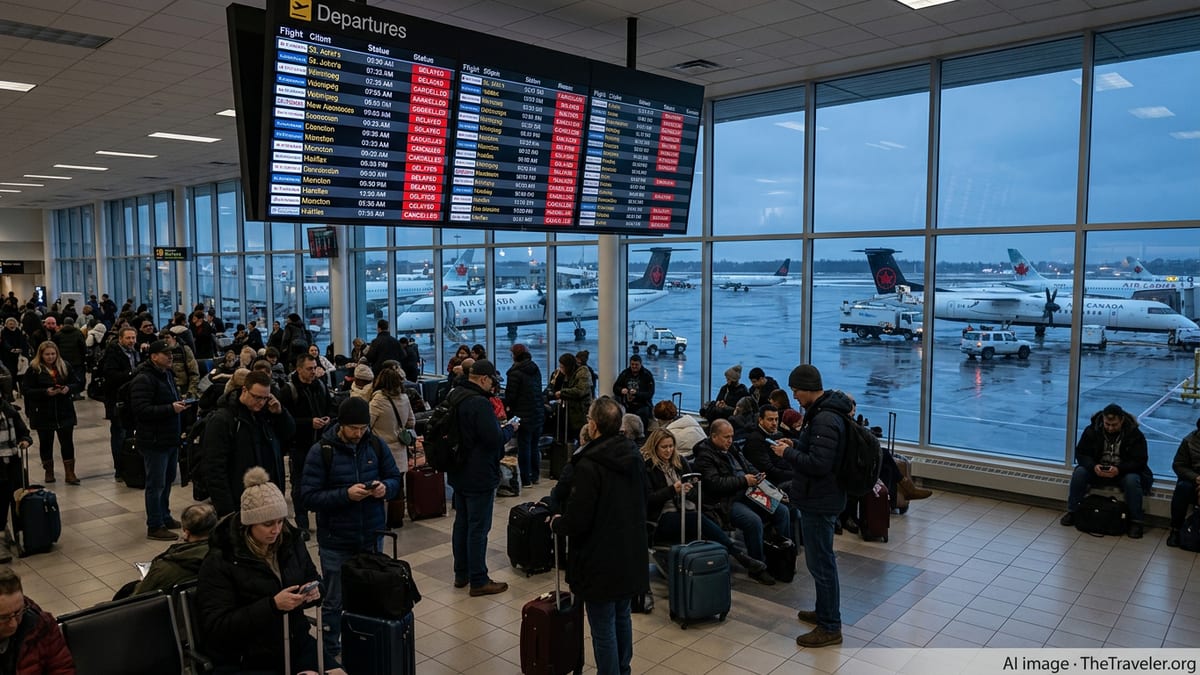
Widespread Cancellations and Delays Across Multiple Carriers
Publicly available tracking data and media coverage indicate that Canadian air travel has been hit by a fresh wave of disruption, with a combined 76 flights cancelled and more than 770 delayed across the country in a single day. The impact spans several major carriers, including Air Canada, WestJet, Jazz, Porter Airlines and smaller operators, with passengers reporting missed connections, overnight stays and long rebooking lines.
The pattern of disruption mirrors a broader trend seen through the 2025–2026 winter seasons, when Canadian airlines have repeatedly struggled with operational resilience amid severe weather, infrastructure constraints and tight staffing. While isolated cancellations are common in winter, the scale of the current episode, affecting hundreds of services, has left many travelers effectively grounded in key gateway cities.
Tracking dashboards show that delays now extend well beyond a few minutes of schedule slippage, with many flights running hours late and forcing cascading knock-on effects throughout the day. Travellers with multi‑segment itineraries, particularly those connecting through Toronto Pearson, Montreal Trudeau, Calgary and Vancouver, are among the hardest hit, as missed onward flights can require complete itinerary rebuilds.
The disruption is not confined to a single airline or region, underlining the interlinked nature of Canada’s domestic route network. Regional operators such as Jazz, which flies under the Air Canada Express banner, and Porter Airlines, now serving both downtown and major international airports, play a crucial role in feeding traffic into larger hubs, so delays at one point can spread quickly to others.
Key Hubs From Toronto to Halifax Under Strain
The brunt of the disruption is being felt at Canada’s largest airports, where even small operational shocks can quickly snowball due to high traffic volumes. Toronto Pearson, the country’s busiest hub, has again emerged as a focal point. Recent winters have already produced record snowfalls and extensive cancellation days at Pearson, and any new round of mass delays can quickly back up both domestic and transborder operations.
Montreal Trudeau and Vancouver International, which serve as crucial east and west gateways, are also heavily affected by the latest wave of irregular operations. Delays at these hubs often reverberate across the network, as aircraft and crew scheduled to operate subsequent flights cannot be turned around on time. This results in knock‑on cancellations even at airports where local weather appears relatively calm, a pattern regularly noted in published reporting on previous storms and disruption events.
Calgary, Ottawa and Halifax are likewise experiencing heightened disruption as part of this same system of network effects. Calgary, a central hub for WestJet and an important point for transcontinental connections, is particularly vulnerable when winter storms or runway constraints slow departures and de‑icing. Ottawa and Halifax, while smaller, depend heavily on reliable links to Toronto and Montreal; when those hubs falter, schedules in both cities quickly thin out, leaving passengers with limited alternatives and longer wait times for the next available seat.
At many of these airports, social media posts and local coverage describe crowded departure halls, long lines at customer service counters and confusion over rapidly changing departure boards. For travellers, the experience often extends beyond a single delay, evolving into a multi‑day saga of rebooked flights, airport overnights and last‑minute changes to lodging and ground transportation.
Weather, Operational Constraints and Systemic Challenges
Reports indicate that a mix of harsh winter weather and operational limitations is again at the heart of the latest mass disruption. Canada’s major hubs have recently experienced repeated bouts of heavy snow, freezing rain, extreme cold and low visibility, all of which can slow or halt runway operations, complicate de‑icing and force air traffic managers to reduce arrival and departure rates for safety reasons.
When such constraints are layered on top of tightly scheduled fleets and crews, even a modest reduction in throughput can create a backlog of aircraft waiting for departure slots. As aircraft and flight attendants time out under duty‑time rules, airlines are compelled to cancel some services entirely rather than risk further compounding delays or operating outside regulatory limits.
At the same time, Canadian carriers are still contending with structural pressures that have been widely documented in recent months, including staffing challenges, aircraft maintenance bottlenecks and infrastructure limitations at crowded airports. Analysts have noted that these vulnerabilities become particularly visible during winter peaks, when every available aircraft is needed and recovery windows between storms are short.
Industry observers also point to the increasingly complex web of codeshares, regional feed and shared airport resources. When one airline experiences a significant outage, it can tie up gates, baggage systems and de‑icing capacity, indirectly affecting competitors operating out of the same terminals. This helps explain why the current incident involves a broad range of carriers rather than a single operator in isolation.
Impact on Travellers and Passenger Rights
For passengers, the immediate impact is measured in missed vacations, business trips and family visits, along with the financial and emotional strain of being stranded away from home. Travellers caught up in the latest cancellations and delays have taken to online forums to describe long waits for information, difficulty accessing call centres and limited availability on alternative flights on the same day.
The situation has renewed attention on Canada’s air passenger protection framework, which sets out minimum standards for communication, rebooking and compensation in cases of delay and cancellation. Recent enforcement actions and high‑profile disputes over eligibility have already placed airlines under closer scrutiny, and another round of mass disruption is likely to intensify debate over whether existing rules offer sufficient protection, particularly when weather and operational causes overlap.
Public guidance from consumer advocates typically urges passengers to document all communications with airlines, keep receipts for meals and accommodation, and review the specific conditions under which compensation and refunds may apply. With so many flights disrupted simultaneously, hotel rooms near major airports can quickly sell out, and options for same‑day rebooking on competing carriers may become scarce, especially on popular domestic trunk routes.
Travel insurers and credit card travel protections may also come into play, offering partial reimbursement for out‑of‑pocket expenses in some cases. However, coverage varies widely between policies, and travellers often only discover the details when they urgently need assistance, adding another layer of complexity to an already stressful experience.
What Travellers Can Expect in the Coming Days
Based on how previous large‑scale disruptions in Canada have unfolded, the effects of the current cancellations and delays are unlikely to resolve immediately once weather and operational conditions improve. Airlines typically require several days to reposition aircraft and crews, clear the backlog of displaced passengers and restore schedules to normal.
In the near term, travelers can expect continued crowding at major hubs, along with rolling delays as airlines work through congested departure banks. Some flights may operate with very few empty seats as carriers prioritize moving stranded travellers, making same‑day changes and standby travel more difficult than usual.
Industry analysts often emphasize that winter irregular operations are now an almost annual feature of Canadian aviation, and that passengers booking critical trips during peak months should build additional flexibility into their plans where possible. That can include allowing extra connection time, avoiding the last flight of the day on key routes and closely monitoring flight status in the 24 hours before departure.
For now, thousands of passengers remain in limbo across Toronto, Montreal, Calgary, Vancouver, Ottawa and Halifax, waiting for their flights to be rescheduled and for Canada’s congested air travel system to regain its footing after yet another bruising day of disruption.