

More news on this day
Hundreds of passengers were stranded across Canada on Friday as a fresh wave of flight cancellations and delays rippled through major airports, with Air Canada, WestJet, Porter, Jazz and other carriers scrubbing 87 additional services and delaying more than 300, disrupting travel plans from Vancouver and Calgary to Montreal, Ottawa and smaller regional hubs.
Get the latest news straight to your inbox!
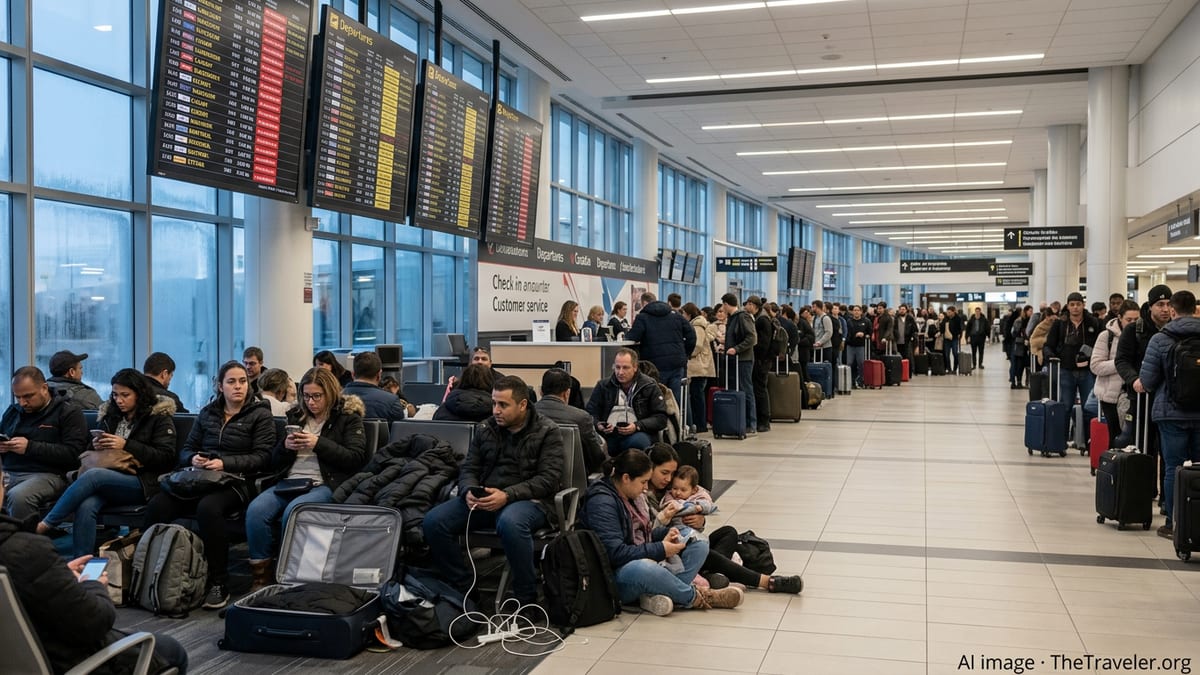
New Wave of Cancellations Hits Major Canadian Hubs
The latest round of disruptions piled onto already stressed airline operations, as carriers cited a mix of operational constraints, aircraft repositioning problems and knock-on effects from recent winter weather systems. The cancellations and delays were concentrated on high-traffic domestic and transborder routes, stranding travelers at some of the country’s busiest terminals.
Vancouver International, Calgary, Montreal–Trudeau and Ottawa airports all reported clusters of scrubbed departures and late arrivals through the day, with departure boards dominated by red and amber status updates. Short-haul services between Western Canada’s main cities and the busy Montreal–Ottawa–Toronto corridor were among the hardest hit, leaving passengers with limited same-day alternatives.
Regional travelers felt the impact as well, as Jazz and other feeder operators struggled to keep schedules intact amid aircraft and crew imbalances. With planes and staff out of position after earlier disruptions, airlines were forced to proactively cancel some services to avoid cascading delays into the evening peak.
Airport officials warned that even when weather conditions appear normal at one location, problems upstream in the network can trigger widespread disruption. Many of Friday’s cancellations were linked to aircraft that never arrived from storm-affected cities earlier in the week, compounding the strain on already tight schedules.
Passengers Face Long Lines, Limited Rebooking Options
Inside terminals, travelers reported snaking customer service lines, scarce rebooking options and difficulty getting through to call centers. With multiple carriers cancelling flights on the same corridors, remaining seats on competing services quickly filled, leaving some passengers told they would not be rebooked until later in the weekend.
Families returning from school breaks and business travelers on tight schedules were among those hardest hit. Some opted to rent cars or share long-distance rides between cities such as Vancouver and Calgary or Montreal and Ottawa rather than wait days for an open seat. Others booked last-minute tickets on rival airlines at steep prices in hopes of salvaging their itineraries.
Hotels near major airports began to sell out by late afternoon, as stranded passengers sought somewhere to stay after evening departures were cancelled. Those unable to secure accommodation prepared to spend the night in terminals, improvising makeshift sleeping arrangements around gate areas and baggage halls.
Travel advocates urged passengers to document all expenses, including meals, taxis and lodging, in case they qualify for reimbursement under federal air passenger protection rules or individual airline policies. They also advised travelers to use airline apps and airport kiosks where possible, to avoid lengthy waits at traditional service desks.
Airlines Cite Safety, Staffing and System Strain
Airlines involved in the disruptions pointed to a convergence of factors rather than a single cause. Operational teams continued to recover from recent storms that snarled traffic in parts of Western and Eastern Canada, while also navigating crew time limits, maintenance windows and high seasonal demand.
Carriers stressed that flights cannot depart when weather or runway conditions fall below safety thresholds at any point in a multi-leg itinerary, even if skies are clear at the origin. When the first flight in a chain is delayed or cancelled, the aircraft and crew often cannot operate subsequent segments, setting off a “ripple effect” that can be felt thousands of kilometres away.
Industry analysts noted that Canadian airlines have been operating with leaner spare capacity, leaving less margin to absorb sudden shocks. When multiple carriers are affected simultaneously, the system quickly reaches a point where there are not enough backup aircraft, reserve crew or empty seats to re-accommodate everyone in a timely manner.
Unions have also raised concerns about crew fatigue as disruptions stretch into multiple days, pressing airlines to slow schedules or build in longer buffers rather than push operations to the brink. That, in turn, can translate into more preemptive cancellations when conditions look unstable.
Rights, Refunds and What Stranded Travelers Can Do
The ongoing turmoil has refocused attention on Canada’s air passenger protection regulations, which outline when travelers are entitled to rebooking, refunds or compensation. The rules distinguish between disruptions within an airline’s control and those caused by weather or air traffic constraints, leading to different levels of obligation for carriers.
Consumer advocates urged passengers to carefully review written notices provided at the airport or via email, and to request clear explanations about whether their disruption is categorized as within or outside the airline’s control. That classification will determine whether they may be owed cash compensation in addition to a new itinerary or refund.
Experts recommend that stranded travelers move quickly to secure alternatives, including checking nearby airports or different routing options within Canada and to the United States. In many cases, acting early can mean the difference between traveling the same day on a more circuitous route or waiting several days for a direct flight to reopen.
Passengers are also encouraged to keep all communications in writing where possible and to take screenshots of flight status pages showing cancelled or heavily delayed services. These records can be crucial if a claim later needs to be escalated through the airline’s complaint process or to the federal regulator.
Ongoing Uncertainty for Spring and Summer Travel Plans
The latest disruption adds to a series of recent incidents that have shaken traveler confidence in Canada’s domestic air network, particularly during winter and shoulder seasons. Many passengers now factor potential multi-day delays into their planning, building in buffer days for critical trips such as cruises, weddings or international connections.
Travel agents report a rise in demand for flexible fares, comprehensive travel insurance and itineraries that avoid tight connections through weather-prone hubs. Some Canadians are also diversifying carriers on round trips, flying out on one airline and returning on another to reduce the risk that a single operator’s problems will derail their entire journey.
With spring break and summer peak seasons approaching, industry observers say airlines will be under pressure to demonstrate more resilient operations and clearer communication when things go wrong. For now, passengers heading through Vancouver, Calgary, Montreal, Ottawa and other affected airports are being advised to monitor flight status closely, arrive early and prepare for last-minute changes.
As airlines work to untangle Friday’s schedule and reposition planes and crews, travelers across Canada face another uncertain travel day, with many still waiting to learn when they will finally be able to take off.