

More news on this day
Thousands of travelers across Canada faced significant disruption today as dozens of flights were cancelled and hundreds more delayed at major hubs including Toronto, Vancouver, Montreal, Calgary, Ottawa, Winnipeg and St. John’s, with publicly available flight tracking data indicating at least 52 cancellations and 297 delays affecting carriers such as Air Canada, WestJet, Jazz, Porter and PAL Airlines.
Get the latest news straight to your inbox!
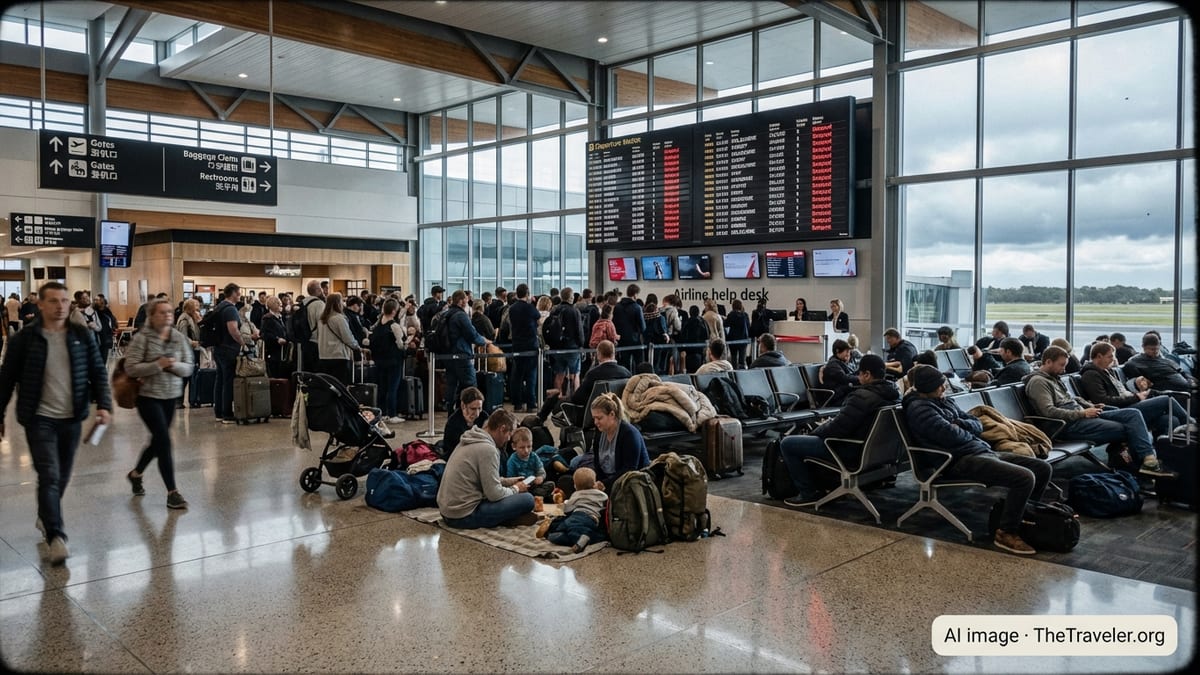
Wave of Cancellations Sweeps Major Canadian Airports
Flight status boards at key Canadian gateways showed widespread disruption, with a fresh round of cancellations and delays rippling through Toronto Pearson, Vancouver International, Montreal Trudeau, Calgary International, Ottawa, Winnipeg and St. John’s. Data compiled from flight tracking platforms and operational summaries indicated that at least 52 services were cancelled outright, while about 297 departures and arrivals experienced delays of varying length.
The pattern mirrors a broader trend of operational strain that has dogged Canadian aviation in recent weeks. Earlier this month, similar disruption was recorded as major hubs in Toronto, Calgary, Montreal and Ottawa logged dozens of cancellations and several hundred delayed flights in a single day, underscoring how quickly conditions can deteriorate when weather or operational constraints converge on an already busy network.
Today’s figures, while lower than the most extreme peaks seen during major winter storms, still translated into long queues at check in, congested security lines and crowded gate areas, as passengers scrambled to rebook or wait out rolling delays. Domestic and transborder routes were both affected, leading to missed connections and extended journey times for many travelers.
Regional centers have also felt the knock on effects. Québec City and CFB Goose Bay, for example, reported their own clusters of delays and cancellations this week, feeding additional disruption into the national system as aircraft and crews were left out of position for subsequent flights.
Flag Carriers and Regional Airlines Hit Across the Board
The disruption has not been confined to a single airline. Publicly available information shows that Canada’s largest carrier, Air Canada, once again featured prominently in today’s statistics, with cancellations and extended delays on core trunk routes linking Toronto, Montreal, Calgary and Vancouver, as well as on feeder services into smaller markets.
Low cost and regional operators have also faced headwinds. WestJet and its affiliates, which maintain strong presences in Calgary and Western Canada, have been affected by knock on delays that spread through their domestic networks. In Newfoundland and Labrador, carriers including PAL Airlines and smaller regional operators have reported cancelled and postponed flights on routes connecting St. John’s and other Atlantic communities to national hubs.
Jazz and Porter, which play a crucial role in feeding passengers into larger airports and serving shorter haul markets, have likewise seen schedules disrupted. High frequency services between cities such as Toronto, Ottawa and Montreal are particularly vulnerable when irregular operations develop, as any delay tends to cascade through multiple rotations over the course of the day.
The combined effect has been to strain connectivity across Canada’s vast geography. With so many passengers depending on tight connections between regional and national services, even relatively modest timetable changes can leave travelers stranded far from their final destinations or forced to wait for scarce alternative seats.
Weather, Congestion and Operational Pressures Combine
Recent days have brought a mix of late season winter weather and unsettled conditions across multiple provinces, factors that often play a decisive role in Canadian aviation. Reports from travel industry outlets highlight how snow, freezing rain and low visibility have periodically affected operations at airports from Québec City and Ottawa to Calgary and Atlantic Canada, pushing air traffic control and ground handling teams to reduce movements for safety.
When runways and taxiways become slippery or visibility drops below specified thresholds, airlines are required to slow or suspend operations until conditions improve. That can quickly translate into a backlog of departures and arrivals during peak periods. Once aircraft and crews fall out of their planned rotations, the knock on effects can persist well after the immediate weather front has passed.
Operational and staffing constraints have added another layer of complexity. In the past year, Canadian carriers have faced scrutiny over their ability to recover from irregular operations, with performance data and media coverage pointing to recurring issues related to maintenance, crew scheduling and airport congestion. On busy travel days, even a relatively small disruption early in the morning can lead to rolling delays that last deep into the evening.
Industry observers note that today’s figures, combined with other recent disruption events, highlight ongoing sensitivity in Canada’s air transport system. While airlines and airports have invested in additional capacity and technology since the worst of the pandemic era turmoil, the network remains vulnerable to spikes in demand, volatile weather patterns and infrastructure bottlenecks at major hubs.
Passengers Face Long Waits and Complex Rebooking
For travelers caught up in today’s disruption, the immediate impact has been measured in hours spent in terminal buildings and uncertainty around onward plans. Social media posts and local news coverage from venues such as Québec City and Goose Bay have in recent days shown passengers lining up at service desks and monitoring departure boards for incremental updates as delay estimates shift throughout the day.
Standard airline practice in such situations is to prioritize safety and then work through rebooking options using available seats on later flights or, where possible, rerouting via alternative hubs. On heavily used domestic corridors such as Toronto to Vancouver or Montreal to Calgary, this can mean same day solutions for some passengers, while travelers on lower frequency regional routes may face overnight stays or extended layovers before a replacement flight becomes available.
Accommodation and meal arrangements vary depending on the cause of the disruption and individual airline policies. Where delays and cancellations are attributed to weather or other uncontrollable factors, carriers in Canada are generally not required to provide hotel stays, though some may offer vouchers or goodwill gestures in specific circumstances. Travelers affected by controllable issues such as certain types of maintenance problems may have broader entitlements under national passenger rights rules.
The complexity of these rules has prompted growing attention from consumer advocates and regulators. Recent coverage of a pilot project at Air Canada aimed at speeding up compensation claims illustrates how airlines are trying to address large backlogs of passenger complaints related to delays and cancellations, even as new disruption events continue to generate additional cases.
What Today’s Disruptions Signal for Summer Travel
Today’s wave of cancellations and delays offers a timely warning for travelers planning trips in the coming months. Analysts reviewing transportation performance data note that while overall completion rates for Canadian carriers remain relatively high, the proportion of flights that experience some form of disruption has edged upward during periods of heavy demand or challenging weather.
The recent clusters of stranded passengers at airports across Québec, Atlantic Canada and the country’s largest hubs suggest that even routine weather systems and localized operational issues can have outsized effects when the network is running close to capacity. As the summer travel season approaches, with traditionally higher passenger volumes, there is concern that similar patterns could recur unless resilience measures keep pace.
For now, travel experts commonly recommend that passengers build additional buffer time into itineraries that rely on tight connections, particularly when routing through Toronto, Montreal, Calgary or Vancouver. They also emphasize the importance of monitoring real time flight information through airline apps and airport displays, enrolling in notification services and considering flexible ticket options that make it easier to adjust plans at short notice.
While airlines and airports continue to refine their contingency planning, today’s figures serve as a reminder that Canada’s air travel system remains heavily exposed to a combination of weather volatility, infrastructure constraints and operational pressures, leaving thousands of passengers vulnerable to sudden and often lengthy disruptions.