

More news on this day
Thousands of air travelers across Canada faced major disruption on February 24, 2026, as Air Canada, WestJet, Jazz, Porter and other carriers cancelled 350 flights and delayed 282 more across Montreal, Toronto, Vancouver, Halifax, Ottawa and St. John’s amid a powerful winter storm linked to severe weather in the United States.
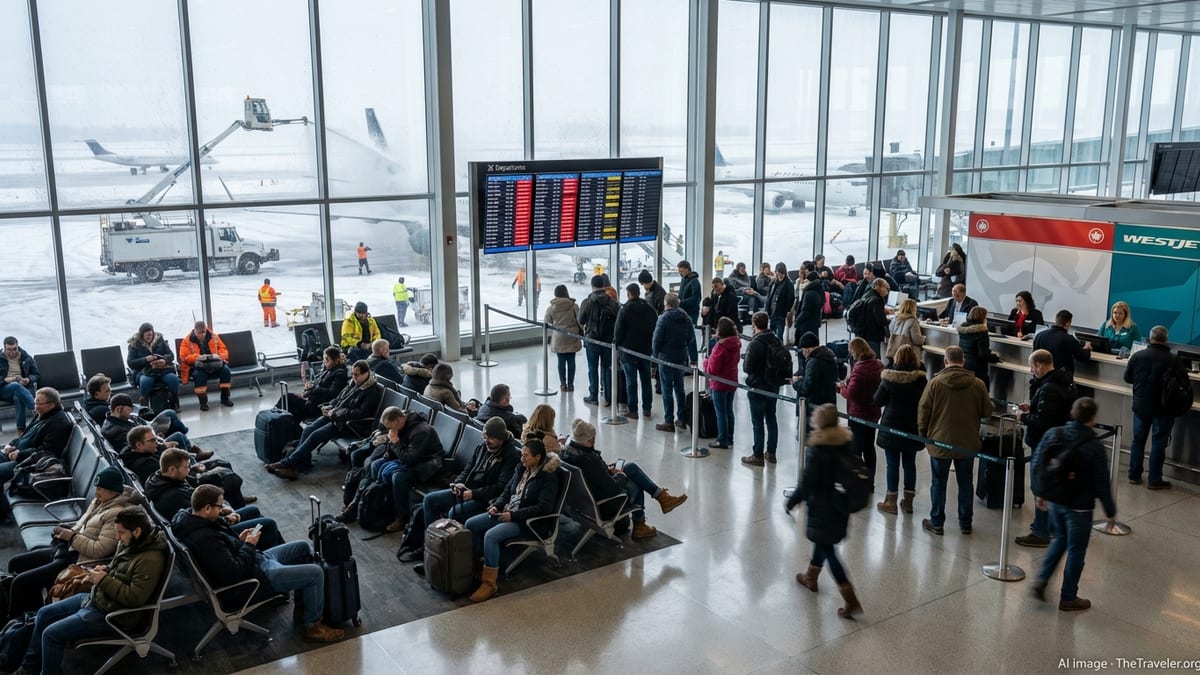
Air Travel Across Canada Buckles Under Winter Weather
The scale of Monday’s disruptions placed Canada among the hardest-hit aviation markets in North America, as the country’s largest hubs struggled to keep traffic moving in the face of fast-changing conditions. Flight-tracking data showed cancellations and delays building steadily through the morning rush before peaking by early afternoon, when departure boards at several airports were dominated by red and yellow alerts.
While Canada regularly contends with harsh winter conditions, this round of disruption was notable for its breadth. The knock-on effects stretched from transcontinental routes linking Vancouver and Toronto to short-haul services in Atlantic Canada, complicating both domestic and international travel. With aircraft and crews out of position, airlines warned that residual delays could linger even after the storm system begins to ease.
Industry analysts noted that the timing of the disruption, at the start of a busy late-winter travel period that includes school breaks in some provinces, heightened the impact for leisure travelers. Many passengers heading for sun destinations or returning from weekend trips found themselves stuck in terminals with limited options for rebooking on the same day.
Montreal and Toronto Bear the Brunt of Operational Chaos
Montreal and Toronto, two of Canada’s busiest aviation gateways, were among the worst affected by the cancellations and delays. At Montreal–Trudeau International Airport, a wave of scrubbed departures and arrivals involving Air Canada, WestJet and regional partner Jazz slowed operations to a crawl as crews worked continuously to clear snow and ice from runways and taxiways.
Toronto Pearson International Airport, the country’s largest hub, saw disruptions ripple through its tightly choreographed schedule. Dozens of Air Canada mainline and feeder flights, along with services operated by Jazz and Porter, were cancelled or pushed back by hours as de-icing queues lengthened and arriving aircraft were forced into holding patterns or diversions. Passengers connecting through Pearson to destinations across Canada, the United States, Mexico and overseas bore the brunt of the cascading delays.
On the opposite shore of Lake Ontario, Billy Bishop Toronto City Airport also recorded significant knock-on impacts, particularly for Porter Airlines services linking downtown Toronto with Ottawa, Montreal, Halifax and smaller regional points. Short-haul business travelers, who often rely on same-day return trips via Billy Bishop, found themselves unable to complete their journeys as flights were scrubbed with little notice.
Vancouver and Atlantic Canada Struggle to Maintain Schedules
On the West Coast, Vancouver International Airport faced a different but related set of challenges as the national network disruption reached the Pacific gateway. While local weather conditions fluctuated between rain and mixed precipitation, a substantial number of cancellations and delays were triggered by inbound aircraft that never departed from storm-affected cities in Central and Eastern Canada or the U.S. Northeast.
Air Canada and WestJet both scaled back eastbound transcontinental services from Vancouver as crews and aircraft were reassigned or held in place for safety reasons. Passengers bound for Toronto, Montreal and Ottawa saw flights repeatedly pushed back as operations teams attempted to rebuild schedules around the evolving weather picture and air traffic control restrictions farther east.
In Atlantic Canada, Halifax emerged as a critical pressure point. The airport, which serves as a major link for communities across the region, experienced a mix of outright cancellations and significant delays on services operated by Air Canada, WestJet, Porter and other carriers. Weather-related capacity constraints in Central Canada and along transborder corridors compounded local challenges, leaving some routes with only a fraction of their normal frequency.
Farther east in St. John’s, already prone to winter volatility, the impact was acutely felt on both domestic and transatlantic connections. Several departures to Halifax and central Canadian hubs were cancelled, while international links that rely on tight aircraft rotations faced extended delays, stranding travelers in terminals and hotels overnight.
Severe U.S. Winter Storm Sends Shockwaves Through Canadian Skies
Meteorologists and aviation authorities tied much of Monday’s disruption to a powerful winter system battering the northeastern United States, a storm pattern often referred to as a nor’easter. As the system intensified over the weekend and into Monday, it brought heavy snow, blizzard conditions and strong winds to key U.S. hubs including New York, Boston, Newark and Philadelphia, triggering thousands of cancellations south of the border.
Because Canadian airlines operate dense schedules into and out of these U.S. cities, the operational shock quickly spread north. Aircraft that were scheduled to shuttle between Canadian hubs and northeastern U.S. airports became trapped on the ground or diverted elsewhere, interrupting rotations that typically support multiple flights per day. Even routes with relatively clear skies overhead in Canada were affected when their inbound aircraft and crews failed to arrive.
Forecasters warned that the combination of heavy snowfall, high winds and low visibility over the northeastern seaboard would continue to make conditions hazardous for takeoffs and landings through at least late Monday. Authorities in several U.S. states declared emergencies and urged residents to avoid non-essential travel, further constraining airport operations. For Canadian airlines, that meant a cautious approach to schedule restoration, with carriers preferring to cancel early rather than gamble on narrow weather windows.
Airlines Activate Flexible Policies as Passengers Seek Answers
With departure boards filling up with cancellations and extended delays, major carriers moved to activate or expand flexible rebooking policies. Air Canada and Porter offered customers traveling to and from storm-affected destinations the option to change flights without standard penalties, subject to availability. WestJet issued travel advisories covering impacted airports, including Halifax and several northeastern U.S. cities, and encouraged passengers to check their flight status before heading to the airport.
Call centers and digital customer-service channels quickly became congested as travelers sought information on alternative routing and compensation options. Airline representatives urged passengers whose trips were not imminent to use online tools and mobile apps rather than lining up at airport counters, where queues in some terminals stretched past check-in areas and into public concourses.
At affected airports, volunteers and airport staff handed out water and snacks to those facing long waits, while some airlines arranged hotel accommodation or meal vouchers for passengers dealing with overnight delays. However, with spare capacity limited across the network, especially on peak routes, many travelers were told that the earliest available rebooking options could be a day or more away.
Travel advisors and industry experts recommended that passengers accept rebookings through secondary hubs, such as flying via Western Canada or the U.S. Midwest, where possible. They also urged travelers to maintain flexible plans, allow generous connection times and build in contingencies for ground transport once they arrived at their destinations.
Operational Resilience and Staffing Tested Yet Again
The latest round of disruptions provided a fresh test of the operational resilience of Canada’s airline and airport systems, which have been under sustained pressure from a series of intense winter weather events in recent years. Ground handling, maintenance, and airport operations teams were once again pushed to their limits as they battled snow accumulation, icing conditions and fluctuating wind patterns.
De-icing operations, a crucial but time-consuming winter procedure, proved to be a particular bottleneck. As snow and freezing precipitation persisted, aircraft often required multiple rounds of treatment, slowing departure flows and forcing crews to juggle takeoff slots and duty-time constraints. In some cases, flights that had boarded and pushed back were forced to return to the gate when weather conditions deteriorated beyond safe operating thresholds.
Staffing levels, already stretched at many airports by tight labor markets and ongoing recruitment challenges, added another layer of complexity. While airlines and airport authorities have invested in cross-training and contingency plans since earlier winter crises, supervisors acknowledged that even well-prepared teams struggle to absorb the operational shock when multiple major hubs are hit simultaneously by severe weather.
Aviation analysts noted that climate variability and more frequent extreme weather patterns are increasingly shaping airline planning for the winter months. Carriers are gradually shifting toward more conservative schedules during high-risk periods, building in additional slack and contingency resources where possible, though such measures can only partially offset the impact of a storm of this magnitude.
Ripple Effects on Tourism and Business Travel
The storm-induced chaos is expected to reverberate beyond the aviation sector, affecting tourism operators, hotels and business travelers across Canada and in key international markets. In major cities such as Toronto, Montreal and Vancouver, downtown hotels reported a spike in last-minute bookings from stranded passengers who needed overnight accommodation after missed connections or cancelled flights.
Tour operators and travel agencies specializing in winter getaways to the Caribbean, Mexico and other sun destinations also fielded a surge in calls from clients whose outbound or return flights were disrupted. In some cases, package holidays had to be shortened or extended unexpectedly, complicating ground arrangements and insurance claims. Cruise passengers traveling through Canadian hubs to connect with sailings in Florida and the Caribbean faced particular anxiety as delays threatened to cause missed departures.
Corporate travel managers said the timing was especially problematic for executives attending conferences, investor meetings and cross-border negotiations. With high-speed virtual meeting tools now embedded in most organizations, some trips were quickly converted to online participation. Still, last-minute changes often required complex coordination and, in some instances, led to postponed or downsized events.
For regional communities reliant on a limited number of daily flights to larger hubs, the cancellations underscored their vulnerability to external shocks. Business leaders in smaller cities warned that recurring winter disruptions risk eroding confidence in air connectivity that is critical for investment and tourism growth.
What Travelers Should Expect in the Coming Days
As airlines and airport authorities worked through the backlog, operations experts cautioned that normal service would not resume immediately once the worst of the storm passed. Aircraft and crews will need to be repositioned, maintenance cycles reset and slot allocations rebalanced across several congested hubs. That process can take several days, particularly when weather remains volatile or additional fronts threaten to move through key corridors.
Passengers with flights scheduled for the next 24 to 48 hours were advised to monitor their itineraries closely, sign up for airline notifications and consider proactively rebooking if traveling through heavily affected airports. Travelers connecting through the northeastern United States or major Canadian hubs were encouraged to build in generous buffer time or, when feasible, explore alternative routings via less affected cities.
Airports across the affected regions have indicated that they are coordinating closely with airlines, air traffic controllers and meteorological agencies to phase in more normal operations as conditions allow. However, officials stressed that safety will remain the overriding priority, with decisions on departures and arrivals guided by real-time assessments of runway conditions, visibility and wind.
For thousands of passengers who saw their plans upended on February 24, the latest storm disruption served as a stark reminder of how quickly winter weather can reshape travel across a vast country like Canada, where aviation remains a vital lifeline between distant communities and global destinations.