

More news on this day
Canada is urging travelers to rethink or carefully reassess trips to Russia, China and Bangladesh in 2026, as Ottawa updates its travel advisories to reflect a volatile mix of security concerns, political tension and emerging health risks that could quickly derail even well-planned journeys.
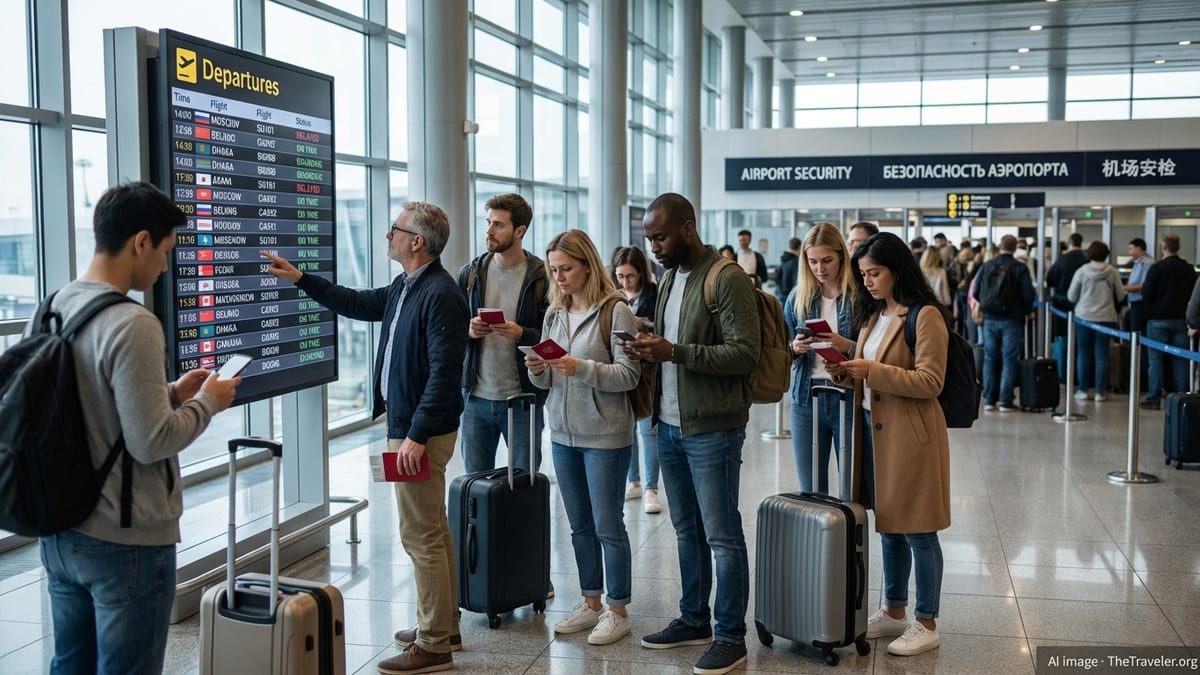
Heightened Warnings Signal a More Volatile World for Travelers
Global Affairs Canada has entered 2026 with a series of sharper travel advisories highlighting the fragility of the security environment in Russia, renewed scrutiny of China and fresh health alerts affecting Bangladesh. While advisory language is calibrated rather than alarmist, officials and public health experts are stressing that Canadians can no longer assume business-as-usual conditions in these destinations, even if flights are operating and borders remain open.
The updated guidance is part of a broader international trend in which governments are moving faster to flag localized risks, from political crackdowns and cyber surveillance to sudden disease outbreaks. For travelers, the practical effect is that trips which looked routine a year ago may now require far more preparation, documentation and on-the-ground vigilance, particularly in countries where the rule of law is weak or geopolitical tensions are high.
Travel advisors say the new emphasis on risk is not meant to deter all movement, but to make travelers think carefully about whether a given trip is essential, how they will stay informed and what contingency plans they have if conditions deteriorate. Insurance coverage, evacuation options and communication strategies are becoming central considerations, not afterthoughts.
Russia: War, Arbitrary Detention and a Shrinking Margin for Error
Canada’s warnings around Russia remain dominated by the ongoing war in Ukraine and the country’s internal security climate, both of which have steadily eroded the safety margin for foreign visitors. Ottawa continues to stress that there is a real risk of arbitrary enforcement of local laws, particularly for travelers with ties to Ukraine, those working in media or civil society, or individuals perceived to have criticized Russian authorities on social media.
With diplomatic relations strained and Western missions operating under constraints, consular assistance in Russia is more limited than many Canadians expect. Analysts note that short-notice mobilization measures, sporadic internal security operations and unpredictable border checks mean travelers can face delays, questioning or device searches with little recourse. In some regions, particularly close to the Ukrainian border, security incidents and infrastructure disruptions remain a possibility.
Sanctions and countersanctions are also reshaping the travel experience. Canadians may encounter difficulties using international payment cards, transferring funds or accessing certain online services. Airlines have rerouted or reduced flights, adding complexity to itineraries and heightening the risk of being stranded if routes are abruptly suspended. For those who do travel, experts strongly recommend carrying hard copies of key documents, maintaining redundant access to money and keeping family or employers updated with real-time itineraries.
Security consultants emphasize that even non-political trips, such as family visits or business meetings, can be affected by sudden policy shifts. Travelers are advised to avoid public demonstrations, refrain from commenting on sensitive political topics in public or online while in the country, and be prepared for intrusive questioning at checkpoints or airports.
China: Visa-Free Entry Meets Persistent Security and Surveillance Concerns
In a striking policy move, China has extended 30-day visa-free entry to ordinary Canadian passport holders starting February 17 and running until at least December 31, 2026. The measure, announced by Chinese officials and confirmed by visa centres in Canada, significantly simplifies short-term travel for tourism, business and family visits. It forms part of a broader push by Beijing to revive inbound tourism and deepen trade ties, coming on the heels of a political thaw between Ottawa and Beijing.
Despite the easier access, Canadian authorities are simultaneously drawing attention to what they describe as elevated security and human rights risks. Security experts and recent academic reports underline concerns about transnational repression, including pressure on dissidents and members of diaspora communities who are critical of Chinese authorities. Incidents of intimidation, online harassment and alleged overseas “police stations” have prompted new debates in Canada about how to protect citizens and permanent residents both at home and abroad.
Within China, travelers face a highly surveilled digital environment. Authorities have sweeping powers to monitor online communications, track movements via mobile apps and demand access to electronic devices at ports of entry. Messaging platforms, social media posts and even content backed up in the cloud can be scrutinized. For Canadian visitors, this raises real questions about data privacy, the safety of sensitive business information and the risk that past online statements could attract unwanted attention.
On the ground, regional disparities in risk remain pronounced. Heightened security measures continue in areas such as Xinjiang and Tibet, where foreign movement can be tightly controlled and access for journalists and researchers is often restricted. Travelers can encounter checkpoints, additional document checks and limitations on where they can move freely. Ottawa’s updated messaging stresses that Canadians should avoid any areas with a heavy security presence, steer clear of protests or politically sensitive events and be prepared for sudden changes to local rules or movement controls.
Balancing Opportunity and Risk in Canada–China Travel
The new visa-free window has been welcomed by airlines, universities and tourism operators on both sides of the Pacific, many of whom see it as a long-awaited chance to rebuild routes, academic exchanges and business travel disrupted since the pandemic and years of political tension. Canadian carriers and travel agencies report a surge of interest in itineraries to major Chinese cities, with particular demand from business travelers, students and those with family ties in China.
Yet the same easing of entry requirements that facilitates legitimate travel can also mask a layered set of risks. Legal scholars point out that Chinese authorities retain broad discretion over what constitutes a national security threat, with laws that can be applied retroactively or interpreted broadly. Canadians conducting research, media work or sensitive corporate negotiations may be especially vulnerable if they misjudge how authorities view their activities.
Digital hygiene is emerging as a key line of defence. Cybersecurity specialists advising Canadian firms now routinely recommend travelers use clean devices with minimal stored data, rely on secure virtual private networks where permitted, and disconnect sensitive corporate systems from devices that will cross the Chinese border. Individuals are urged to review their public social media profiles, remove unnecessary personal details and understand that private group chats may not be truly private when traveling in tightly monitored jurisdictions.
Despite these challenges, many analysts stress that China remains an important and often necessary destination for Canadian businesses, supply chains and educational partnerships. The core message from both government and industry is not to avoid all travel, but to approach it with a strategic mindset, clear risk assessments and robust contingency planning if conditions deteriorate or if policy changes close the visa-free window earlier than expected.
Bangladesh: Emerging Health Threats Amid Rapid Urban Growth
While Russia and China dominate headlines for geopolitical reasons, Bangladesh has entered Canada’s risk calculus primarily through the lens of public health. In mid-January, the Public Health Agency of Canada updated its travel health notice for chikungunya, elevating the risk level for several countries, including Bangladesh, after they reported case counts above seasonal norms. The revised notice encourages Canadians to take enhanced precautions and, in some cases, to consider postponing non-essential travel.
Bangladesh’s dense cities and rapid urbanization, combined with seasonal monsoon patterns, create ideal conditions for mosquito-borne illnesses such as chikungunya and dengue. Public health officials warn that travelers unfamiliar with local health systems or unaccustomed to high mosquito activity may underestimate the speed with which these diseases can spread, particularly during peak rainy seasons and in low-lying neighborhoods prone to flooding.
The elevated health alert intersects with growing Canadian commercial interest in South Asia, including mining, agribusiness and information technology projects. Corporate mobility managers are under pressure to keep critical operations running while also meeting duty-of-care obligations to staff deployed to higher-risk environments. This has led some organizations to rethink rotation schedules, bolster on-site medical support and reassess insurance coverage in light of the changing disease landscape.
For individual travelers, the immediate implications are practical: obtaining the recommended vaccinations where available, consulting travel clinics well before departure and taking strict anti-mosquito measures, particularly in the early morning and late afternoon when the mosquitoes that transmit chikungunya and dengue are most active.
Health Precautions and the New Role of Vaccines
Canada’s chikungunya alert is part of a wider shift in how travel health advice is communicated to the public. Rather than issuing broad, one-size-fits-all warnings, authorities are increasingly relying on tiered systems that distinguish between routine precautions and higher-level alerts, such as the current Level 2 advisory that calls for enhanced protective measures in parts of South Asia and the Caribbean.
One notable development highlighted by public health experts is the availability of a newly approved preventive vaccine against chikungunya. While not a replacement for mosquito bite prevention or environmental controls, the vaccine offers an additional layer of protection for those at higher risk, such as long-stay travelers, humanitarian workers or people with underlying health conditions that could complicate recovery from infection.
Travel medicine specialists caution that vaccine supply and eligibility criteria may be limited at first, making early consultation with a clinic critical for those planning extended trips to Bangladesh or other affected countries. They advise travelers to treat vaccines as part of a broader toolkit that should also include insect repellent, long-sleeved clothing, screened or air-conditioned accommodation and awareness of early symptoms like high fever and joint pain.
The emphasis on proactive health management reflects lessons learned from recent global outbreaks, where delayed recognition and response allowed localized problems to escalate. For Canadians visiting Bangladesh in 2026, officials say the goal is to enable safe travel rather than to halt it, provided that adequate precautions are in place and travelers understand the constraints of local health infrastructure should they fall ill.
Insurance, Legal Exposure and the Fine Print of Risk
Beyond the immediate security and health dimensions, the 2026 advisories for Russia, China and Bangladesh are prompting closer scrutiny of insurance policies and legal exposures. In conflict-affected or heavily sanctioned countries such as Russia, some travel and medical evacuation policies may exclude coverage for events linked to war, civil unrest or government action. Travelers who fail to read the fine print may discover only too late that they are not insured for exactly the scenarios they worry about most.
In China, where the legal environment is complex and evolving, corporate travelers face additional questions about intellectual property protection, data security and the risk of disputes in local courts. Legal experts advising Canadian firms stress the importance of robust contracts, clear data-handling protocols and advance planning for how sensitive information will be stored, transmitted and accessed during overseas trips.
The health-focused alert affecting Bangladesh also has insurance implications. Some policies now include specific language around epidemic or pandemic events, quarantine measures and medical evacuation thresholds. Travelers are advised to confirm whether their coverage includes infectious-disease-related delays, hospitalizations or mandatory isolation, all of which can significantly extend and increase the cost of a trip.
Across all three countries, one common theme is the need for travelers to maintain an updated digital and physical dossier that includes policy numbers, emergency contact information, copies of key documents and local embassy or consulate coordinates. Experts recommend keeping at least one offline copy in case of connectivity disruptions or device confiscation.
What Canadian Travelers Should Do Now
As Ottawa refines its warnings for Russia, China and Bangladesh, experienced travel risk consultants say the most important step for Canadians is to integrate official advisories into a broader information ecosystem rather than treating them as stand-alone documents. That means monitoring government updates before departure and during the trip, but also paying attention to reputable news outlets, local authorities and, where appropriate, employer security briefings.
Pre-trip planning should now routinely include a structured risk assessment. For Russia, the focus will be on security, sanctions and the potential for rapid policy shifts that could affect border crossings or air routes. For China, Canadians must weigh the convenience of visa-free access against surveillance, data security and the possibility of legal entanglements. For Bangladesh, the primary emphasis will be on health, particularly mosquito-borne diseases and access to reliable medical care in the event of illness.
On a practical level, officials encourage travelers to register their presence abroad with Canadian government services, maintain regular contact with family or employers and keep a low profile in politically sensitive environments. Simple habits, such as avoiding discussions of local politics, steering clear of demonstrations and respecting local laws and customs, remain among the most effective protective measures for visitors in unfamiliar settings.
Travel industry observers say that the 2026 advisories do not mark the end of Canadian travel to Russia, China or Bangladesh, but they do signal a new era in which risk awareness is integral to the journey. For those willing to do the homework, seek professional advice where needed and adapt their plans as conditions change, it is still possible to navigate these destinations responsibly, even as the global landscape grows more unpredictable.