

More news on this day
Canada has sharply escalated its travel warnings across the Middle East, adding Qatar to a growing list of states under top-tier advisories as joint United States–Israel strikes on Iran ignite a wider regional conflict and trigger fresh bouts of cross-border warfare.
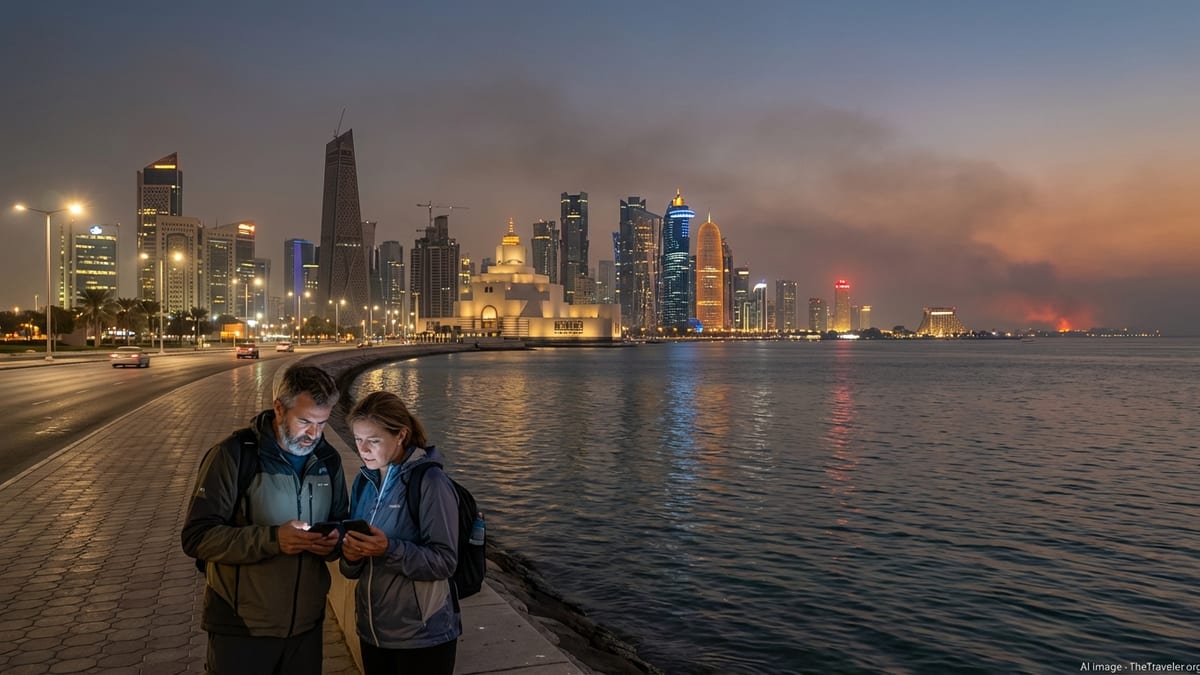
Canada Expands Highest-Level Warnings Across Gulf and Levant
Ottawa is now urging Canadians to avoid all travel to Bahrain, Iraq, Israel and the Palestinian territories, Kuwait, Lebanon, Qatar and the United Arab Emirates, and to avoid non-essential travel to Jordan, Oman and Saudi Arabia. The expanded advisories, updated in recent days by Global Affairs Canada, amount to one of the broadest sets of high-level warnings the country has issued for the region in years.
Officials say the move reflects a rapid deterioration in security since February 28, when coordinated US and Israeli strikes hit targets across Iran, killing Supreme Leader Ali Khamenei and senior military commanders. Iranian retaliation has included missile and drone launches aimed at Israel, US installations in Gulf states and key energy infrastructure, sharply increasing risks to civilian aviation and overland travel.
The Canadian government cautions that its ability to provide consular support during active hostilities is limited and urges Canadians already in affected countries to prepare contingency plans that do not rely on organized evacuations. Travellers are being told to monitor local media, follow instructions from local authorities, and register their presence with Ottawa so they can receive security updates directly.
While travel advisories are issued independently, Canadian officials acknowledge they are closely tracking assessments by allies such as the United States and European partners, many of which have released parallel security alerts for the wider Middle East in the wake of the strikes.
US–Israel Strikes on Iran Reshape Regional Risk Map
The immediate trigger for the latest wave of Canadian alerts is the US–Israel air and missile campaign against Iran that began on February 28. Branded as a pre-emptive effort to neutralize Iranian missile, drone and command capabilities, the operation saw scores of Israeli fighter jets and US assets strike targets in Tehran and other cities, including security headquarters used to coordinate internal repression and external operations.
Iran’s leadership was badly hit, with the death of Ayatollah Ali Khamenei confirming what regional analysts had feared would be a red line for Tehran and its network of allies. Within hours, Iranian forces and affiliated groups launched retaliatory salvos across the region, including toward Israel, US bases in Gulf states and vital energy facilities in Saudi Arabia. The narrow Strait of Hormuz, through which a sizable share of the world’s oil exports passes, has since been at the center of an escalating maritime crisis, with commercial shipping disrupted and insurers reassessing risk premiums.
For travellers, the military confrontation translates into volatile airspace closures, potential misidentification of civilian aircraft, and heightened security alerts around airports, ports and border crossings. Governments and carriers have begun rerouting flights away from Iranian airspace and adjacent conflict zones, lengthening journey times between Europe, Asia and Africa and creating new choke points in already strained global aviation networks.
Against this backdrop, Ottawa’s warnings are framed not only around the risk of direct attack, but also around the secondary effects of conflict, from sudden route cancellations and grounded fleets to overwhelmed local authorities and sporadic internet blackouts that can leave visitors cut off from information and assistance.
Border Clashes and Proxy Fronts Deepen Regional Uncertainty
The conflict is no longer confined to Iran and Israel. Along Israel’s northern frontier, Hezbollah has opened an additional front, firing missiles and drones from southern Lebanon and drawing heavy Israeli strikes on Beirut’s southern suburbs and the Bekaa Valley. The exchanges have killed and injured scores of people and pushed civilians to flee border areas, reviving memories of earlier Lebanon wars.
Israel has declared a state of emergency nationwide, shuttering schools, limiting public gatherings and mobilizing reservists as it braces for further attacks not only from Lebanon but from other Iranian-aligned groups. The heightened alert status has immediate implications for travel, with commercial flights suspended or heavily curtailed and land crossings subject to sudden closures or security surges.
Beyond Israel and Lebanon, Iranian drones and missiles have been aimed at or intercepted near US and allied assets in Bahrain, Saudi Arabia and Cyprus, and regional air defenses are on near-constant alert. In one incident that underscored the risk of miscalculation, Kuwaiti forces reportedly shot down US jets in a friendly-fire episode. For foreign nationals, including Canadians, the mosaic of overlapping conflicts, proxy engagements and border skirmishes creates a complex and fast-changing threat environment.
Travel risk specialists note that even destinations not directly struck, such as Qatar, Oman and Jordan, can experience spillover effects, whether through disrupted air routes, heightened security checks or being perceived as potential staging grounds for military activity and evacuations.
Implications for Travellers: From Grounded Flights to Insurance Gaps
For Canadian travellers and dual nationals, the practical impact of the new advisories is already evident. Airlines are canceling or consolidating services to hubs in the Gulf and Levant, while some carriers have temporarily halted overflights of the broader conflict zone. Travellers may face abrupt itinerary changes, extended layovers in third countries and increased fare volatility as capacity is shifted to safer corridors.
Travel insurance is emerging as another pressure point. Many standard policies include exclusions for acts of war and armed conflict, leaving visitors exposed to significant costs if they decide to leave early or if routes are cut with little notice. Industry experts recommend that travellers review policy language carefully, confirm whether war risks are covered or can be added, and consider the financial feasibility of self-funding emergency returns if government-organized departures are unavailable.
Consular officials stress that an official “avoid all travel” advisory carries heavy weight for any decision to enter or remain in a destination. Such warnings can affect everything from evacuation priorities to airline and tour operator liability. Canadians who nonetheless choose to travel to or stay in high-alert countries are being advised to maintain a low profile, keep documents and essential supplies ready, and maintain multiple ways to receive news and government alerts amid the possibility of telecom disruptions.
For the broader travel industry, the crisis is likely to reverse some of the post-pandemic rebound seen in Gulf and Levant tourism and transit, with ripple effects for airlines, hotels and conference organizers in cities such as Doha, Dubai, Manama and Amman that have marketed themselves as safe, stable hubs between continents.
What Canadians Should Monitor in the Days Ahead
Officials in Ottawa and allied capitals are warning that the situation could evolve rapidly in the coming days. Key indicators include any further Iranian missile or drone launches, especially against Gulf states hosting US forces; changes in the tempo of Hezbollah–Israel exchanges along the Lebanese border; and developments in the Strait of Hormuz, where even a limited confrontation involving commercial shipping could have outsized economic and travel impacts.
Diplomatic efforts are continuing behind the scenes, with major powers including China calling for an immediate ceasefire and de-escalation. However, analysts caution that the political incentives for all sides to claim victory or deterrence gains may prolong hostilities, even as civilian and commercial risks mount.
Canadian travellers are being urged to treat the advisories as living documents rather than static assessments, checking them repeatedly rather than assuming that conditions remain unchanged from the time of booking. Those with upcoming itineraries involving transit through Middle Eastern hubs should maintain contact with airlines and tour operators, build flexibility into travel plans, and be prepared for last-minute rerouting.
For now, the message from Ottawa is unequivocal: with joint US–Israel operations against Iran ongoing, retaliatory strikes spreading and border warfare intensifying, non-essential travel to much of the region is not recommended, and those already there should reassess their personal risk tolerance with the expectation that conditions could worsen without warning.