

More news on this day
Canadians racing to lock in spring break and summer holidays are being urged to take a hard second look at their itineraries, as Ottawa quietly tightens a web of travel advisories that now affect many of the country’s favourite winter-sun hotspots as well as a widening ring of high-risk conflict zones.
Get the latest news straight to your inbox!
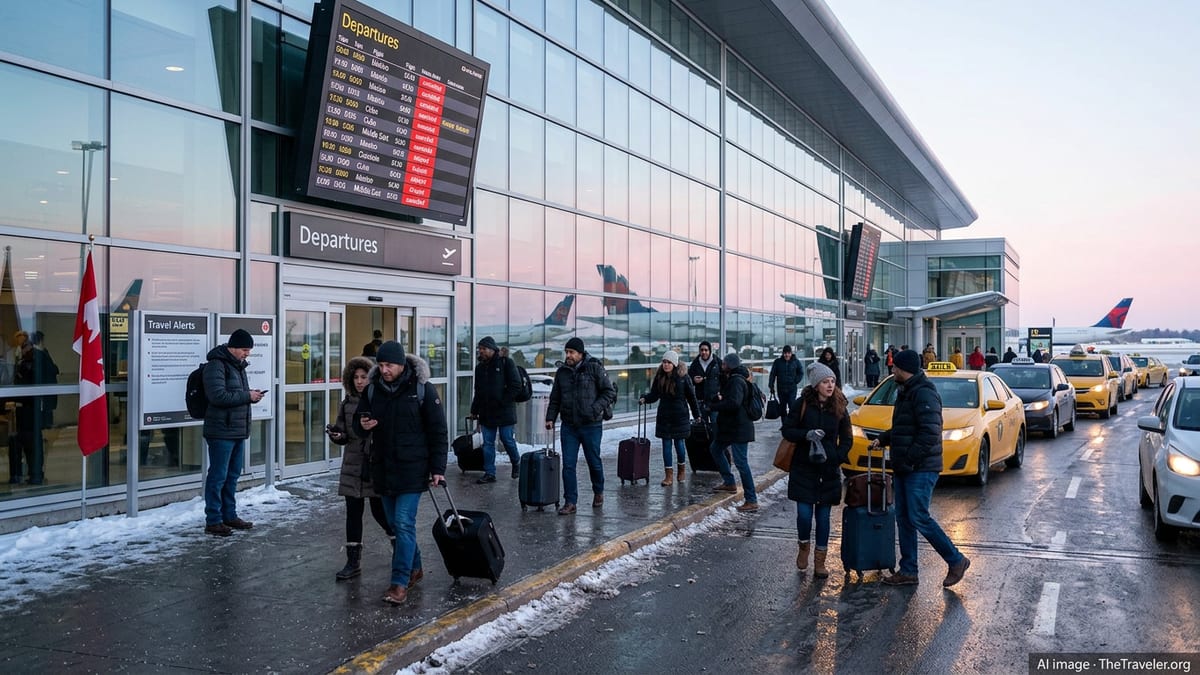
A Surge in High-Risk Warnings for Popular Holiday Destinations
Global Affairs Canada has expanded and upgraded a series of travel advisories since the start of 2026, raising fresh concerns for travellers heading to traditional getaway spots. In addition to long-standing “avoid all travel” warnings for extreme-risk countries such as Afghanistan, Haiti, Yemen and parts of the Democratic Republic of Congo, officials have sharpened language around security threats, crime and civil unrest in several destinations that draw hundreds of thousands of Canadian visitors each year.
Security analysts note that the latest wave of alerts reflects a more volatile global environment, where local tensions can spill over into bustling tourist corridors with little warning. That means even a beach holiday or city break in an otherwise familiar destination can now be affected by sudden spikes in violence, protests or state crackdowns, with direct implications for the safety of Canadian visitors.
Behind the scenes, Canada’s Integrated Terrorism Assessment Centre feeds into these decisions by monitoring threats to Canadian interests worldwide, while consular officials track trends in kidnappings, armed attacks and infrastructure failures that could strand travellers. The resulting advisories are calibrated on a four-level scale that starts at “exercise normal security precautions” and climbs through “exercise a high degree of caution” and “avoid non-essential travel” to the most serious warning of “avoid all travel.”
For holidaymakers, the shift from one level to another is more than semantics. Industry experts stress that a change of just one step on the advisory ladder can affect everything from airline schedules and cruise itineraries to the fine print of travel insurance policies, which often exclude coverage once Ottawa formally discourages or forbids entry to a country or region.
Mexico, Cuba and the Caribbean Come Under Stricter Scrutiny
Some of the starkest changes this season concern Mexico and the wider Caribbean, cornerstones of Canada’s winter tourism economy. Travel advisories for Mexico now highlight regional “avoid non-essential travel” warnings related to cartel violence, targeted killings and roadblocks in several states that are home to major resort areas and travel corridors. Recent security incidents have prompted temporary flight suspensions and shelter-in-place alerts, underscoring how quickly a sunny coastal trip can be disrupted by criminal clashes far beyond hotel grounds.
Cuba, long considered one of the more stable and affordable options for Canadian sun-seekers, has also come under renewed scrutiny. Ottawa is cautioning travellers about worsening shortages of fuel, food and basic goods that may affect resort operations and excursions. While beaches and historic districts remain open, visitors are being told to prepare for intermittent power cuts, limited medical supplies and service reductions that can significantly alter the holiday experience.
Elsewhere in the Caribbean, advisories urge a higher degree of caution in countries grappling with violent crime, gang activity and fragile policing capacity. In some islands, crime trends now feature as prominently as hurricane-season guidance in official travel advice, with particular concern around robberies near airports, vacation rentals and nightlife areas frequented by foreign visitors.
Canadian consular officials emphasize that these warnings are not blanket bans on tourism across entire regions, but they do signal a more sober view of the risks lurking beyond resort walls. Travellers are encouraged to read country pages in full, paying close attention to maps that carve out high-risk states, border zones and urban districts where Canadians have been robbed, assaulted or caught up in armed clashes.
Middle East Conflict and New “Avoid All Travel” Hotspots
Beyond the Americas, Canada’s most severe warnings are concentrated across parts of the Middle East and a cluster of fragile states where conflict and political collapse have made travel exceptionally dangerous. Ottawa maintains top-tier “avoid all travel” alerts for countries such as Afghanistan, Haiti, Yemen, South Sudan and others where kidnapping, terrorism, arbitrary detention and the near-total breakdown of public services leave little margin for error.
In recent weeks, regional conflict has triggered upgraded advisories for several Gulf and Levant states, as cross‑border strikes, missile launches and proxy clashes raise the risk of sudden airspace closures and airport shutdowns. These alerts point not only to the danger of direct attack, but also to secondary effects such as disrupted supply chains, overwhelmed hospitals and communications outages that can leave visitors struggling to access information or consular help.
Security specialists warn that even countries not directly at war can become high-risk transit points when regional tensions spike. When air routes are rerouted or grounded without warning, Canadians passing through major hubs may find themselves stranded at crowded terminals with limited options for rebooking and little clarity about who will cover added costs.
Canadian authorities underline that choosing to ignore an “avoid all travel” or “avoid non-essential travel” notice carries serious consequences. In extreme cases, consular staff may be unable to reach certain areas, particularly if local authorities limit foreign access or if kidnapping and militant activity make movement too dangerous. Government-organized evacuation flights are reserved for the most critical scenarios and are never guaranteed.
Hidden Consequences: Insurance, Airlines and Out-of-Pocket Risk
One of the most jarring messages for travellers in the latest advisories is that the financial fallout of a poor risk calculation can be as painful as the disruption itself. Many standard travel insurance policies contain clauses that restrict or nullify coverage once the Government of Canada posts an “avoid non-essential travel” or “avoid all travel” warning for a destination, or for a region within an otherwise open country.
That means Canadians who book or continue a trip to a newly flagged area may find that medical emergencies, evacuations or cancellations are no longer covered, leaving them facing bills that can easily climb into tens of thousands of dollars. Air ambulances out of war zones or disaster-stricken countries routinely exceed the limits of basic policies, and some evacuation providers will simply refuse missions into active conflict zones or areas where airports and roads are not reliably secure.
Airlines, for their part, are under pressure to adjust routes rapidly as advisories change, sometimes cancelling flights or suspending entire city pairs with minimal notice. While passenger-protection rules may require credits or refunds in certain scenarios, travellers who have built multi-stop itineraries around a now-suspended leg can end up absorbing hotel, tour and connection losses that fall outside airline obligations.
Financial planners and travel-law specialists say the new landscape effectively shifts more responsibility onto the individual traveller. Canadians are being urged to review policy wording carefully, confirm whether optional clauses for war, civil unrest or government advisory changes are available, and weigh the affordability of self-funding emergency returns if official assistance or insurer support is limited.
What Travellers Are Being Urged to Do Before Departure
Faced with rising geopolitical tension and more granular destination warnings, Canadian officials are sharpening their advice for those determined to travel. The core message is to verify, then verify again: check the official travel advice for every country and region on an itinerary both at the planning stage and in the days immediately before departure, watching for risk-level changes or new security incidents.
Travellers are also being encouraged to register their trips with consular services so that they can receive targeted alerts and be contacted more easily in an emergency. Registration records, officials say, have been critical during sudden airport closures, natural disasters and outbreaks of violence, allowing embassies to account for citizens and coordinate safe departure options when local infrastructure is under strain.
On the ground, Canadians are advised to maintain a lower profile, avoid demonstrations and large gatherings, and keep flexible exit plans, including spare funds and multiple payment methods in case local banking systems or card networks fail. In destinations flagged for violent crime, that means rethinking basic habits such as using unlicensed taxis, flaunting jewellery or cash and walking alone at night in unfamiliar neighbourhoods.
Ultimately, the latest travel alerts underscore a stark reality for would‑be holidaymakers: in 2026, a successful trip abroad is no longer just about grabbing a good fare and a beachfront room. It now demands the same kind of risk analysis once reserved for business travellers and aid workers, with Canadians expected to weigh not only where they want to go, but how quickly conditions there could change.