

More news on this day
Jordan has found itself swept into the same storm of economic anxiety and security risk facing its Gulf neighbours, as Canada issues urgent new travel warnings and unprecedented airspace closures and missile strikes across West Asia sever key routes between Europe and Asia.
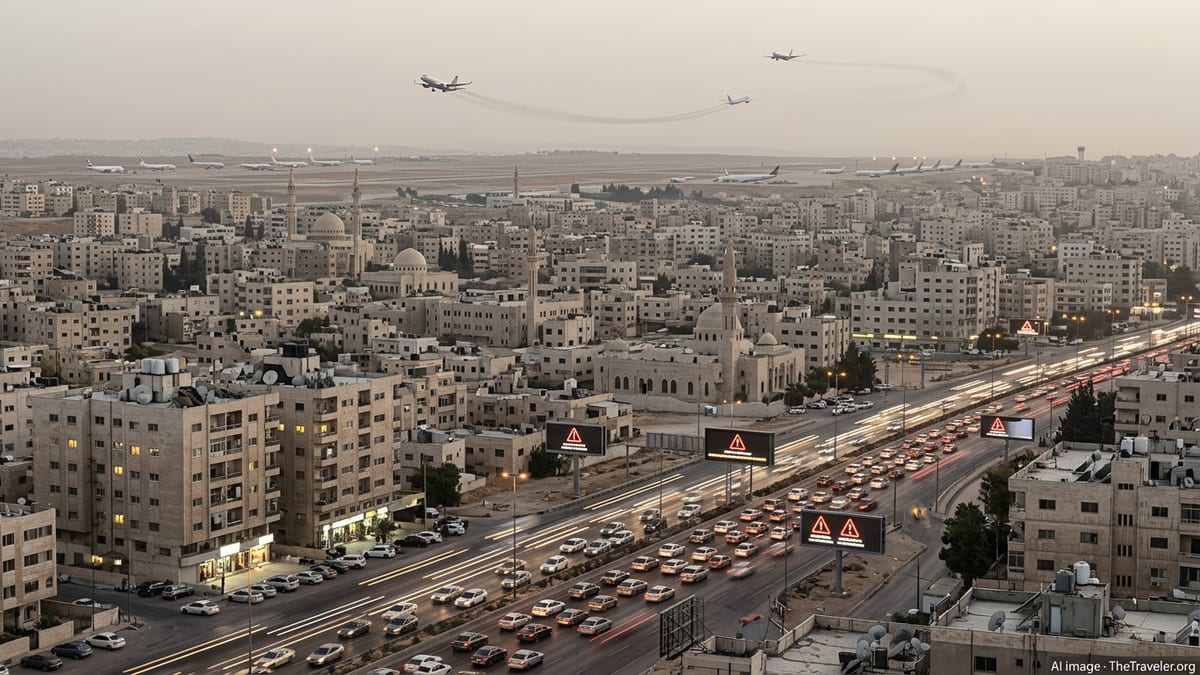
Jordan Pulled Deeper Into a Regional Maelstrom
Long seen as a relative safe haven flanked by conflict zones, Jordan is now confronting the same overlapping economic and security pressures that beset larger energy-rich neighbours such as Saudi Arabia, the United Arab Emirates, Qatar, Oman and Bahrain. The kingdom’s growth prospects had been slowly improving, helped by an International Monetary Fund program and a 2025 trade pact with the UAE, but those gains are now threatened by the rapid escalation of regional conflict and the closure of critical air corridors.
Jordan’s structural vulnerabilities are well known: scarce water, reliance on imported energy, high public debt and a labour market strained by successive refugee inflows. International lenders have praised Amman’s fiscal discipline and reforms, yet warn that the country’s resilience depends heavily on regional stability and external support. With trade, tourism and remittances closely tied to the fortunes of Gulf economies, any prolonged disruption in the wider Middle East reverberates quickly through Jordanian households and businesses.
The latest crisis, triggered by United States and Israeli strikes on Iran on 28 February and followed by Iranian retaliation across the Gulf, is amplifying those stresses. Airlines have rerouted or suspended flights through Jordanian airspace amid conflict zone bulletins and reports of GPS interference across much of West Asia. For a country that has invested heavily in positioning itself as a predictable, accessible gateway for tourism and logistics, the fallout is immediate and severe.
Security planners in Amman now face a delicate balancing act. Jordan hosts Western military assets and cooperates closely on counterterrorism, while sharing borders with Israel, Syria, Iraq and Saudi Arabia. The widening conflict increases the risk of spillover incidents, missile or drone debris and cyber disruption, pushing authorities to tighten airspace management and step up visible security around transport hubs and tourist sites at a moment when the economy can least afford new shocks.
Gulf Hubs Hit as West Asia Skies Partially Close
The current wave of airspace closures has turned what was once one of the world’s most predictable aviation corridors into a patchwork of no fly zones and rapidly changing restrictions. After the first strikes on Iran, multiple West Asia states, including Iran, Iraq, Kuwait and Bahrain, closed their skies. Flight tracking platforms reported an almost complete absence of civil aviation over the United Arab Emirates as authorities there implemented a temporary partial shutdown. Qatar also shut its airspace, disrupting operations at Doha’s Hamad International Airport.
Key hubs that anchor global connectivity between Europe, Africa and Asia, notably Dubai International and Abu Dhabi International in the UAE and Doha in Qatar, have seen large portions of their schedules wiped out. Industry analysts estimate that thousands of flights have been cancelled or heavily delayed since 28 February, with airlines scrambling to reroute long haul services over the eastern Mediterranean, the Caucasus or across Africa. Journey times on some Europe Asia sectors have lengthened by several hours, driving up fuel costs and straining crew rosters.
These aviation disruptions compound the economic shock from direct strikes on Gulf infrastructure, including reported drone attacks near Dubai’s airport and on ports in Oman. The Gulf Cooperation Council economies entered 2026 with cautiously optimistic growth forecasts, underpinned by non oil investment and tourism initiatives. Now, higher insurance premiums, a jump in energy prices linked to the Strait of Hormuz crisis and a sudden collapse in high yielding transit traffic threaten to erode that outlook.
For travellers, the practical implications are stark. Airlines have advised passengers not to go to airports without confirmed rebookings, as backlogs mount and relief flights remain scarce. Tour operators with programs in Jordan, Oman and other regional destinations are offering credits or alternative itineraries, while warning that further schedule changes are likely as security assessments evolve day by day.
Canada Raises the Alarm With Sweeping Travel Advisories
The Canadian government has responded to the spiralling conflict by raising its travel alerts for a swathe of Middle Eastern destinations to some of the highest levels in its advisory system. Global Affairs Canada has issued “avoid all travel” or “avoid non essential travel” warnings for more than ten countries in a single update, reflecting the rapid deterioration in security and the mounting disruption to commercial aviation.
Canada’s updated guidance highlights risks from missile and drone strikes, falling debris from intercepted projectiles, airspace closures and the possibility of further retaliatory attacks that could target major cities and transport hubs. The advisory notes that airports once considered secure transit points, including in the UAE and Qatar, can no longer be relied upon as safe corridors for onward journeys, and urges Canadians already in the region to monitor flight availability closely.
Air Canada has suspended routes to Tel Aviv and extended a halt on flights into several Gulf destinations, while other carriers serving the Canadian market are cutting frequencies or diverting aircraft to alternative hubs. Authorities in Ottawa advise citizens against travelling to affected countries for tourism or business and recommend that those already present register with consular services, maintain a low profile and be prepared to depart on short notice should limited commercial seats become available.
The Canadian move follows earlier conflict zone bulletins from European regulators and dovetails with warnings from the United States for its own citizens to leave the region. Together, the advisories underscore how the crisis has shifted perceptions of risk in parts of the Middle East that had marketed themselves as stable, high end tourism and investment destinations, including Jordan’s neighbours along the Gulf.
Economic Strain Spreads Across Jordan and the Gulf
Beyond the immediate safety concerns, the conflict is deepening economic strains in Jordan and across the Gulf at a sensitive juncture. Gulf economies remain heavily tied to hydrocarbon revenues despite ambitious diversification plans, leaving budgets exposed to swings in oil prices and shipping costs. The latest Strait of Hormuz crisis has already driven up global energy benchmarks and revived fears of supply disruptions, even as some exporters look to reroute shipments via Red Sea ports.
Jordan’s challenges differ in composition but are linked through regional interdependence. The kingdom relies on affordable imported fuel and on remittances from Jordanian workers in Gulf states, as well as on investment and budget support from those governments. If Gulf growth softens or fiscal priorities shift inward to reconstruction and defence, Amman could find external financing less generous just as it confronts rising borrowing costs and a new hit to tourism revenue.
Tourism, which had been recovering after the pandemic and earlier regional shocks, is particularly vulnerable. Jordan’s flagship attractions such as Petra, Wadi Rum and the Dead Sea depend on airlines marketing multi stop Middle East itineraries and on the smooth functioning of hub airports in Dubai, Abu Dhabi and Doha. With that connectivity fraying and travel advisories multiplying, international tour groups are postponing or cancelling trips, while conference organisers reconsider events planned in Amman and Aqaba.
In Gulf cities, hotel occupancy has been hammered both by the loss of transit passengers and by a sudden chill in corporate travel. Retail, hospitality and aviation linked services that had boomed on the back of regional mega projects and sports events now face a period of intense uncertainty. Governments with ample reserves can cushion the blow in the short term, but analysts caution that repeated shocks over the past decade have narrowed the policy room available to absorb yet another crisis without painful adjustments.
Travelers Navigate a Fragmented and Uncertain Landscape
For would be visitors to Jordan and the wider region, the situation demands a level of flexibility and risk awareness that goes well beyond normal trip planning. Flight paths that looked routine only weeks ago now depend on overnight security assessments, with notices to air missions reshaping airspace access across West Asia. Carriers may reroute or cancel services with little warning as they react to new military activity or regulatory guidance.
Travel experts advise that anyone with imminent plans to Jordan, the UAE, Saudi Arabia, Qatar, Oman, Iraq or neighbouring states should check both their government’s travel advisories and the latest information from airlines before making decisions. Many carriers are offering limited fee waivers or credits, but availability is tight and the situation remains fluid. Independent travellers in the region are being urged to keep their itineraries flexible, maintain direct contact with airlines and accommodation providers and factor in the possibility of extended stays if outbound flights are disrupted.
Within Jordan itself, daily life continues but under a visible security presence, particularly around diplomatic districts, major hotels and transport infrastructure. Tour operators on the ground report heightened screening, route diversions around sensitive areas and occasional delays at checkpoints, but no systematic targeting of tourists. The greater risk for most visitors lies in being stranded by shifting airspace rules rather than in day to day movement inside the country.
As Jordan and its neighbours seek to project calm and continuity, the confluence of military confrontation, aviation upheaval and economic headwinds underscores how exposed even relatively stable Middle Eastern states are to regional shocks. For now, governments and travelers alike are operating in a landscape where the only constant is the expectation of rapid change.