

More news on this day
A new wave of Canada to Japan flight offers is reshaping how visitors map their itineraries, with a fresh promotion built around free or deeply discounted Japan Airlines domestic segments that nudges travelers away from Tokyo and Kyoto toward lesser-known regional destinations.
Get the latest news straight to your inbox!
Free Domestic Segments Turn Long-Haul Tickets Into Mini Japan Rail Passes
Publicly available fare information and loyalty program chatter indicate that Japan Airlines has expanded a campaign allowing eligible international travelers to add domestic flights within Japan at no extra base fare when those segments are booked on the same ticket as a JAL-operated long haul. While taxes and limited surcharges still apply, the underlying domestic airfare is effectively waived, transforming a single transpacific ticket into a multi-stop pass across Japan.
The offer appears to apply across several key inbound markets, including Canada, when travelers purchase round trip or qualifying open-jaw itineraries into major Japanese gateways such as Tokyo or Osaka. Reddit discussions and travel forums are filled with examples of passengers successfully tacking on sectors such as Tokyo to Sapporo or Osaka to Okinawa for little more than the cost of airport fees, provided all flights sit within a single reservation record.
Reports indicate that the initiative is designed to tackle overtourism in Japan’s best-known hotspots by diverting visitors toward regional cities that have long struggled to gain a share of international arrivals. That aligns with earlier programs highlighted in Japanese media, where JAL and tourism partners promoted side trips from major hubs to lesser-known locales as part of a broader regional revitalization push.
For Canadian travelers, the structure of the deal is particularly attractive. Nonstop and one-stop JAL services from cities such as Vancouver and Toronto connect into both Tokyo airports, which then serve as springboards to dozens of domestic destinations on the JAL and JAL Group network. Purchased strategically, a single Canada to Japan ticket can cover not only the transpacific legs but also two or more internal hops that would otherwise cost hundreds of dollars each.
Regional Japan Steps Into the Spotlight Beyond Tokyo and Kyoto
Japan’s tourism planners have long grappled with the imbalance between record visitor numbers and the concentration of those travelers in a handful of famous districts. According to recent campaign materials from JAL and Japanese travel agencies, the airline’s free domestic segment initiative is explicitly tied to steering visitors into regions that have historically flown under the radar for international tourists.
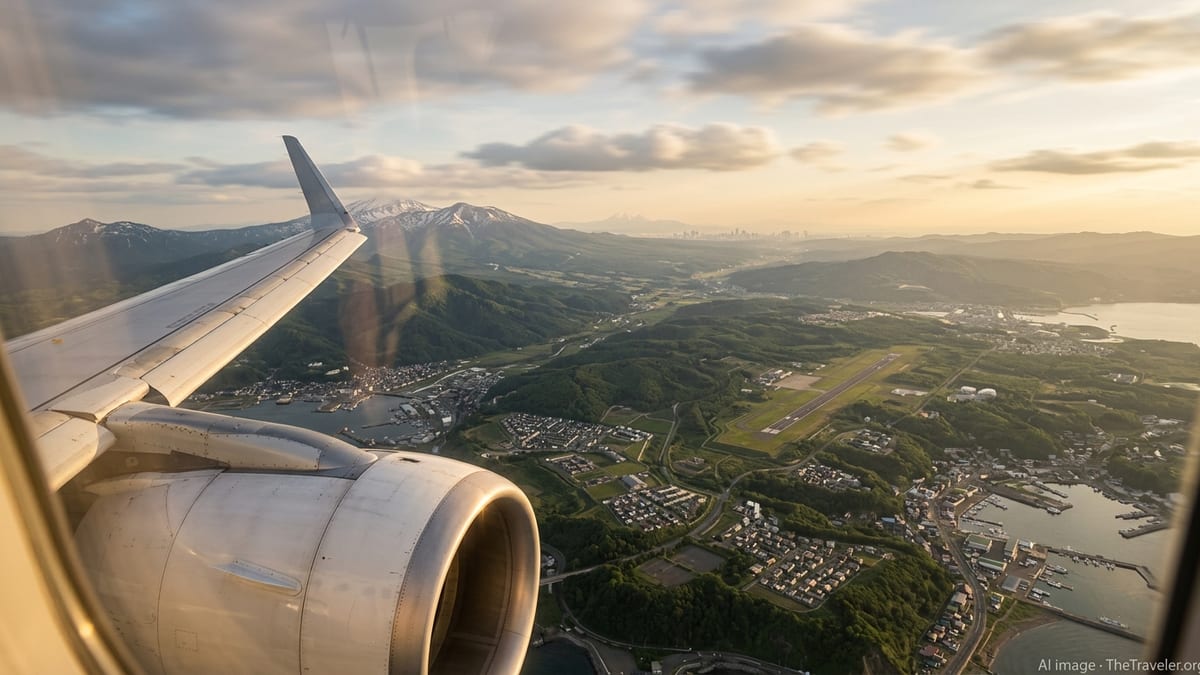
Hokkaido, long popular with skiers from Australia and parts of Asia, is one of the biggest beneficiaries of the current push. Air Canada has already announced new nonstop seasonal flights from Vancouver to Sapporo’s New Chitose Airport from December 2026 to March 2027, underscoring the growing interest in Hokkaido’s winter sports, craft beer, and food culture. JAL’s domestic network links Sapporo onward to smaller hubs such as Asahikawa and Hakodate, which now become far more reachable for Canadians leveraging the domestic add-on promotion.
To the south, Kyushu and Shikoku are also positioned to gain. JAL and its regional affiliates operate dense schedules into cities such as Fukuoka, Kagoshima, Matsuyama, and Kochi. These areas offer volcanic hot springs, coastal hiking routes, and food scenes that rival better-known destinations while remaining off many first-time itineraries. With domestic base fares reduced to zero on eligible tickets, the cost barrier to exploring these islands drops significantly.
The same applies to Okinawa and the outer island chains, which see fewer North American visitors despite their subtropical beaches and distinct Ryukyuan culture. Access historically required pricey separate tickets from Tokyo or Osaka. Under the new structure, Canadian travelers can potentially fold Okinawa into the same booking as their transpacific flights, paying only marginal additional fees instead of a full standalone fare.
How the Promotion Works for Canadian Travelers
Based on published fare rules and consumer reports, the Canada–Japan free domestic flight offer is built around a few key conditions. Travelers generally must purchase eligible round trip or qualifying multi-city JAL itineraries originating outside Japan, often with travel dates confined to a defined campaign window and booking deadlines set several months in advance. Domestic sectors must be booked at the same time as the international legs, rather than added later.
The domestic flights must also be operated by JAL or designated JAL Group carriers on specific fare buckets, and seat availability is limited. Stopovers can trigger additional charges, and promotional materials note that taxes, airport facility fees, and some surcharges still apply even when the base fare is waived. In practice, that means a “free” Tokyo to Sapporo flight may still carry a modest cash component, though often far below the cost of buying the segment separately.
Travelers are also advised to pay attention to ticketing deadlines and change rules. Japan Airlines’ standard fare conditions for international tickets, including penalties for date changes or cancellations, typically apply to the domestic legs as well, because they are part of a single ticket. If a traveler later decides to skip a domestic sector, that can sometimes affect onward segments depending on how the itinerary is structured.
Despite those caveats, the structure aligns well with how many Canadians already plan their Japan trips. A common pattern is to arrive in Tokyo, leave immediately for a regional base such as Sapporo or Fukuoka, and then finish with several nights in Tokyo or Kyoto before flying home. The current promotion essentially rewards that multi-stop approach by eliminating much of the extra airfare associated with the domestic hops.
Competitive Pressure Builds as Other Carriers Deepen Japan Links
The Canada–Japan free domestic flight push is emerging against a backdrop of intensifying competition on transpacific routes. Air Canada has been expanding its Japan footprint, with year-round services to both Tokyo airports and summer seasonal flights to Osaka, and has announced new winter flights to Sapporo. WestJet has also moved aggressively into the market, unveiling Calgary to Tokyo routes alongside an expanded codeshare with Japan Airlines that adds seamless connections from Tokyo into Osaka Itami and Nagoya.
These developments give Canadian travelers a broader mix of options for reaching secondary Japanese cities. WestJet’s partnership with JAL, for example, allows customers to book through itineraries from Western Canada to domestic Japanese destinations on a single ticket, even when the international leg is operated by WestJet. While these itineraries do not necessarily fall under the same free domestic fare structure as JAL’s own promotion, they illustrate a wider industry trend toward integrated Canada to regional Japan connectivity.
On the loyalty and partnership side, Air Canada continues to lean on its Aeroplan program and Star Alliance partnerships to attract Japan-bound travelers, emphasizing mileage earning and redemption opportunities on partner networks. JAL, meanwhile, is using targeted fare promotions and regional tourism tie-ups to capture demand from visitors seeking more than a quick circuit of Tokyo and Kyoto. The free domestic segment initiative sits squarely within that strategy.
Analysts following the transpacific market suggest that as capacity between Canada and Japan grows through 2026 and beyond, promotions that bundle in value-added perks such as domestic flights will become more important in differentiating airlines. For travelers, that competition translates into more creative routing options and potential savings, particularly for those willing to step off the main tourist trail.
Hidden Gem Itineraries Now Within Easy Reach
The most visible impact of the Canada–Japan domestic flight deals is in the kinds of itineraries travelers can realistically consider. With the cost of flying between Japanese cities reduced, Canadian visitors are beginning to craft trips that string together ski slopes in Hokkaido, temple towns in Shikoku, and seaside hot spring resorts in Kyushu, all anchored by a single transpacific booking.
Travel media coverage has highlighted sample routes that pair Vancouver to Tokyo flights with add-on sectors to Sapporo, then onward to Fukuoka, before looping back to Tokyo or Osaka. Other permutations link Toronto to Tokyo with domestic side trips to remote prefectures such as Aomori or Tottori, regions that historically saw relatively few long haul visitors despite having strong rail and road networks.
Local tourism boards are responding with their own campaigns, packaging accommodation discounts, regional rail passes, and cultural experiences around the new air connectivity. Some destination marketing materials explicitly reference the JAL domestic fare promotions as a tool to make side trips more affordable for North American visitors, encouraging them to add an extra stop rather than spending an entire holiday in a single metropolitan area.
For Canadian travelers planning Japan trips in 2026, the effect is clear. Instead of choosing between Tokyo and Kyoto or a single add-on city, many will find it feasible to explore three or four distinct regions within one vacation, using complimentary or heavily discounted domestic flights as the backbone of their journey.