

More news on this day
Canadian travelers heading to Japan in 2026 are being offered an unusually generous perk: a free domestic flight tacked onto their Japan Airlines ticket, opening up lesser-known regions far beyond Tokyo’s neon and Kyoto’s temple-lined streets.
Get the latest news straight to your inbox!
How the Free Domestic Flight Offer Works
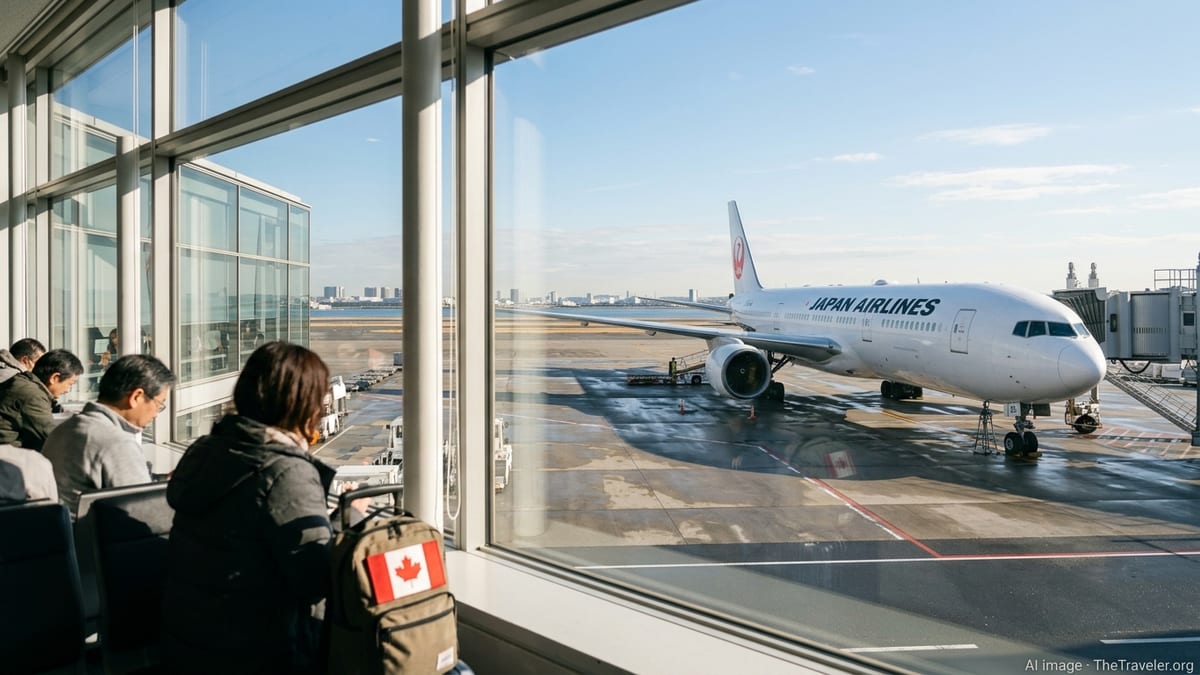
Japan Airlines has introduced a promotion that grants international visitors a complimentary one-way domestic flight within Japan when they book their overseas and internal segments together on the same reservation. Recent coverage of the campaign indicates that the initiative, first launched in late 2024 and extended into 2025, now targets key long-haul markets including Canada and is scheduled to remain available into 2026.
For Canadian travelers, the basic structure is straightforward. Buy a round-trip international ticket into Japan on Japan Airlines, and you can add a domestic leg at no extra base fare, selecting from the carrier’s extensive network of cities. Taxes, fees, and a modest stopover surcharge may still apply in some cases, but the underlying domestic airfare is covered by the promotion.
The offer is positioned as a simple add-on rather than a separate voucher or contest. Travelers search for their preferred dates on the airline’s booking platform, choose an international itinerary from Canada to Japan, then select an onward domestic route such as Tokyo to Sapporo or Osaka to Okinawa as part of the same booking record. Reports note that inventory is limited and drawn from regular booking classes, so early planning is recommended.
Eligibility rules vary slightly by origin country, but Canadian travelers are grouped with other long-haul markets such as the United States and Australia. Publicly available guidance explains that the complimentary leg is offered once per international round-trip, underscoring that the campaign is meant to nudge travelers into adding at least one extra destination beyond their arrival gateway.
Targeting Hidden Gems Beyond Tokyo and Kyoto
Travel industry coverage describes the free-flight initiative as part of a broader strategy by Japan’s tourism authorities and airlines to spread visitor traffic to regional areas. Cities such as Tokyo, Kyoto, and Osaka remain headline draws, but crowded trains, busy temple precincts, and pressure on local infrastructure have prompted calls to redirect some tourism flows.
By making domestic flights effectively cost-free on the fare side, the Canada–Japan campaign encourages visitors to consider cities and prefectures that may not yet be on first-time itineraries. Examples highlighted in recent reporting include Hokkaido’s Sapporo for winter sports and beer halls, the art islands of the Seto Inland Sea near Takamatsu, and the rugged coastlines of Tohoku in the north.
Other routes open up lesser-known landscapes: travelers can pair a few days in Tokyo with a hop to the subtropical beaches of Okinawa, or combine Kyoto’s cultural sites with a side trip to Kanazawa for contemporary museums and preserved samurai districts. Mountain gateways such as Nagano and Toyama provide access to hiking trails, hot spring towns, and alpine scenery with fewer overseas visitors.
Reports suggest that the free-flight structure is particularly effective at pushing travelers beyond the so-called Golden Route that runs from Tokyo through Hakone and Kyoto to Osaka. With a domestic segment already included, adding a night or two in a regional hub like Fukuoka, Kagoshima, or Niigata can feel less like an indulgence and more like a built-in feature of the trip.
What Canadian Travelers Need to Know for 2026
For Canadians planning Japan trips in 2026, the timing and fine print of the campaign are important. Publicly available information indicates that the free domestic flight offer is tied to specific booking windows and travel periods, with the overarching program expected to continue across the 2025 to 2026 travel seasons. Exact cutoff dates may shift, so travelers are being advised in industry reporting to verify current conditions when they book.
One notable detail flagged in travel guides is a stopover fee that can apply to visitors from Canada, the United States, Mexico, and China when they stay more than 24 hours in their arrival city before taking the free domestic leg. In these cases, the domestic ticket remains free on the fare side, but a fixed stopover surcharge is added, reflecting airline and tourism policy aimed at balancing flexibility with network management.
The promotion typically covers economy class, and checked baggage allowances follow the rules of the international ticket, which can be generous on long-haul routes. That structure allows Canadian visitors to travel between multiple Japanese cities without needing to repack or pay separate baggage fees for the internal flight.
Travel trade publications also note that seat availability on the complimentary sectors can be constrained during peak Japanese holidays, such as Golden Week in late April and early May or the Obon period in August. Canadians aiming for cherry blossom or autumn foliage seasons may want to secure their domestic segments as early as possible to ensure access to popular destinations like Kyushu’s hot spring towns or Hokkaido’s national parks.
Impact on Tourism Flows Between Canada and Japan
The Canada–Japan free-flight arrangement is emerging against the backdrop of a broader rebound in transpacific travel. Airlines have been rebuilding capacity on routes linking major Canadian cities with Tokyo, while Japanese tourism officials continue to highlight inbound visitor targets for the mid-2020s. The free domestic segment is viewed in industry analysis as a relatively low-cost way to increase visitor nights and spending in regional economies.
Travel analysts point out that regional airports stand to benefit significantly. Places like Aomori, Tokushima, and Miyazaki may see more direct arrivals from overseas travelers who previously would have stayed entirely within the Tokyo–Kyoto corridor. Local tourism boards have begun positioning food, festivals, and outdoor activities to appeal to first-time visitors arriving on these new patterns.
There are also potential gains for Canadian outbound tourism providers. Tour operators and travel agencies can package the free domestic leg into multi-city itineraries, framing it as a built-in bonus when clients book Japan Airlines tickets. Industry newsletters have already begun featuring sample routes such as Vancouver to Tokyo with a complimentary hop to Okinawa, or Toronto to Osaka with a side trip to Hokkaido, as a way to differentiate Japan offerings in a competitive market.
Observers note that the initiative also aligns with Canada’s ongoing interest in deepening cultural and economic ties with Japan. More Canadians traveling beyond the major gateways may translate into stronger people-to-people links, as visitors spend time in regional cities, small inns, and local restaurants rather than concentrating exclusively in a handful of urban centers.
How This Fits Into a Wider Trend of Free Flights in Japan
The Canada-focused promotion sits within a wider shift across Japan’s aviation and tourism sectors. In parallel with the Japan Airlines scheme, recent European media coverage has highlighted a separate initiative by All Nippon Airways and the Japan National Tourism Organization that offers free domestic flights to travelers from the United Kingdom and parts of Europe during the 2025 to 2026 winter season.
Together, these programs suggest a coordinated push to use airline networks to manage visitor flows and support lesser-visited regions. Rather than simply capping arrivals or restricting access to popular sites, Japanese stakeholders are experimenting with incentives that make it financially attractive to explore further afield. The free-leg model effectively turns domestic air travel into a distribution tool, guiding travelers toward under-the-radar cities and rural areas.
Analysts writing in travel and business outlets describe the approach as a natural evolution from previous rail-focused initiatives, such as discounted regional rail passes. With domestic air networks reaching islands and distant prefectures that can be harder to access by train, complimentary flights broaden the map of realistic add-on destinations for international visitors.
For Canadians mapping out Japan itineraries for 2026, the result is a landscape of options that is both wider and, in many cases, more affordable. A single long-haul ticket can now unlock a second city or even a far-flung island, inviting travelers to look beyond the standard highlights and discover a more varied picture of contemporary Japan.