

More news on this day
A wave of experimental “free flight” offers linking Canada and Japan is poised to shift how budget-conscious travelers experience the country in 2026, steering visitors away from overcrowded hotspots and toward rural communities eager for new tourism income.
Get the latest news straight to your inbox!
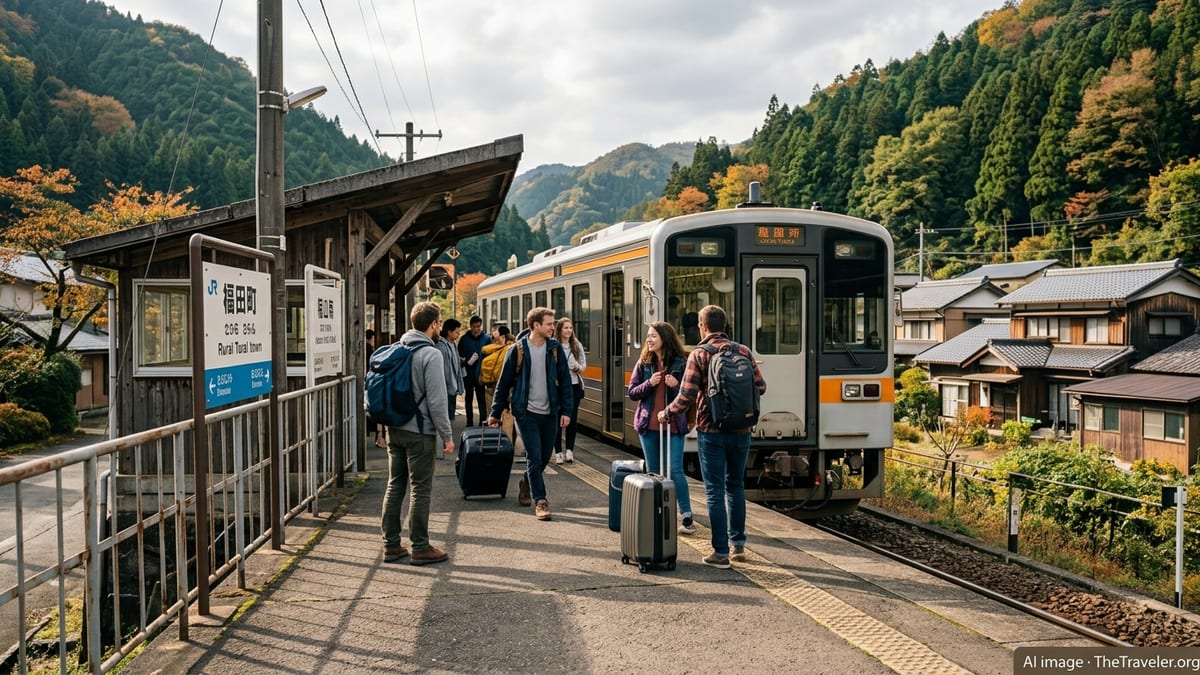
From Niche Promotions to a New Canada-Focused Free Flight Era
Japan’s tourism strategy has been steadily pivoting toward incentives that move visitors into lesser-known regions. Airline-led schemes offering complimentary or deeply discounted domestic flights to international visitors have already emerged in Europe-facing campaigns and broader global promotions, targeting travelers who are willing to venture beyond Tokyo, Osaka, and Kyoto. Reports indicate that these trials have been framed as tools to relieve overtourism while channeling new spending into regional economies.
By 2025, initiatives from major Japanese carriers had begun to normalize the concept of adding a no-cost or low-cost domestic leg to a long-haul ticket, provided travelers arrived on a partner airline and met basic eligibility rules. Publicly available information shows that Canadians are already included in some of these offers, placing them in a strong position as Japan refines its inbound tourism strategy ahead of 2026.
Industry coverage suggests that a Canada-focused extension of these free flight schemes is now coalescing around 2026, with carriers and tourism bodies eyeing Canadians as high-value, repeat visitors who stay longer and spend more per trip. While specific seat allocations and booking windows have yet to be fully detailed, the emerging framework closely mirrors earlier experiments that paired paid intercontinental tickets with complimentary domestic sectors.
This emerging “Canada-Japan Free Flight Program 2026” is not a single branded government decree, but rather a set of overlapping airline promotions and coordinated tourism campaigns aimed at the Canadian market. Together, they function as a de facto free-flight bridge between Canadian gateways and Japan’s regional airports, particularly in areas keen to attract winter sports enthusiasts, cultural travelers, and food-focused visitors.
How the Program Works for Budget-Conscious Canadian Travelers
According to published coverage, the model taking shape for 2026 typically requires Canadians to purchase a round-trip international ticket to Japan on a participating carrier, then add at least one domestic segment within Japan on the same booking. Once eligibility criteria are met, that domestic leg is discounted to zero or near-zero base fare, leaving travelers to pay only taxes and fees where applicable.
The offers are usually limited to economy-class itineraries and tied to specific travel periods, such as winter ski seasons or shoulder months when regional destinations want to fill beds and support local businesses. Inventory controls apply, meaning not every flight or date will qualify, and travelers may need flexibility on timing or routing to secure the free segments.
Crucially for travelers on a tight budget, these free domestic add-ons remove one of the biggest cost barriers to exploring rural Japan: the price of hopping between islands and distant prefectures. A Canadian flying into Tokyo or Osaka can bolt on a side trip to regions such as Hokkaido, Tohoku, Shikoku, or Kyushu without absorbing the full cost of a separate domestic ticket, opening up itineraries that would previously have been out of reach.
Publicly available airline guidance indicates that bookings must typically be made through official channels or approved travel agencies, and that changes or cancellations to the long-haul ticket can affect the complimentary segment. For travelers, that means planning carefully, reading fare rules line by line, and building some buffer days into complex multi-stop itineraries.
Linking Canadian Gateways to Japan’s Rural Heartlands
As these free flight incentives gather momentum, network changes between Canada and Japan are creating new launchpads for regional exploration. Announced seasonal services linking Vancouver to Sapporo in Hokkaido from late 2026, for example, align closely with Japan’s goal of dispersing visitors beyond the “Golden Route” of Tokyo, Kyoto, and Osaka. Reports from aviation industry outlets describe this as a strategic move that provides direct access to one of Japan’s most underexplored winter playgrounds for North American travelers.
Once in Japan, domestic networks operated by major carriers and their regional subsidiaries offer connections to dozens of secondary and tertiary airports, from fishing ports on the Sea of Japan coast to onsen towns tucked into alpine valleys. When paired with free or heavily discounted domestic sectors, these networks effectively shrink the distance between Canadian cities and small Japanese communities that rarely see overseas visitors.
Canadian tour operators have started to respond by developing packages that bundle long-haul flights, complimentary domestic segments, and locally hosted experiences in rural areas. According to trade press coverage, familiarization trips for Canadian agents are increasingly focused on sustainable itineraries that emphasize homestays, family-run ryokan, and nature-based activities rather than large-scale resort tourism.
For independent travelers, the emerging program offers a chance to piece together their own regional circuits. A typical itinerary could involve flying from Canada to Tokyo, taking a free domestic leg to a regional hub, then connecting overland by rail or bus through a series of small towns before returning from a different Japanese gateway. The result is a deeper, more varied experience of the country without a corresponding spike in transportation costs.
Economic Lifeline for Rural Communities and Small Businesses
Japan’s national and regional tourism strategies for the mid-2020s place strong emphasis on moving visitors and their spending outside of major cities. Policy documents and budget drafts point to multi-billion yen allocations for programs that send inbound tourists to local areas, including support for destination management organizations and wide-area marketing campaigns that link multiple prefectures.
Free-flight style incentives dovetail neatly with these aims. By lowering the cost threshold for reaching out-of-the-way airports, they increase the likelihood that visitors will spend money on lodging, dining, and experiences in communities that have struggled with population decline and aging demographics. Local officials and business groups have framed inbound tourism as a way to keep small inns, family restaurants, craft workshops, and regional festivals viable.
Evidence from earlier campaigns suggests that travelers who take advantage of complimentary domestic segments often stay longer in regional destinations than those on conventional city-hopping itineraries. With fewer big-ticket attractions and more emphasis on slow travel, per-day spending on accommodation and food can be substantial, even if visitors are saving on transportation.
At the same time, the initiatives are seen as tools to distribute visitor numbers more evenly across the country, easing pressure on overcrowded urban sites and heritage districts. Some local debates have emerged over the use of public funds and perceived preferential treatment for foreign visitors, but tourism authorities argue that the net economic impact on host communities justifies targeted incentives.
What Travelers Should Watch as 2026 Approaches
For Canadians looking to capitalize on the Canada-Japan Free Flight Program in 2026, the coming months will be critical as airlines and tourism partners finalize schedules, booking rules, and promotional windows. Travelers will need to monitor carrier announcements, tourism-board campaigns, and updates from Canadian travel agencies that specialize in Japan.
Key variables are likely to include the number of eligible routes from Canada, blackout periods during peak holiday travel, and whether the free domestic segments can be used in both directions or only as a one-way add-on. Past promotions in other markets have often limited travelers to a single complimentary leg per round-trip ticket, encouraging careful choice of which region to prioritize.
Travelers should also pay close attention to how these offers interact with loyalty programs and fare classes. Some promotions may not apply to the lowest basic-economy tickets or award bookings, while others could provide additional incentives such as bonus points for itineraries that include designated regional airports.
As details firm up, one trend is already clear: by pairing paid transpacific tickets with targeted free-flight incentives inside Japan, 2026 is shaping up to be a landmark year for Canadians who want to experience the country beyond its famous cities. For rural Japan, the stakes are just as high, with the promise of fresh spending, cultural exchange, and renewed life in communities that sit far from the traditional tourist map.