

More news on this day
Japan is expanding its ambitious use of free domestic flights as a tourism tool, with Canada now among a widening group of origin markets including the United Kingdom, Thailand, the United States, Singapore, Spain, France and others feeding into new campaigns aimed at steering visitors beyond Tokyo and Kyoto and into lesser-known regions.
Get the latest news straight to your inbox!
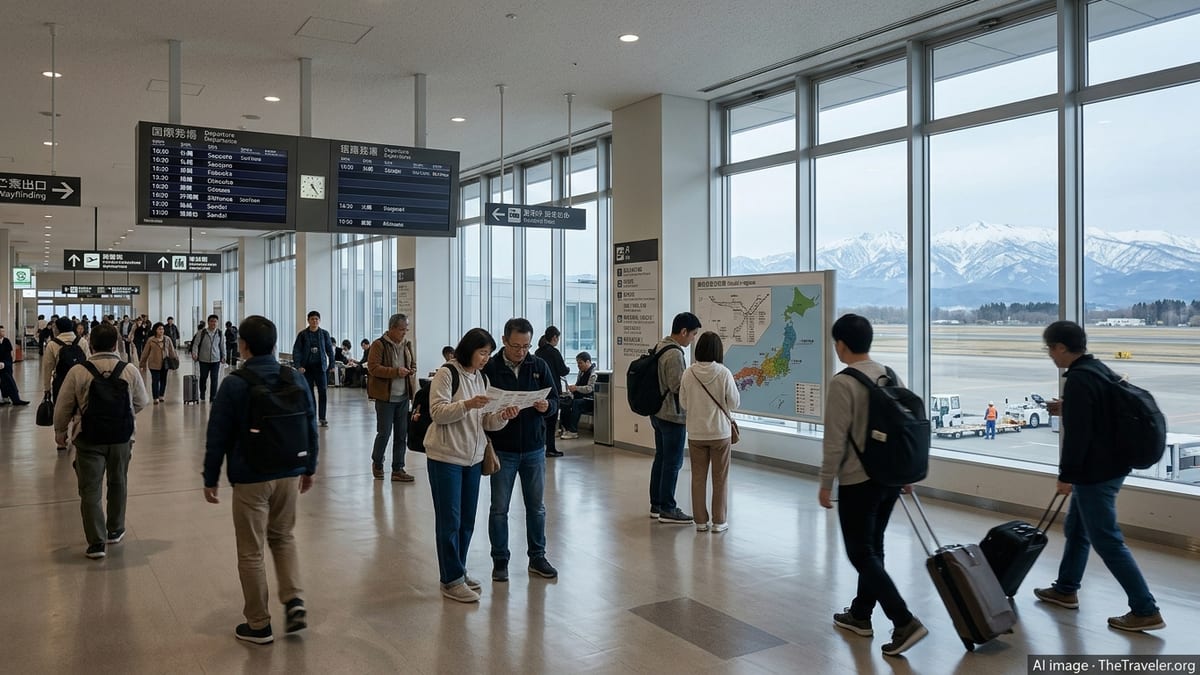
A New Phase in Japan’s “Free Trip” Tourism Strategy
Japan’s evolving “free trip” approach is built around targeted aviation incentives that remove the cost of domestic sectors for eligible international travelers who book long haul flights on selected carriers. Publicly available information shows that Japan Airlines launched a major version of this strategy in late 2024, offering complimentary domestic flights to passengers originating in markets such as the United States, Canada, Thailand, Singapore and several others when they connect onward within Japan.
The concept has since been reinforced by additional campaigns. All Nippon Airways, working with the Japan National Tourism Organization, rolled out a separate limited-time offer in late 2025 that grants travelers from the United Kingdom and wider Europe up to two free domestic flights when they fly into Japan on qualifying international tickets. Coverage in trade and consumer travel media indicates that France, Spain and other European markets are among the key targets for this latest wave of incentives.
These overlapping initiatives are being presented domestically as part of a broader “free trip” tourism strategy, in which carriers absorb or discount the cost of internal legs in order to make multi-stop itineraries more attractive. By lowering the barrier to adding extra destinations, policymakers and industry partners are seeking to deliberately reshape how first-time and repeat visitors move around the country.
Reports on policy documents such as Japan’s Tourism Nation Promotion Basic Plan describe tourism as a central pillar of the national growth strategy and regional revitalization. Within that framework, subsidized or free travel components are emerging as one of the most visible tools to distribute inbound demand more evenly and extend visitor spending beyond the established urban core.
Canada and Other Key Markets Step Into Focus
Recent travel industry reporting highlights that Canada has become one of the priority origin markets included in Japan Airlines’ free domestic flight offer. Canadian travelers who book eligible long haul services into Japan are able to add domestic sectors to dozens of regional airports without extra base fare, positioning Canada alongside the United States and Mexico as part of a North American trio that Japan sees as crucial for sustained tourism growth.
At the same time, European markets have been singled out through the All Nippon Airways campaign that focuses on passengers starting in the United Kingdom and European Union member states. Trade summaries of the initiative list the UK, France, Spain, Germany, Italy, the Netherlands and others as central to the scheme, illustrating how Europe’s mature long haul market is being tapped to fuel Japan’s regional destinations.
Across Asia-Pacific, Thailand and Singapore feature in the free domestic flight eligibility lists tied to Japan Airlines, underlining their importance as regional aviation hubs and growing sources of higher-spend leisure travelers. Separate coverage of Thailand’s own tourism incentives, including time-limited free domestic flight offers for foreign visitors, suggests that both countries are experimenting with similar demand-stimulation tools.
Taken together, the inclusion of Canada, the UK, Thailand, the US, Singapore, Spain, France and additional markets reflects a deliberate diversification strategy. Rather than relying solely on nearby East Asian origin countries, Japan is broadening its inbound base to a mix of long haul and short haul visitors, aiming to reduce vulnerability to regional shocks while supporting year-round arrivals.
Redirecting Visitors Beyond the “Golden Route”
Japan’s free-trip style incentives are being deployed against a backdrop of concern over crowding in marquee destinations such as Tokyo, Kyoto and Osaka. Published commentary from tourism bodies and international organizations notes that Japan is seeking to tackle overtourism in a way that protects local communities while keeping overall visitor numbers on an upward trajectory.
By making onward domestic journeys cost free or significantly cheaper, the campaigns are designed to encourage travelers to add stops in regions that historically attracted fewer foreign guests. Promotional materials around the airline offers spotlight areas such as Tohoku in the northeast, Kyushu and Shikoku in the south and west, and island chains including Okinawa, positioning these as easy add-ons to a classic urban-focused itinerary.
Airlines and tourism partners are aligning flight networks, tour products and destination messaging to support this shift. Some projects highlighted in Japanese press releases describe curated circuit itineraries that bundle domestic flights with local experiences, aiming to spread visitor nights across smaller cities and rural towns rather than concentrating stays in a handful of hotspots.
This territorial rebalancing is closely linked to the government’s tourism planning documents, which emphasize creating sustainable tourism areas, preserving culture and nature and leveling visitor flows across seasons. The free domestic flight model is one of the most direct mechanisms to influence where travelers go, effectively turning the ticketing system itself into a tool of regional policy.
Economic and Regional Development Stakes
Japan’s embrace of free-trip style incentives is not only about mitigating crowding but also about harnessing tourism as a driver of regional economic recovery. Official strategy papers produced in recent years describe tourism as a pillar of national growth and a core component of efforts to revitalize communities that face demographic decline and weakened local industries.
Regional airports and smaller cities stand to benefit if even a fraction of long haul visitors take advantage of the complimentary domestic segments. Additional flights bring more spending on accommodation, dining, transportation and activities, with multiplier effects for local suppliers. For prefectures that invested heavily in airport infrastructure during earlier development waves, higher international transit traffic via domestic links could help justify and sustain those assets.
At the national level, Japan has set ambitious inbound tourism revenue targets for the latter half of the decade, aiming to lift per-capita spending by steering visitors toward longer and more diverse itineraries. Free domestic travel components support that objective by making it less costly for travelers to extend their stays and explore niche interests ranging from hot spring towns and ski resorts to craft villages and nature-based experiences.
Observers in the policy and academic communities point out that such incentives also serve a signaling function, projecting an image of Japan as open, innovative and committed to visitor-friendly reforms. When combined with visa-free entry for dozens of countries and ongoing investment in multilingual services, the free trip campaigns help keep Japan prominent in a competitive global tourism marketplace.
Global Context and Future Outlook
Japan’s strategy is emerging in parallel with broader shifts in how destinations court international visitors. Comparative analyses of national tourism strategies note that countries such as Canada, France, Singapore, Thailand and the United States have all refreshed their tourism road maps in the past few years, with a shared focus on dispersing travelers, boosting regional economies and encouraging higher-value, lower-impact trips.
In that context, Japan’s use of airline-based free-trip mechanisms stands out as a particularly concrete intervention. While other destinations have relied more heavily on marketing campaigns and tax incentives, Japan is directly altering the cost structure of multi-destination travel within its borders. For origin markets like Canada, the UK and Spain, this creates a compelling proposition at a time when long haul airfares and on-the-ground costs have risen sharply.
Travel industry analysts suggest that the scope and design of Japan’s free domestic flight offers are likely to evolve as authorities and airlines measure outcomes. Metrics such as regional hotel occupancy, average length of stay, visitor satisfaction and seasonal patterns will help determine whether the campaigns are extended, replicated in new forms or adjusted to target different segments.
What is clear is that the mix of Canada, the UK, Thailand, the US, Singapore, Spain, France and other participating markets now sits at the heart of Japan’s tourism growth playbook. As airlines refine their route maps and the government moves ahead with longer-term tourism plans, the free trip strategy is poised to remain a headline feature of Japan’s bid to turn visitor flows into a broader story of regional development and economic renewal.