

More news on this day
Canada has issued a significant clarification on cross-border travel for First Nations and Native American travellers, updating its advice to stress that status cards alone may no longer be sufficient to guarantee entry to the United States and that passports and newer, machine-readable documents are becoming essential.
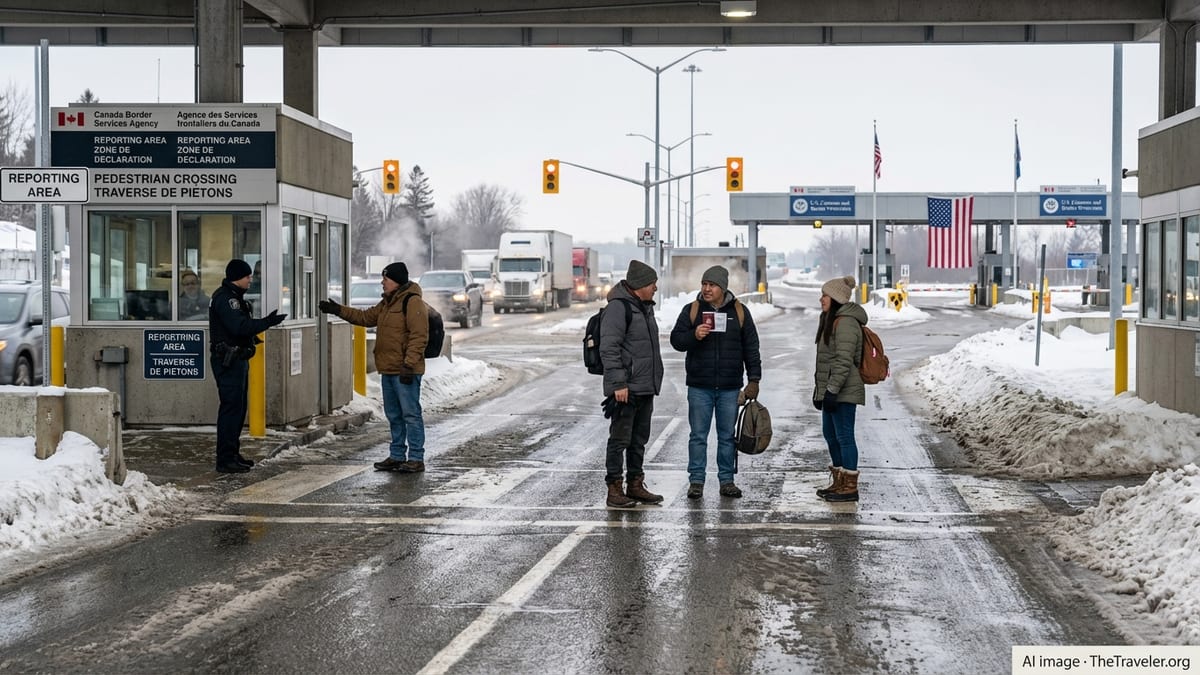
Shift in Official Guidance on Indigenous Border Travel
The federal government has revised its public travel advice for the United States, marking a notable shift in how it communicates the rights of First Nations people and Native Americans to cross the Canada U.S. border. Until this week, Canada’s travel information emphasized that First Nations people could “freely” enter the United States for purposes such as employment, study, retirement, investment or immigration, language that many Indigenous travellers understood as an affirmation of long standing cross border mobility rights rooted in the 1794 Jay Treaty and subsequent U.S. law.
As of February 19, 2026, that wording has been replaced with more cautious language that underlines the discretion of American border officials. The updated guidance now states that First Nations individuals may be permitted to cross the border by land or water using a Secure Certificate of Indian Status, often referred to as a secure status card, but stresses that acceptance of any status card is entirely up to U.S. authorities. The change signals a more realistic, if uncomfortable, acknowledgment by Ottawa that Indigenous travellers are encountering heightened scrutiny at U.S. ports of entry.
The clarification also explicitly confirms that neither regular laminated status cards nor secure status cards are considered valid travel documents for flights between Canada and the United States. For air travel, a passport remains mandatory, a point that has long existed in aviation rules but is now being highlighted in Indigenous specific guidance as concerns grow over inconsistent experiences at the border.
New Emphasis on Passports and Machine Readable Status Cards
Central to the updated guidance is a strong recommendation that First Nations travellers carry a valid passport in addition to any status card, even when crossing by land or water. The advice is framed as a precaution rather than a strict new legal requirement, but federal officials are clear that relying on a status card alone is increasingly risky as U.S. border agencies intensify document and identity checks.
Indigenous Services Canada is now telling registrants that while they may have crossed the Canada U.S. border in the past using only a secure status card, they should assume that a passport will be needed going forward, particularly for any trip that involves work, extended stays or immigration processes. The department notes that U.S. officials have full discretion to reject status cards, question their validity or demand additional supporting documentation before granting entry.
Ottawa is also drawing attention to the technical evolution of the Secure Certificate of Indian Status. Since February 2019, all newly issued and renewed secure status cards have included a machine readable zone on the back, allowing U.S. Customs and Border Protection systems to scan and verify personal information more quickly. Authorities say travellers should confirm that they are carrying one of these newer, machine readable cards if they intend to present a status card at the border, as older laminated or non secure versions may trigger longer inspections or be refused outright.
Despite the technological upgrades, officials caution that neither a status card nor its machine readable features changes the fundamental reality at the border. The card is an important piece of identity that confirms registration under Canada’s Indian Act, but it is not a guaranteed travel document in the eyes of the United States. A passport remains the most reliable document for demonstrating citizenship and identity in a way that American officers consistently recognize.
Context: Jay Treaty Rights and U.S. Immigration Law
The new messaging is unfolding against a complex legal backdrop that intertwines historic treaty commitments with modern immigration rules. The 1794 Jay Treaty between Great Britain and the United States recognized the right of Indigenous peoples to freely pass and repass the international boundary for purposes such as trade and residence. While Canadian courts determined in the 1950s that the treaty is not directly enforceable in Canadian domestic law, the United States has embedded related protections in its Immigration and Nationality Act.
Under section 289 of that U.S. law, “American Indians born in Canada” are entitled to enter the United States for employment, study, retirement, investment and even permanent immigration, provided they can prove that at least 50 percent of their ancestry is “of the American Indian race.” In practice, many Indigenous travellers have relied on Canadian issued Certificates of Indian Status or Secure Certificates of Indian Status as evidence of their eligibility, and for years those cards were widely accepted by American officers at land crossings.
Recent incidents, however, suggest that interpretation is tightening. Advocacy groups and legal aid organizations report cases in which U.S. officers have questioned or rejected status cards as insufficient proof of blood quantum, demanded additional genealogical records or detained travellers for extended secondary inspections while their ancestry was verified. These developments have pushed both Ottawa and First Nations organizations to update their guidance, warning that a status card alone may no longer satisfy U.S. immigration requirements, even for individuals long accustomed to crossing the border with minimal documentation.
For Native Americans residing in the United States who have family or cultural connections with First Nations communities north of the border, the situation is equally intricate. Those who are neither Canadian citizens nor registered under the Indian Act must still navigate standard Canadian immigration rules to reside or work in Canada, and community issued identity cards are not necessarily accepted at ports of entry. The cross border rights that exist in U.S. law do not automatically translate into reciprocal rights in Canadian law, a disconnect that Indigenous leaders have criticized as inconsistent with the spirit of the Jay Treaty.
Assembly of First Nations and Treaty Groups Sound the Alarm
The federal clarification follows a wave of warnings from Indigenous leadership in Canada about changing conditions at the border. The Assembly of First Nations, the national advocacy organization representing First Nations across the country, has urged its members to exercise caution when planning travel to the United States, citing recent immigration enforcement actions and reports of Indigenous people being detained or turned back.
AFN National Chief Cindy Woodhouse Nepinak has publicly confirmed that at least one First Nations traveller recently had a negative encounter with U.S. Immigration and Customs Enforcement, after which the individual was ultimately allowed to return to Canada. While details of the case have not been fully disclosed, the incident has become emblematic of a broader pattern in which Indigenous travellers report feeling targeted or subjected to more probing questions about their identity, ancestry and reasons for travel than in past years.
Regional organizations have issued similar alerts. In border regions such as northwestern Ontario, Treaty based councils representing cross border First Nations have circulated travel advisories explaining that a Secure Certificate of Indian Status can no longer be relied on as the sole document for U.S. entry. They recommend that members carry a Canadian passport, additional proof of citizenship or permanent residence, and where relevant, documentary evidence of ancestry that might satisfy the 50 percent blood quantum requirement under U.S. law.
These Indigenous led advisories often go beyond the official federal wording, reflecting lived experiences at border crossings. They describe instances of status cards being questioned, damaged or even confiscated, and remind travellers that the burden of proof rests on them to demonstrate their eligibility to cross. The updated federal guidance appears to be catching up to these on the ground realities, reinforcing the message that extra documentation is no longer optional.
Practical Impact for First Nations and Native American Travellers
For day to day travellers, the clarified rules mean more preparation and more paperwork. First Nations individuals registered under the Indian Act are being encouraged to check the expiry date and type of their status card before travelling, ensure they have a valid passport and consider carrying supplementary documents such as long form birth certificates, genealogical letters or community issued confirmation of ancestry if they intend to invoke Jay Treaty related rights at the U.S. border.
At land and marine ports of entry, American officials can, by policy, accept valid Certificates of Indian Status and Secure Certificates of Indian Status as part of an identity and eligibility assessment. Yet there is no guarantee that a given officer will be familiar with Canadian documents or with the specific provisions of U.S. law that apply to American Indians born in Canada. Travellers may be asked to explain their status, provide additional proof of ancestry or answer detailed questions about their purpose of travel and intended length of stay.
The air travel environment is more rigid. Airline check in staff and airport border officers work under strict carrier liability rules that tie boarding permission to the presentation of recognized travel documents. In this setting, a passport is essential, and status cards, even secure ones, are treated as supplementary identification at most. Indigenous travellers who have relied historically on land crossings to avoid passport costs or bureaucratic hurdles may find that their options are narrowing as more aspects of cross border travel, such as connecting flights through U.S. hubs, require passports as a matter of course.
Native American travellers heading into Canada face their own version of this uncertainty. While community issued tribal identification cards are widely used within the United States, they do not always align neatly with Canadian border documentation standards. Without Canadian citizenship, permanent residency or appropriate visas, Native American individuals with kinship ties in Canada can find that their freedom to visit relatives, attend ceremonies or participate in cross border cultural events depends heavily on individual officers’ discretion and understanding of Indigenous mobility rights.
Status Cards, Technology and Data Sharing
Canada’s move toward more secure, machine readable status cards has been promoted as a way to smooth cross border travel for Indigenous people, but it has also raised questions about privacy and data sharing. The Secure Certificate of Indian Status contains a range of personal information, including the holder’s name, date of birth, gender, photograph, place of birth, issuing jurisdiction and renewal date. The machine readable zone on the card allows that information to be scanned and transmitted quickly at border checkpoints.
Federal documents indicate that certain elements from the secure status card can be shared with U.S. Customs and Border Protection as part of joint efforts to verify identity and combat fraud. Canadian authorities say information is retained only as long as the card remains active and is then disposed of in accordance with government standards, but privacy advocates note that once data enters foreign systems, oversight and recourse can be limited for individual travellers.
For many First Nations people, the trade off between convenience and control over personal information is a difficult one. On one hand, the secure card is designed to reduce delays and manual data entry at land border crossings, theoretically shortening wait times and lowering the risk of misidentification. On the other hand, it ties Indigenous identity more closely to digital systems managed by agencies that have historically been sources of tension and mistrust.
Indigenous organizations have called for clearer communication about what information is shared, how long it is stored and what mechanisms exist for Indigenous travellers to access or correct their records. The latest travel guidance, while focused primarily on practical requirements, is likely to intensify calls for transparency as more Indigenous people are advised to rely on machine readable documents that interface directly with foreign border databases.
Canada’s Pledge to Address Long Standing Border Inequities
The travel advisory update is only one piece of a broader federal commitment to reform how border policy affects Indigenous peoples. Under its implementation of the United Nations Declaration on the Rights of Indigenous Peoples, Canada has pledged to review and amend domestic laws, including the Immigration and Refugee Protection Act, in ways that better respect Indigenous rights and mobility across traditional territories that straddle the international boundary.
Past government reviews have already identified numerous inequities. Native Americans with family ties to First Nations communities may face significant obstacles if they want to live or work in Canada, because their tribal citizenship or community membership is not automatically recognized as a basis for Canadian immigration status. Identity documents issued by Indigenous communities are not consistently accepted at ports of entry, and Indigenous travellers with criminal records, even for older or minor offences, can be turned away despite strong cultural and family connections on the other side of the border.
In response, Ottawa has outlined measures such as adding the machine readable zone to secure status cards, increasing recruitment of Indigenous border services officers and providing additional cultural competency training for Canada Border Services Agency staff. It has also committed to continued dialogue with First Nations, Inuit and Métis communities along the border to develop longer term solutions to complex mobility challenges, although Indigenous leaders say progress has been uneven and often slow.
The latest clarification on passport and status card requirements underscores how much work remains. While technical changes to documents can reduce some friction at checkpoints, they do not resolve deeper questions about sovereignty, self determination and the inherent right of Indigenous nations to maintain cross border relationships. For many community members, the hope is that clearer rules today can coexist with more transformative reforms in the future, where Indigenous mobility is recognized not as an exception but as a foundational principle of border policy.