

More news on this day
Canada has expanded its high-level travel advisories in the Caribbean and Central American region, adding Guatemala to a growing list of destinations where Canadian travelers are being urged to pay closer attention to passport validity, entry stamp enforcement and escalating security risks in popular sun destinations such as the Bahamas, the Dominican Republic, Jamaica, and Trinidad and Tobago.
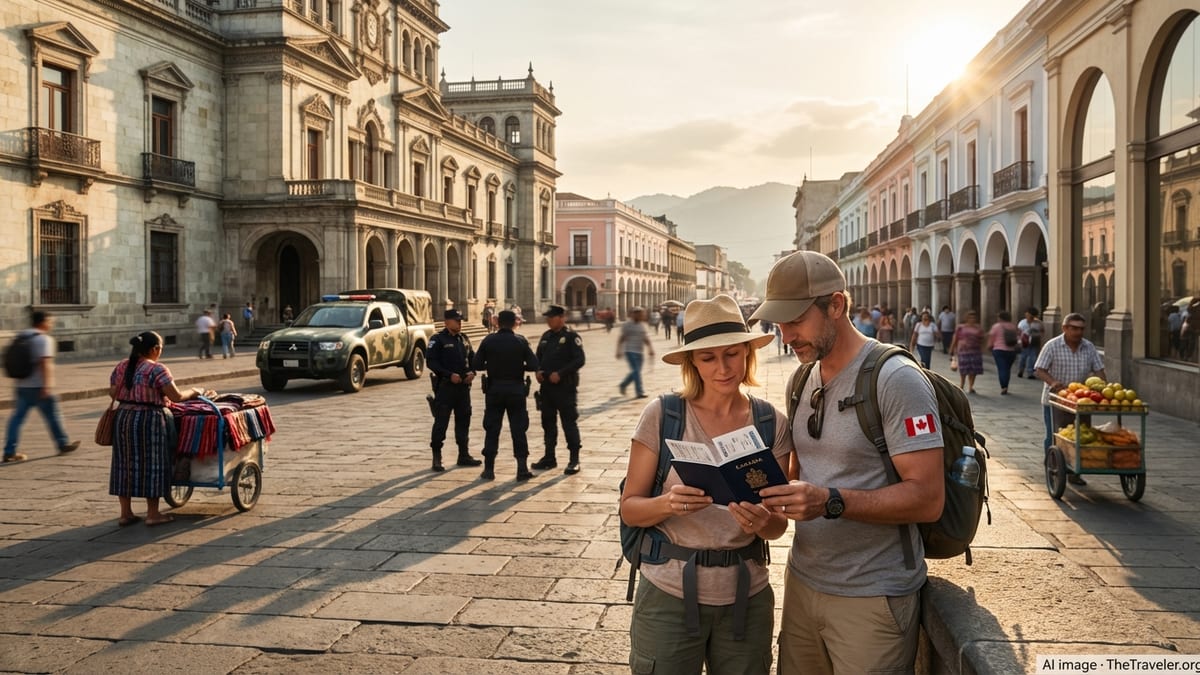
Guatemala Emerges As New Focus In Canada’s Regional Warnings
Guatemala has become the latest country in the broader Caribbean and Central American travel corridor to draw intensified scrutiny from Canadian officials, amid signs of deteriorating security conditions and increasingly strict enforcement of entry rules. While Guatemala is not a Caribbean island, it sits squarely on popular multi-stop itineraries that combine Mexican Caribbean resorts with Central American cultural and nature-based tourism.
Foreign governments have recently highlighted rising insecurity in Guatemala, including a 30-day nationwide state of siege declared in mid-January 2026 in response to organized crime, gang activity, attacks on security forces and prison unrest. That state of siege, which expanded the power of security forces and allowed restrictions on movement and public gatherings, has raised red flags among consular officials assessing risk for travelers across the region.
Canada’s own travel advice system evaluates a mix of factors that include violent crime trends, political instability, emergency measures and the resilience of local institutions. In Guatemala, concerns now increasingly overlap with existing Canadian warnings for parts of the Caribbean where violent crime, gang-related activity and sometimes unpredictable local enforcement practices can affect the experience of visitors, particularly those venturing outside gated resorts.
Although major tourist sites in Guatemala such as Antigua, Lake Atitlán and the Mayan ruins of Tikal remain open, travelers are being advised to pay close attention to advisories on high-risk departments, night-time road travel and political developments that can disrupt transportation, curfews or access to services with little warning.
Caribbean Hotspots Under Pressure Over Crime And Public Security
The Bahamas, the Dominican Republic, Jamaica, and Trinidad and Tobago have all seen their profiles rise in Canadian travel advisories over the past several years, due largely to elevated levels of violent crime and gang-related activity in urban centers. While millions of Canadians continue to visit these destinations annually, officials stress that resort corridors often coexist with neighborhoods experiencing serious security challenges.
In Jamaica and Trinidad and Tobago in particular, foreign governments have pointed to high homicide rates, armed robberies and incidents of violence that, while mostly affecting residents, can occasionally spill into areas frequented by tourists. In the Bahamas and the Dominican Republic, Canadian authorities have previously flagged issues such as robberies targeting visitors, sexual assaults and the need for vigilance when using taxis or moving around nightlife districts after dark.
These crime patterns have driven Canadian advisories to urge travelers to remain inside well-established tourism zones whenever possible, avoid isolated beaches, use only licensed taxis or pre-arranged transportation, and steer clear of political gatherings or demonstrations. Authorities also emphasize that security situations can change rapidly, and that high-profile criminal incidents or gang crackdowns can result in temporary curfews or increased security checkpoints that may affect movement.
For many Caribbean destinations, the tourism industry remains a critical economic lifeline, and governments have worked to bolster police patrols in resort areas and expand tourist police programs. Even so, Canada’s advisories underscore that visitors should not assume that the atmosphere on hotel grounds reflects the broader reality just beyond resort gates.
Passport Validity Rules Move To The Forefront
Alongside mounting security considerations, Canada is placing renewed emphasis on passport validity rules, reminding travelers that many Caribbean and Central American destinations enforce minimum validity periods that go beyond the standard requirement of a valid passport at the moment of entry. Six months’ validity after the date of departure remains a common, though not universal, threshold imposed by foreign governments.
Canadian authorities have warned that travelers can and do encounter problems at airline check-in counters or border control even when their passports have not yet expired. If a destination requires three or six months of remaining validity, airlines may deny boarding or local officials may refuse entry, regardless of a traveler’s tickets or hotel reservations. This risk is particularly pronounced on winter and spring getaways to sun destinations where Canadians may be traveling on passports issued a decade earlier and now approaching expiry.
Ahead of the recent winter travel season, Ottawa’s minister responsible for passport services publicly urged Canadians to check their passport expiry dates against the entry requirements of intended destinations and to apply for renewals at least six months before travel. The guidance reflects a broader push to reduce last-minute emergencies at passport offices and to prevent stranded travelers who discover at the airport that their documents no longer meet destination rules.
In the context of Guatemala and the Caribbean, this focus on validity is especially important for multi-stop itineraries or cruise passengers. A single stretch of insufficient validity can cause an entire trip to unravel if immigration officials in one port or airport enforce rules more strictly than others, leaving travelers unable to continue their journey or re-board their cruise ship.
Entry Stamps, Overstays And Stricter Border Enforcement
Canadian advisories are also highlighting a less visible but increasingly important risk: inconsistent or stricter enforcement of entry-stamp rules, visa-free length-of-stay limits, and proof-of-funds or onward-ticket requirements in Caribbean and nearby states. As travel has rebounded in the post-pandemic period, some governments have moved to tighten border controls, particularly in countries that serve as transit hubs or face pressures from irregular migration.
Reports from travelers indicate that in certain Caribbean and Central American destinations, immigration officers have become more attentive to the fine print of entry rules, including requiring visitors to show proof of accommodation, sufficient funds, and confirmed outbound travel. In some cases, visitors who cannot produce supporting documentation have been denied entry or granted shorter stays than they expected, directly impacting long-stay vacationers, digital nomads, and snowbirds.
Overstays that might once have been resolved quietly with a modest fine are now more likely to attract formal penalties, detention or bans on re-entry. Canadian officials caution that failure to respect the exact number of days printed in an entry stamp, or to regularize one’s status when extending a stay, can have consequences that extend beyond a single trip, affecting future visa or entry applications across the region.
For destinations like Guatemala, which is part of the regional CA-4 border arrangement with neighboring countries, the accurate calculation of entry and exit dates takes on added importance. Time spent in one participating country typically counts against the overall limit for the entire block, meaning travelers who cross borders frequently within the region must carefully track their remaining days to avoid inadvertent overstays.
Escalating Security Risks Reshape Winter Travel Calculus
The decision to draw Guatemala more clearly into the same risk conversation as the Bahamas, the Dominican Republic, Jamaica, and Trinidad and Tobago reflects a broader reassessment of how Canadians view winter travel to the Caribbean basin. While the majority of visits remain trouble-free, spikes in violent crime, the spread of organized criminal networks and the use of emergency security measures have complicated the landscape in ways that were less pronounced a decade ago.
Canadian travel advisories increasingly stress that crime is not confined to capital cities or marginalized neighborhoods. Roadside robberies, armed attacks on public transportation, and opportunistic crimes against visitors traveling independently can occur along popular tourist routes as well. In Guatemala, recent states of exception and siege underscore how quickly authorities may respond to unrest with curfews, checkpoints and military deployments.
These developments are prompting consular officials to encourage a more conservative approach to movement, including recommendations to avoid night-time intercity travel, limit use of informal transportation such as unregistered taxis or local minibuses, and rely instead on reputable tour operators or pre-booked private transfers. Travelers are also urged to monitor local news, sign up for government notification systems, and remain alert to changes in security posture, such as the sudden appearance of heavily armed forces or roadblocks.
For some Canadians, particularly those who venture far beyond resort strips, the heightened security messaging may influence destination choices. Others may simply adjust their behavior, choosing guided excursions over independent exploration or focusing on well-established tourist zones with a strong visible security presence.
What Canadian Travelers Are Being Advised To Do Now
In response to these combined concerns over passport validity, entry stamps and security, Canadian authorities are laying out a series of practical steps for travelers eyeing Guatemala and Caribbean destinations. First among them is a call to consult official travel advisories for each specific country well before booking, and again in the days leading up to departure, since security and entry conditions can shift quickly.
Travelers are being encouraged to verify the exact passport validity required for every stop on their itinerary, not just their primary destination, and to consider renewing passports that will be close to expiry within six months of the planned return date. Officials stress that airlines generally enforce destination rules rigorously, and that front-line agents may bar boarding if they believe a passenger does not meet the entry criteria of the next country on their ticket.
Canadians are also urged to travel with printed and digital copies of key documents, including proof of accommodation, return or onward tickets, and contact information for their embassy or consulate. Keeping a written record of entry and exit dates, as well as photographing passport stamps, can help travelers demonstrate compliance in the event of disputes over length of stay or border crossings within regional blocks like the CA-4 area.
For those heading to areas with higher crime levels or recent states of emergency, authorities recommend pre-arranging airport transfers, avoiding displays of wealth, staying in accommodations with solid security measures, and registering their travel with consular services that provide security updates and facilitate contact in a crisis.
Industry Response And Impact On Regional Tourism
Tourism operators across the Caribbean and Central American region are watching Canada’s evolving advisories closely, conscious that Canadian visitors represent a significant share of winter-season arrivals. While officials in affected countries often dispute characterizations of risk, many have responded with visible efforts to bolster tourist security, from increased patrols in resort zones to dedicated tourist police units and public awareness campaigns.
In Guatemala, where cultural and adventure tourism is a key economic driver, authorities have stepped up messaging around official tourist assistance hotlines and escorted travel for groups moving between major sites. Local industry representatives argue that most tourist itineraries remain safe when visitors follow guidance on routes, timing and reputable operators, but acknowledge that headlines about states of siege and security operations can weigh on traveler confidence.
In island nations like the Bahamas, the Dominican Republic, Jamaica and Trinidad and Tobago, hotel associations and tourism boards typically emphasize that the vast majority of incidents occur far from resort corridors and that high-visibility policing has been reinforced in areas frequented by visitors. At the same time, some operators are quietly adjusting their own risk assessments, revisiting recommended neighborhoods for independent exploration and reconsidering late-night excursions that traverse higher-risk districts.
For the wider region, the challenge lies in balancing transparent acknowledgement of security and governance issues with reassurance that responsible, well-informed travel remains possible. As advisories grow more detailed on matters of documentation and local law enforcement practices, tourism stakeholders are being pushed to improve communication with guests about what to expect at borders, in cities and on the roads.
A New Era Of Documentation-Heavy Sun Travel
Together, the heightened focus on passport validity, entry stamps and security in Guatemala and key Caribbean countries points to a new era of documentation-heavy travel to sun destinations that were once marketed as carefree escapes. Canadian officials increasingly frame these trips as international journeys subject to complex legal and security environments, rather than simple resort getaways insulated from local realities.
For travelers, that means homework has become as important as packing sunscreen. Reading the fine print of travel advisories, understanding local entry rules, and planning for the possibility of sudden security measures or route disruptions are now central elements of trip preparation. Those who take these steps are still likely to enjoy the natural beauty, cultural richness and hospitality that draw millions to Guatemala and the Caribbean each year.
As winter-weary Canadians continue to seek out beaches, rainforests and historic cities across the region, the expanding circle of high-level advisories serves as a reminder that global travel, even to familiar destinations, demands closer attention to documents, dates and developments on the ground. With Guatemala now grouped alongside the Bahamas, the Dominican Republic, Jamaica and Trinidad and Tobago in Canada’s more guarded regional messaging, the onus is firmly on travelers to arrive both informed and prepared.