

More news on this day
Canada’s tourism industry is pressing ahead with an ambitious long-term growth strategy even as a sharp slowdown in cross-border travel with the United States reshapes visitor flows and exposes new risks for border-dependent businesses.
Get the latest news straight to your inbox!
Cross-Border Slowdown Reshapes North American Travel
Recent data from Canadian and U.S. agencies point to a pronounced drop in two-way travel across the Canada–U.S. land border, reversing decades of steady growth and altering long-established tourism patterns. Statistics and analytical reports show that Canadian trips to the United States by car and air have fallen for multiple consecutive months, with some border crossings recording double-digit percentage declines compared with 2024 volumes. Industry analyses attribute the downturn to a mix of economic pressures, shifting exchange rates, higher travel costs and geopolitical tensions that have pushed some Canadian travelers to reconsider U.S. destinations.
Several research summaries indicate that from early 2025 through late 2025, passenger vehicle crossings from Canada into the United States dropped by around 20 percent or more compared with the previous year, with some months showing even steeper falls from post-pandemic norms. In parallel, Canadian media and tourism commentary highlight that Canadian visitors are making fewer shopping and leisure trips to nearby U.S. communities, citing concerns over new U.S. visa-related fees, heightened border scrutiny and political uncertainty as deterrents. The shift has been felt acutely by U.S. border towns that once relied heavily on Canadian day-trippers.
The slowdown is not one-sided. Statistics Canada’s recent updates show that U.S.-resident trips to Canada declined on a year-over-year basis in late 2025, with November figures down about 9 percent compared with November 2024. Aviation data referenced in public reporting suggest that reduced capacity on some transborder routes has added another drag on flows. As a result, both countries are seeing a cooling of the cross-border travel corridor at the same time that global tourism volumes are generally recovering from the pandemic era.
Analysts note that this decoupling is occurring even though Canada and the United States remain each other’s largest single-country tourism markets. The current downturn is therefore less about a collapse of the relationship and more about a rebalancing of where and how travelers choose to spend. For Canada, that is placing new emphasis on domestic tourism, long-haul international markets and niche segments such as Indigenous-led experiences.
Federal Tourism Growth Plan Targets Record Expansion
Against this backdrop, the federal government has launched a multi-year effort to lift tourism’s contribution to Canada’s economy and make the sector more resilient to international volatility. A flagship element is the Tourism Growth Program, introduced in connection with Budget 2023 and now being deployed through regional development agencies. The program allocates 108 million Canadian dollars over three years to support destination development, product diversification and community-based tourism projects across the country, including in rural and remote regions.
Government releases describe the Tourism Growth Program as a tool to help operators adapt to changing travel patterns by backing investments in experience-based offerings, season extension and infrastructure upgrades. Recent funding announcements in southern Ontario and Atlantic Canada, for example, include support for museums, theatres, cultural attractions and nature-focused experiences aimed at drawing more domestic and international visitors, lengthening stays and spreading benefits beyond major urban gateways. The intention is to reduce reliance on a narrow set of markets and to build capacity in communities that can attract visitors even when cross-border traffic is uneven.
These measures sit within a broader national tourism strategy that looks ahead to 2030, informed by Destination Canada’s data modelling and the Canadian Tourism Data Consortium’s real-time analytics. Forecasts cited in industry briefings indicate that travel and tourism could contribute a record amount to Canada’s gross domestic product in 2025, with the World Travel and Tourism Council projecting sector activity in the range of 180 billion U.S. dollars and employment of around 1.8 million jobs. Longer-range scenarios point to continued growth through the next decade if Canada can sustain competitiveness, improve connectivity and align with travelers’ preferences for sustainable and culturally rich experiences.
Publicly available information shows that Ottawa’s strategy emphasizes resilience as much as growth. After the severe impact of pandemic travel restrictions and the current cross-border softness, policy documents highlight the importance of balancing international inbound demand with strong domestic tourism and diversified source markets in Europe and the Asia-Pacific region. The federal approach increasingly links tourism policy with climate objectives, community well-being and reconciliation with Indigenous peoples, positioning the sector as both an economic engine and a platform for social priorities.
Indigenous Tourism Emerges as a Strategic Pillar
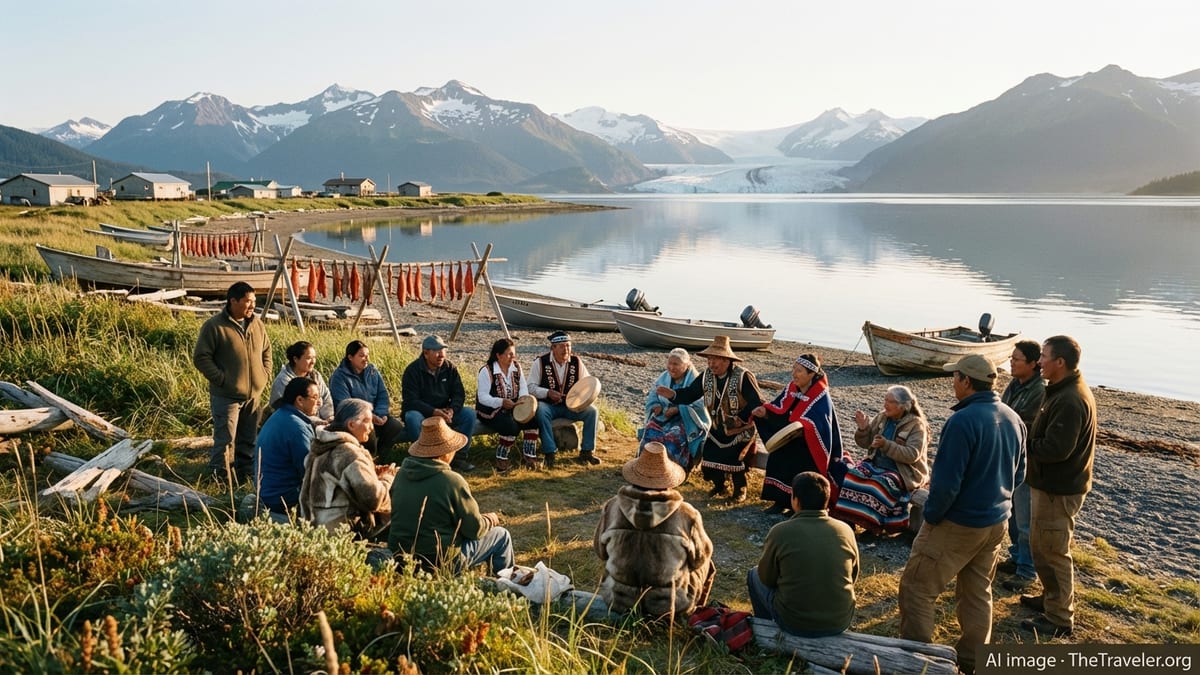
Indigenous tourism has moved from a niche offering to a central plank of Canada’s tourism narrative, even as the segment continues to recover from the disproportionate damage inflicted by the pandemic. Research conducted by the Conference Board of Canada and the Indigenous Tourism Association of Canada shows that Indigenous tourism businesses were among the first to be hit and the slowest to rebound, with 2019 remaining the high-water mark for revenues, employment and visitor volumes. Despite this, demand indicators suggest strong interest from both domestic and international travelers for authentic, community-led Indigenous experiences.
A sector impact report released in January 2025 outlines how Indigenous-owned lodges, cultural centers, tour operators and arts experiences are rebuilding capacity, often with a sharper focus on sustainability, land stewardship and cultural integrity. The report notes that while overall economic output has not yet fully returned to pre-pandemic levels, the number of market-ready Indigenous tourism businesses is growing again, and many are booking solid advance demand from European and other long-haul markets that view Canada’s Indigenous cultures as a distinctive draw.
Regional organizations such as Indigenous Tourism BC report similar trends in their 2024 to 2025 updates, pointing to rising visitor interest in guided cultural tours, Indigenous culinary experiences and wildlife or nature-based trips grounded in traditional knowledge. These offerings align closely with global travel trends favoring immersive, low-impact travel and provide communities with opportunities to lead tourism development on their own terms. Industry observers argue that this creates a competitive advantage for Canada, differentiating it from other destinations that are slower to center Indigenous voices in their tourism marketing.
The federal tourism strategy increasingly references Indigenous tourism as a driver of both reconciliation and regional economic diversification. Program criteria for the Tourism Growth Program and related funding streams frequently highlight Indigenous-owned or Indigenous-partnered projects, with an eye to building year-round employment and fostering youth entrepreneurship. As cross-border traffic softens, these community-led experiences are expected to play a growing role in sustaining visitor volumes, particularly in provinces and territories where Indigenous lands and cultures define the travel experience.
Domestic Strength and New Markets Offset U.S. Weakness
While the cooling of cross-border trips has created headwinds for some operators, especially in border communities and U.S-focused destinations, Canada’s overall tourism numbers are being propped up by robust domestic travel and gains from overseas markets. Statistics Canada has reported that tourism activity and spending within Canada reached or exceeded pre-pandemic levels in nominal terms during 2024 and 2025, even if inflation-adjusted figures remain somewhat lower. Canadians are traveling extensively within their own country, filling hotels in popular national parks, coastal regions and major cities during peak seasons.
Industry analyses published in early 2026 describe a tourism landscape where domestic trips and high-yield international visitors from Europe and Asia are offsetting the softness in North American cross-border traffic. Travel media and sector research point to strong demand from markets such as the United Kingdom, Germany and South Korea for nature-based and culturally rich itineraries, including Indigenous-led products. Airlines have been adding or restoring routes to key European hubs and select Asian cities, aiding this reorientation of demand.
Canada’s destination marketing is also evolving in response. Destination Canada’s refreshed brand platform emphasizes the country as a place of “unfiltered” experiences and natural beauty, backed by the use of real-time tourism data to fine-tune campaigns. Promotional efforts now lean heavily into themes of sustainability, Indigenous culture, outdoor adventure and urban creativity, aiming to attract travelers who stay longer and spend more, rather than merely maximizing visitor counts. This approach is designed to support the federal growth agenda while avoiding overtourism pressures in fragile environments.
For tourism businesses, this recalibration carries both challenges and opportunities. Operators that depend heavily on short, price-sensitive cross-border trips are facing a more difficult adjustment, while those positioned around experiential, high-value travel are seeing room to grow. Analysts suggest that if Canada can continue to cultivate Indigenous tourism, reinforce domestic travel, broaden its international base and maintain supportive federal policy, the sector will remain on track for expansion even if cross-border flows with the United States recover only gradually.
Border Communities Seek Adaptation as Policy Risks Persist
The communities most exposed to the cross-border downturn are the small cities and towns clustered near land crossings that historically drew Canadian visitors for shopping, entertainment and quick leisure breaks, as well as Canadian communities that relied on American visitors for festivals and seasonal attractions. Reports from both sides of the border describe reduced traffic at duty-free shops, outlet malls and roadside tourism businesses, with some operators citing sales declines of 50 percent or more compared with typical pre-pandemic years.
These localized shocks are closely intertwined with broader policy uncertainty. Trade frictions, shifting tariffs, talk of new or higher visa-related fees and evolving security protocols all create an environment in which travelers may hesitate to cross the border for discretionary trips. Canadian polling during the current trade dispute indicates strong public support for reducing dependence on the United States in both economic and cultural terms, a sentiment that spills over into travel choices. U.S. tourism organizations, in turn, have begun to warn of mounting losses from reduced Canadian visitation, particularly in states such as Florida, Nevada and border regions of the Midwest and Pacific Northwest.
On the Canadian side, the federal tourism strategy and regional development programs are being asked to bridge these gaps by fostering alternatives that keep spending at home or redirect it toward other international markets. Investment in Indigenous tourism, destination development in Atlantic and northern Canada, and support for cultural infrastructure in mid-sized cities are all part of this risk-mitigation approach. Local tourism boards in border provinces are also ramping up campaigns that invite Canadians to “rediscover” nearby domestic destinations that can substitute for traditional cross-border weekend trips.
Policy analysts observe that the immediate outlook for cross-border travel will depend heavily on the trajectory of the trade dispute, currency movements and the perceived hassle factor of crossing the border. For now, Canada’s tourism sector appears to be weathering the storm through a combination of federal investment, domestic demand and the growing appeal of Indigenous-led and sustainability-focused experiences. The ability of border communities to adapt, and of Indigenous and regional operators to scale up without losing their distinctiveness, will be central to how resilient this expansion proves over the remainder of the decade.