

More news on this day
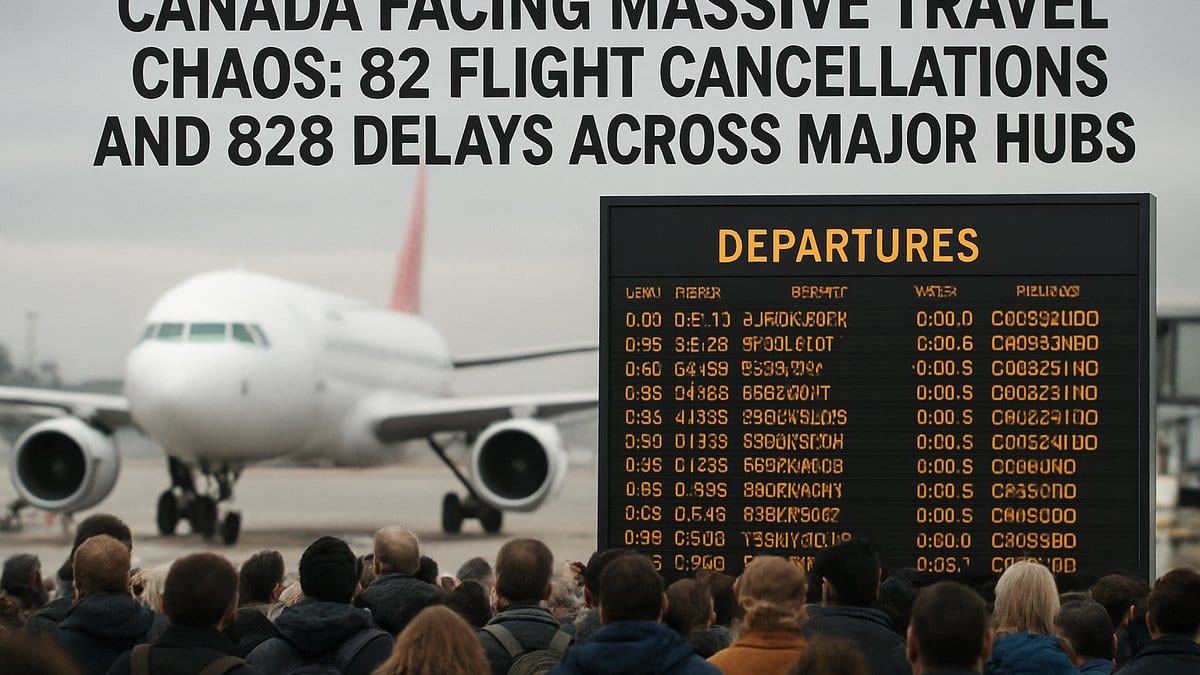
Canada’s aviation network is wrestling with a fresh wave of disruption, with data from flight-tracking services showing 82 flight cancellations and 828 delays affecting travelers across the country’s busiest hubs in a single day.
Get the latest news straight to your inbox!
Major Hubs Bear the Brunt of Disruption
The latest figures highlight how concentrated the disruption has become at Canada’s largest airports, where dense schedules and tight turnaround times leave little margin when conditions deteriorate. Toronto Pearson, Vancouver International and Montreal–Trudeau appear to be absorbing the bulk of cancellations and delays, with knock-on effects stretching to Calgary, Edmonton, Ottawa and secondary regional terminals.
Publicly available airport and flight-tracking dashboards indicate that hundreds of services were pushed back by more than an hour, while dozens never left the gate at all. The 82 cancellations represent a relatively small share of total daily departures, yet they translate into thousands of disrupted journeys once connecting passengers and missed links are taken into account.
The imbalance between cancellations and delays is particularly striking. With 828 flights delayed, carriers appear to be prioritizing keeping aircraft moving, even at the cost of long waits, rather than cutting services outright. That strategy may help reduce the backlog over several days, but it also means passengers are more likely to experience rolling departure-time changes and late-night arrivals.
For Canada’s largest hubs, the numbers underscore a broader trend. In recent winters, heavy snowfalls, extreme cold and rapid temperature swings have repeatedly pushed airports to the edge of their capacity, forcing widespread schedule revisions and leaving little resilience when any additional stress hits the system.
Weather, Congestion and Staffing Under Scrutiny
Reports from Canadian and international outlets in recent months point to a convergence of factors behind the latest wave of travel chaos. Unsettled weather across large parts of the country, including snow, freezing rain and low cloud ceilings, has periodically slowed arrivals and departures, triggering ground holds and runway changes that cascade through busy daily schedules.
At the same time, Canada’s aviation sector is still working through structural strains that emerged after the pandemic. Industry analyses have repeatedly highlighted tight staffing in specialized roles, including air traffic control, maintenance and ground handling. When weather or technical issues arise, these staffing constraints can lengthen recovery times and make it harder for airlines to reposition aircraft and crews efficiently.
Congestion in North American airspace is compounding the problem. Delays at major hubs in the United States and Europe frequently spill into Canadian operations, particularly on long-haul and transborder routes. When overseas arrivals are late, aircraft that would normally turn quickly to operate domestic legs are forced into extended ground times, compressing the rest of the day’s schedule.
Recent safety and infrastructure concerns elsewhere in the network have also contributed to a more cautious operating environment. Runway work, updated spacing rules and heightened scrutiny of approach and departure procedures at busy international airports can reduce hourly capacity, feeding back into Canadian carriers’ planning and limiting their flexibility when disruptions occur.
Impact on Travelers Across the Country
For passengers, the numbers translate into long lines at check-in counters, crowded departure lounges and a spike in missed connections. Travelers reported on social platforms that some domestic flights sat on the tarmac waiting for deicing or an available gate, while others were held at origin as crews timed out or inbound aircraft arrived late from previous sectors.
The discrepancy between relatively modest cancellation totals and an elevated volume of delays has led many travelers to face multi-hour waits rather than outright trip abandonments. While a delayed departure can sometimes be preferable to a cancellation, late arrivals can cause vacation days to be lost, business meetings to be rescheduled and onward rail or bus journeys to be missed.
Families traveling with children and elderly passengers are often among the hardest hit. Extended waits in terminals, limited seating near gates and late-night schedule changes can magnify stress and fatigue. In some cases, travelers have described scrambling to find last-minute hotel rooms near airports when their connecting flights left without them or were rescheduled to the following morning.
Consumer-rights advocates have continued to urge passengers to document every stage of their disruption, from boarding passes to delay notifications, to support claims under Canada’s Air Passenger Protection Regulations or relevant international regimes. Published guidance emphasizes that eligibility for compensation depends heavily on whether a disruption is considered within an airline’s control and on the length of the delay in reaching the final destination.
Airlines and Airports Adjust Operations
Airline operational data and schedule updates show carriers responding to the surge in disruptions by trimming frequencies on some routes, consolidating lightly booked flights and swapping aircraft types to better match available crews and maintenance capacity. In busy corridors such as Toronto to Vancouver or Montreal to Western Canada, some departures appear to be merged or retimed to reduce the risk of last-minute cancellations later in the day.
Airports, for their part, have been adjusting deicing plans, runway configurations and staffing rosters to cope with peaks in demand during storms and cold snaps. Public information from several Canadian airports indicates that snow-clearing teams and deicing crews have been working extended shifts this season to keep runways and taxiways open when heavy weather hits.
Airside congestion remains a serious challenge, particularly during morning and late-afternoon banks when multiple airlines schedule departures within tight time windows. If a handful of flights are delayed by weather, technical issues or late-arriving crews, departure queues can rapidly lengthen and taxi times can increase, feeding back into the overall delay statistics for the day.
Some carriers appear to be leaning more heavily on digital tools to manage passenger flows, encouraging travelers to rebook through apps or websites when disruption hits rather than relying solely on airport service desks. While that approach can speed up rebooking for tech-savvy passengers, it can also leave less frequent travelers uncertain about their options, especially when itineraries involve multiple airlines or codeshare partners.
What Travelers Can Do as Disruptions Mount
With 82 cancellations and 828 delays recorded in a single day, travel experts are again stressing the importance of preparation when flying through Canada’s major hubs. Publicly available advice from consumer organizations and travel analysts highlights several practical steps that can help mitigate the impact of sudden cancellations or rolling delays.
Passengers are often urged to monitor their flights closely through both airline apps and independent tracking services, which can sometimes flag emerging issues before official departure times are updated. Building extra buffer time into itineraries, particularly when connecting to international flights or onward rail services, can reduce the risk of missed connections.
Travel insurance and credit card protections are also receiving renewed attention. Many policies include specific coverage for flight delays, missed connections, accommodation and meals, provided travelers keep receipts and proof of disruption. Given the frequency of schedule changes in recent seasons, analysts suggest that such coverage is increasingly valuable for trips that rely on tight connections or that cannot be easily rescheduled.
For now, the combination of 82 cancellations and 828 delays across Canada’s main airports serves as a stark reminder that the country’s aviation system remains vulnerable to shocks. As airlines, airports and regulators debate long-term fixes, passengers are left to navigate a landscape where even routine journeys can quickly turn into extended ordeals when conditions turn against them.