

More news on this day
Air travel across Canada has descended into widespread disruption, with freshly compiled data showing 82 flight cancellations and 828 delays in a single day across the country’s busiest airports, snarling schedules and leaving thousands of passengers scrambling to reroute their journeys.
Get the latest news straight to your inbox!
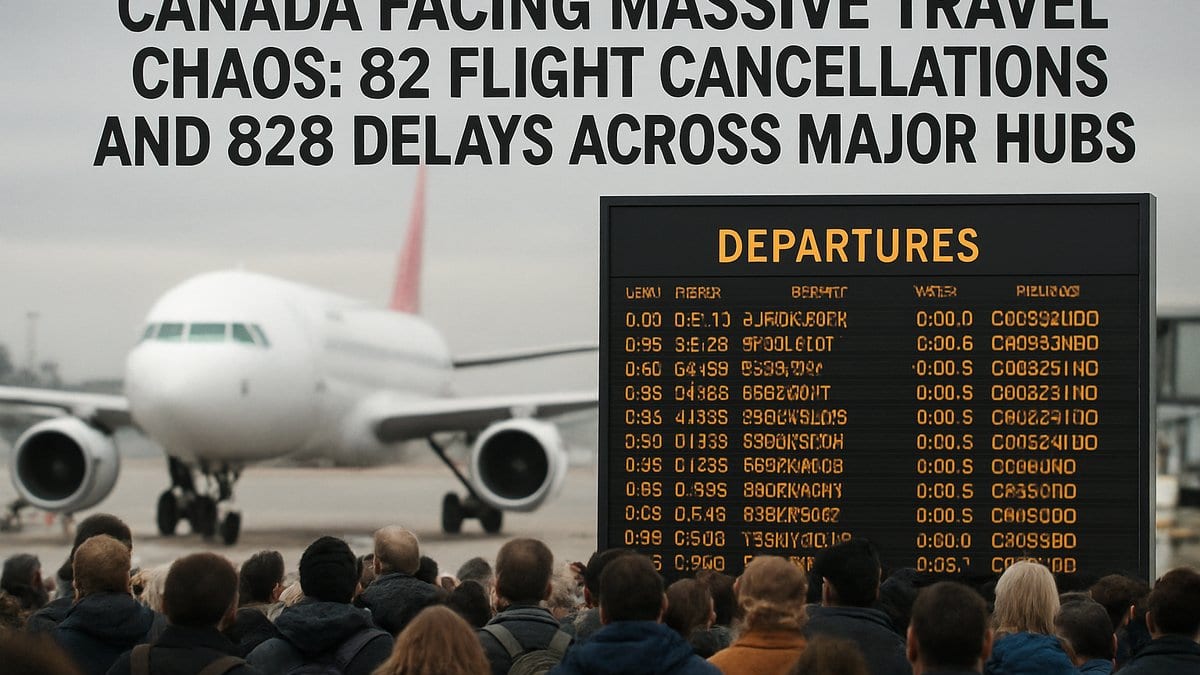
Major Hubs Buckle Under Mounting Operational Strain
Publicly available tracking data indicates that Canada’s largest hubs, including Toronto Pearson, Vancouver International and Montreal–Trudeau, are shouldering the bulk of the cancellations and delays, with knock-on effects rippling into regional airports. The concentration of disruption at these key gateways has turned what might otherwise be localized issues into a nationwide travel headache.
Industry reports suggest that a mix of adverse weather in key corridors, lingering crew and aircraft imbalances from earlier disruptions, and tight schedules has left little slack in the system. When problems surface at one major hub, they quickly cascade, forcing airlines to cancel rotations or drastically delay departure times to realign aircraft and crews.
Data from global flight-tracking platforms shows that delays are not confined to a single carrier or route type. Domestic, transborder and some long-haul international services have all been affected, indicating that the disruption stems from broader operational pressures rather than a single isolated failure.
Observers note that Canada’s major hubs are also processing increased spring leisure and business travel, which is compounding the strain. Higher passenger volumes mean longer lines at check-in and security, which can in turn delay boarding and push back already tight departure windows.
Passengers Confront Missed Connections and Overnight Stays
For travelers, the statistical picture translates into long hours in terminal buildings, missed connections and, in some cases, unexpected overnight stays. With 82 flights canceled outright, scores of passengers have seen their itineraries collapse, particularly those relying on short domestic hops to connect to transborder or overseas flights.
Published coverage of recent disruptions underscores how quickly delays can snowball into missed onward journeys. A late inbound aircraft can arrive after a connecting flight has already departed, leaving travelers to queue for rebooking at service desks that are themselves struggling to keep pace with the volume of schedule changes.
Those caught in the wave of 828 delays face uncertainty even when their flights eventually depart. Long waits at crowded gates, shifting departure times and concerns about making tight connections are adding to the stress. Families traveling with children and older passengers are especially vulnerable to lengthy, late-night disruptions.
Travel forums and social media posts reflect widespread frustration about limited rebooking options on popular routes, particularly where multiple flights in a day have been delayed or canceled. Some travelers report opting to cancel trips altogether when alternative same-day options are no longer feasible.
Airlines and Airports Race to Restore Stability
According to operational summaries published by airports and carriers, recovery efforts are focused on restoring predictable schedules and clearing backlogs of displaced passengers. That process typically involves repositioning aircraft and crews, consolidating lightly booked flights and, in some cases, preemptively trimming schedules to create more buffer in the system.
Recent international disruptions have highlighted how sensitive airline networks can be to sudden shocks, whether related to weather, technology or safety events. Coverage of a recent Air Canada regional jet collision at New York’s LaGuardia, for example, described how a single closure of a major runway could trigger days of delays and cancellations on both sides of the border as aircraft and crews fell out of position.
In the Canadian context, aviation analysts point out that large carriers often operate tightly wound schedules that maximize aircraft utilization but leave relatively little margin when conditions deteriorate. When severe weather, airspace congestion or foreign disruptions intersect with those tight timetables, airlines may need several days of steady operations before their networks fully stabilize.
Airport authorities have been emphasizing the importance of monitoring flight status before leaving home and arriving early when flights are still operating. With gate changes and schedule shifts happening rapidly during disruption events, passengers who arrive close to departure time are more likely to encounter complications at security and boarding.
What Today’s Chaos Means for Passenger Rights
The latest wave of disruption is also drawing attention to passenger rights under Canada’s Air Passenger Protection Regulations. Public guidance from the Canadian Transportation Agency explains that compensation and assistance depend on the cause of the delay or cancellation and whether it is within the airline’s control, within its control but required for safety, or outside its control entirely.
For cancellations and long delays within an airline’s control and not required for safety, airlines may be obligated to offer standards of treatment such as food and drink vouchers, hotel accommodation in the case of an overnight delay, and rebooking on the next available flight. Under certain conditions, passengers may also be entitled to financial compensation, particularly when they are notified of schedule changes close to departure.
When disruptions stem from factors outside an airline’s control, such as severe weather or air traffic control restrictions, carriers are generally required to provide rebooking or refunds but may not owe additional compensation. However, consumer advocates often encourage travelers to document their experience, retain receipts and follow up with airlines after the fact if they believe the disruption was within the carrier’s control.
In all cases of cancellation, publicly available information from consumer agencies reiterates that passengers who choose not to travel are typically entitled to a refund for the unused portion of their ticket, even when disruptions arise from reasons beyond the airline’s control. This principle has gained prominence in recent years as large-scale operational meltdowns have left travelers out-of-pocket for abandoned journeys.
How Travelers Can Navigate Ongoing Disruptions
With Canadian airports still working through the fallout from 82 cancellations and 828 delays, travel advisers are urging passengers to adopt more defensive strategies when planning trips. Booking the first flight of the day, allowing generous connection times and avoiding tight back-to-back itineraries are frequently cited as ways to reduce the risk of being stranded.
Experts also emphasize the value of monitoring flights in real time through airline apps and independent tracking platforms. Early awareness of delays can give travelers a head start on requesting rebooking options, securing scarce hotel rooms or adjusting ground transportation plans when it becomes clear that original schedules will not hold.
For future trips, some passengers are turning to travel insurance products that cover trip interruption and additional expenses incurred during long delays. Policy terms vary widely, but many plans offer reimbursement for meals, lodging and incidentals once a delay passes a defined time threshold.
For now, the hundreds of affected flights across Canada’s major hubs serve as a reminder that even routine travel days can quickly unravel. As airlines and airports work to restore regular operations, travelers face a familiar challenge: building enough flexibility into their plans to withstand the next bout of turbulence in the country’s crowded skies.