

More news on this day
Canada’s decision to elevate its travel advisory for India to a Level 3 “avoid non-essential travel” warning is beginning to reverberate across transcontinental flight networks, disrupting schedules and dampening demand for routes operated by Air Canada, British Airways, and United Airlines.
Get the latest news straight to your inbox!
Heightened Risk Assessment Triggers Stronger Advisory
Publicly available information from Canada’s official travel advisory portal shows India listed with an overall “exercise a high degree of caution” rating, alongside a Level 3 “avoid non-essential travel” warning for specific high-risk regions such as Manipur. Recent updates highlight heightened security concerns and the potential for violence and civil unrest, particularly in parts of northeastern India.
While the most restrictive language is focused on defined regions, industry coverage indicates that many Canadian travelers interpret the message as a broader signal of elevated risk across the country. This perception effect is common whenever governments escalate travel warnings, regardless of how precisely the wording confines the highest risk levels.
The Level 3 category is one step below a full “avoid all travel” designation and is typically reserved for destinations where security conditions or access to essential services may deteriorate quickly. In practice, it often prompts business travelers to postpone or reroute trips, while leisure travelers reassess whether discretionary journeys are still justified.
Canada’s advisory framework also interacts with separate health-related notices, where “avoid non-essential travel” is used for serious outbreaks or systemic health risks. Although the current India guidance is primarily driven by security and political concerns, the shared wording across frameworks reinforces the sense of caution among travelers and corporations.
Air Canada Adjusts Capacity and Booking Policies
Coverage of airline operations indicates that Air Canada, as the primary Canadian carrier linking cities such as Toronto and Vancouver with Delhi and Mumbai, is among the most directly affected by shifting sentiment. Reports note that the airline has already been relying on flexible travel advisories and change-fee waivers in other parts of its network, tools that are now being closely watched by passengers booked on India routes.
Air Canada’s profitability on India services is heavily tied to premium cabins and corporate travel contracts. Industry analysis suggests that the Level 3 advisory is pressuring these higher-yield segments, as risk-averse corporate travel managers scale back non-essential trips or consolidate them into fewer journeys. This dynamic can leave flights more reliant on price-sensitive leisure travelers, complicating revenue management and potentially prompting capacity cuts.
Travel news outlets report that the carrier is reviewing frequency, aircraft type, and seasonal deployment on its India network in response to softening Canadian demand. While a full-scale suspension has not been widely reported, reductions in weekly frequencies, upgauging or downgauging of aircraft, and tactical cancellations on low-demand days are emerging as common strategies to match supply with the new reality.
At the same time, publicly available policy documents show Air Canada maintaining a framework for travel advisories that can trigger rebooking options when flights or destinations are materially impacted. Passengers booked to India are being urged by consumer advocates and travel agencies to monitor the airline’s travel updates closely for any new rebooking windows or fee-relief measures.
British Airways and United Airlines Feel Indirect Pressure
Although British Airways and United Airlines are not Canadian carriers, both rely on Canadian-origin traffic feeding into their India services via hubs such as London Heathrow and U.S. gateway airports. Industry reports indicate that these airlines are now contending with lower demand from Canada-based travelers, even as underlying demand from the United Kingdom, Europe, and the United States remains comparatively more stable.
For British Airways, the impact is most visible on connecting flows where Canadians typically route via London to Delhi, Mumbai, or Bengaluru. Travel trade analysis suggests that some of these passengers are deferring trips or opting for alternative destinations in Southeast Asia and the Middle East that do not carry the same advisory level from Ottawa, eroding a valuable segment of the carrier’s connecting traffic.
United Airlines faces a similar pattern on its India routes, particularly where Canadian travelers would normally connect through hubs such as Newark, Chicago, or San Francisco. While the airline’s India demand base is diversified, the dip in Canadian-origin bookings adds another layer of complexity to a market that has already been shaped by airspace constraints and geopolitical tensions in recent years.
Neither British Airways nor United Airlines has publicly tied individual cancellations to the Canadian advisory alone, but flight-monitoring data and media coverage point to an uptick in tactical schedule changes, day-of-week adjustments, and isolated cancellations as carriers fine-tune capacity. For travelers, this has translated into a less predictable timetable and a greater need to check flight status frequently before departure.
Flight Cancellations, Rebookings, and Insurance Gaps
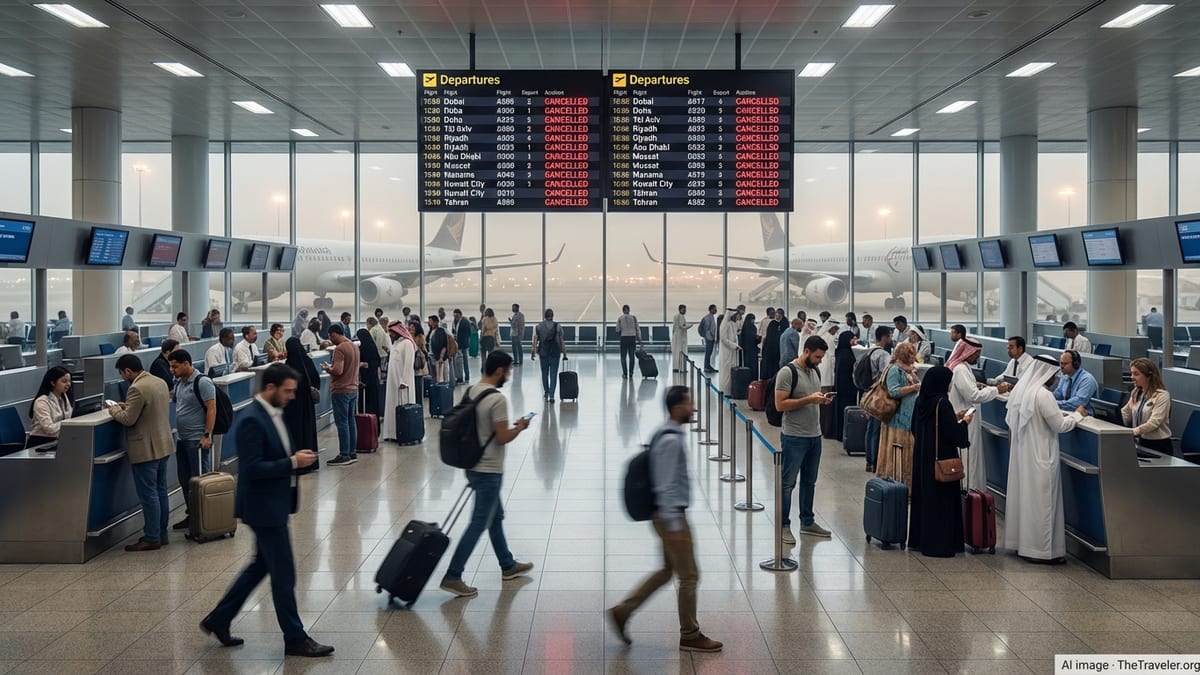
The combination of softer demand and elevated risk perceptions is contributing to a patchwork of cancellations and operational changes across the Canada India corridor. Travel industry reporting describes isolated flight cancellations on certain days, ad hoc consolidation of lightly booked services, and occasional aircraft swaps that reduce premium seating or overall capacity.
Such adjustments can have cascading effects for passengers. A single canceled India-bound departure from Canada or a transatlantic hub can strand travelers mid-journey or force overnight stays, especially when onward connections are already heavily booked. Travel advisors are recommending that passengers build in longer connection times and consider more flexible itineraries that can withstand schedule changes.
Another emerging issue is the interaction between Canada’s “avoid non-essential travel” warning and travel insurance coverage. Many policies feature exclusions or limitations for destinations under high-level government advisories, potentially affecting claims related to trip cancellation, interruption, or medical emergencies. Industry commentary notes that some travelers only discover these restrictions when they attempt to file a claim after an advisory is upgraded.
As a result, travelers heading to India from Canada or via Canadian-origin itineraries are being encouraged to scrutinize policy wording, confirm whether advisory-related exclusions apply, and, if necessary, seek specialized plans that explicitly cover travel to advisory-affected destinations. For corporate travelers, this review often falls to risk management or human resources teams, which may, in turn, further restrict discretionary trips.
Tourism, Trade, and Traveler Behaviour in Flux
Beyond immediate airline operations, Canada’s warning is sending ripples through tourism, trade, and diaspora travel patterns. India is a key destination for visiting friends and relatives, student mobility, and business travel, particularly in technology and services. Travel analysts forecast that a prolonged Level 3 advisory could dampen new bookings for family visits and educational travel, even if some essential journeys continue despite the warning.
Tourism stakeholders in India are watching the situation closely, as Canadian visitors represent a valuable long-haul market segment that often combines family visits with broader leisure itineraries. Reduced arrivals can affect not only major cities such as Delhi and Mumbai but also secondary destinations that rely on long-haul tourists willing to travel beyond the primary gateways.
On the Canadian side, the advisory underscores a period of elevated diplomatic and security sensitivities in relations with India. While the guidance is framed in terms of traveler safety, its economic impacts are felt across airlines, airports, hotels, ground transport providers, and travel agencies that depend on cross-border movement.
For now, the travel landscape between Canada and India appears to be in a holding pattern, shaped by evolving government advisories, airline capacity decisions, and traveler risk tolerance. Prospective passengers are being urged by industry observers to remain flexible, stay informed about both security developments and airline schedule changes, and weigh carefully whether their trips meet the threshold of essential travel under Canada’s updated guidance.