

More news on this day
Canada’s tightened travel advisory for India, urging citizens to avoid non-essential travel to parts of the country, is rippling through transcontinental flight networks and adding fresh uncertainty for passengers booked on Air Canada, British Airways and United Airlines services.
Get the latest news straight to your inbox!
Advisory Raises Risk Level for Key Indian Regions
Canada’s official travel advice for India was recently updated to highlight elevated security concerns in several regions, reinforcing language that calls on citizens to avoid non-essential travel to specific states and border areas. Publicly available information indicates that the advisory singles out parts of India for heightened risk, citing the threat of terrorism, insurgency and civil unrest, while assigning a broader “exercise a high degree of caution” rating to the country overall.
The latest guidance describes a patchwork of risk levels, with certain areas, including parts of Jammu and Kashmir and border districts with Pakistan, placed under stricter “do not travel” or “avoid non-essential travel” categories. Northeastern states such as Manipur and Assam continue to feature prominently in the advisory language due to recurring episodes of violence and instability, as outlined on Canada’s official travel portal and in recent media summaries of Ottawa’s global risk map.
Though the advisory does not ban travel outright, the wording carries important implications for insurance coverage, corporate duty-of-care policies and consumer confidence. Travel insurers and large employers frequently treat “avoid non-essential travel” notices as a trigger to review or restrict trips, which can sharply reduce demand for both leisure and business itineraries touching Indian gateways.
The recalibrated stance also comes against a backdrop of already sensitive bilateral ties between Canada and India, where previous diplomatic tensions have fed into public debate over safety, consular access and the reliability of air links between the two countries.
Air Canada Adjusts India Capacity Amid Labour and Route Pressures
Air Canada, which has spent recent years positioning itself as a major player on the Canada India corridor, is particularly exposed to swings in demand from Canadian travellers. The carrier expanded India services in late 2024 with additional nonstops and one stop options via Europe, according to earlier schedule announcements, but has since faced its own turbulence in the form of labour unrest and selective route cuts.
In 2025, a large scale strike by Air Canada flight attendants led to hundreds of cancellations and left well over 100,000 passengers struggling to rebook, based on figures reported in Canadian and international coverage. Separate route planning decisions have seen some India services, including seasonal links and secondary city pairings, placed under review or temporarily suspended, even as core Toronto Delhi operations remained a priority.
The latest Canadian advisory on India complicates that picture. While the airline continues to market India as a key long haul destination, travel agents and corporate travel managers report that clients are increasingly cautious about new bookings, especially to regions explicitly highlighted in the advisory. As risk perceptions shift, Air Canada faces pressure to fine tune frequencies, swap aircraft types or consolidate services across its India network to keep load factors healthy.
Operationally, Air Canada must also contend with wider disruptions affecting routes into South Asia, from congestion on safer diversion corridors to knock on effects of airspace closures linked to tensions in the Middle East and over Pakistan. Longer routings raise fuel costs and scheduling complexity, amplifying the impact of even modest drops in demand from Canadian travellers heeding the advisory.
British Airways and United Feel Secondary Shock Waves
Although the Canadian advisory is directed at its own citizens, international carriers such as British Airways and United Airlines are being swept up in the resulting uncertainty. Both airlines serve Indian hubs and rely, in part, on connecting traffic from Canada that flows through London and major United States gateways.
British Airways has already been forced in recent months to rework elements of its South Asia network due to instability in West Asia, with at least one widely reported incident involving a London bound flight turning back to Chennai after an abrupt closure of Middle Eastern airspace. Any further softening of demand from Canadian travellers, particularly premium passengers who often route via Heathrow, risks adding another layer of volatility to the carrier’s India schedules.
United Airlines, for its part, has concentrated its India operations on long haul nonstops from hubs such as Newark and Chicago, while also tapping connecting traffic from Canada through transborder codeshares and alliance partners. The airline has dealt with its own operational setbacks, including technology outages that grounded or delayed thousands of flights across its network in 2025, highlighting how quickly disruptions can cascade when long haul connections are involved.
Industry analysts note that when a key origin market like Canada issues a restrictive advisory, demand can ebb not only on nonstop Canada India routes but also on one stop itineraries via the United States or the United Kingdom. This can prompt carriers such as British Airways and United to trim frequencies, consolidate flights on peak days, or temporarily suspend underperforming rotations to Indian cities.
Travellers Face Cancellations, Higher Fares and Insurance Complications
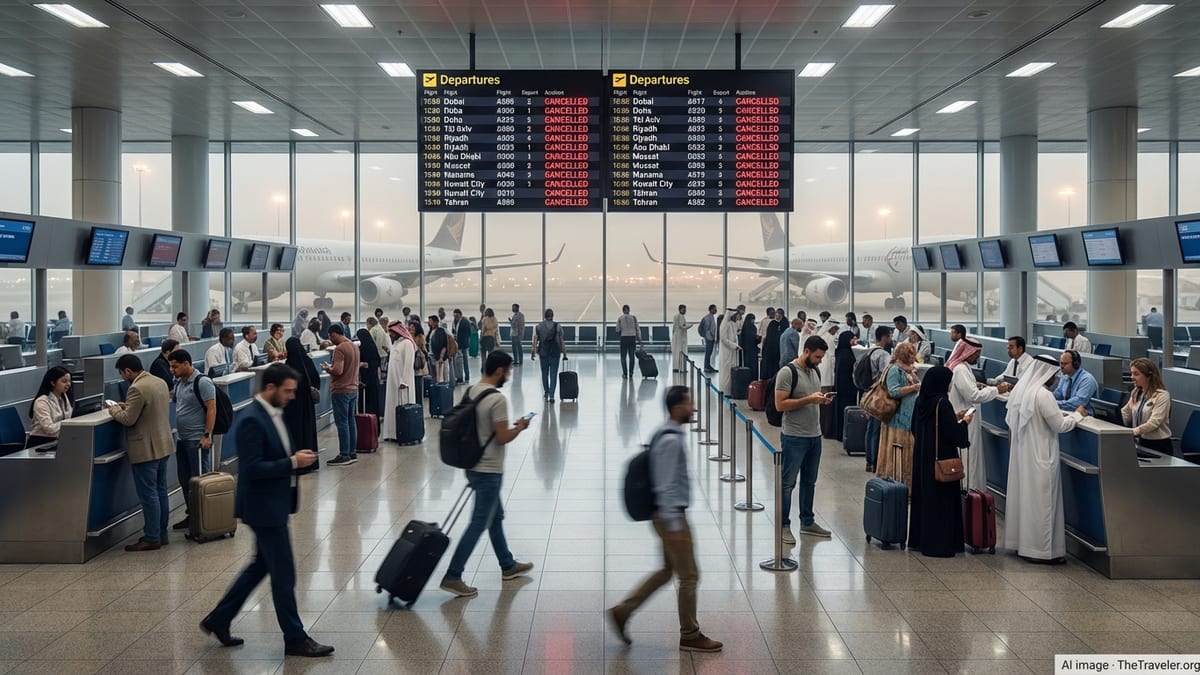
For travellers, the practical effect of Canada’s sharper language on India is already visible in sporadic cancellations, schedule changes and tightened booking conditions. Air Canada’s recent labour related disruptions illustrated how quickly transcontinental itineraries can unravel, with many Canada India passengers reporting last minute rebookings onto partner carriers or being routed through alternative hubs in Europe and the Gulf.
British Airways and United customers are likewise being advised, through public travel updates and agency bulletins, to monitor their itineraries closely and allow additional time for connections involving India. Where flights are not outright cancelled, reroutings around conflict affected airspace have lengthened flight times, compressed connection windows and, in some cases, reduced the number of weekly departures on certain city pairs.
Insurance is another pain point. Many travel insurance policies sold in Canada contain clauses tied directly to the government’s risk levels. When a destination or region is classified under “avoid non-essential travel,” claims related to trip cancellation or interruption can be denied unless the traveller can demonstrate that the journey was essential, such as for urgent family or medical reasons. This has led some would be visitors to postpone or cancel trips to India altogether, reducing forward bookings just as carriers attempt to stabilise their schedules.
Higher volatility typically pushes fares upward on the remaining flights that do operate, as airlines seek to recover increased operating costs and hedge against future disruptions. The result is a more expensive, less predictable travel environment for Canadians hoping to visit family, study abroad or conduct business in India in the coming months.
Outlook: Cautious Demand and a Fragile Air Corridor
Looking ahead, both the Canadian advisory and the broader geopolitical context suggest that the Canada India air corridor will remain fragile. While there is no blanket prohibition on travel, the strong wording around non-essential trips to specific Indian regions is likely to keep demand subdued among risk conscious leisure travellers and some corporate clients.
Air Canada, British Airways and United Airlines are expected to continue adjusting capacity in response, balancing the need to maintain strategic presence in India with the financial realities of operating long haul routes through congested or occasionally restricted airspace. If security conditions in highlighted Indian states improve, Canada could opt to soften its advisory, which would in turn support a rebound in bookings and encourage carriers to restore frequencies.
For now, travellers are being left to navigate an environment in which schedules are subject to rapid change and the fine print of insurance policies matters more than ever. The combination of government advisories, airline labour issues and regional airspace constraints underscores how interconnected global aviation has become, and how quickly a shift in one country’s risk assessment can reverberate through the networks of carriers headquartered half a world away.