

More news on this day
Mounting schedule cuts and operational turbulence at Air Canada, WestJet and regional carrier Jazz are colliding with weakening demand for Canada–United States travel, contributing to an estimated 8.4 percent drop in cross-border arrivals and raising alarms across North American tourism markets.
Get the latest news straight to your inbox!
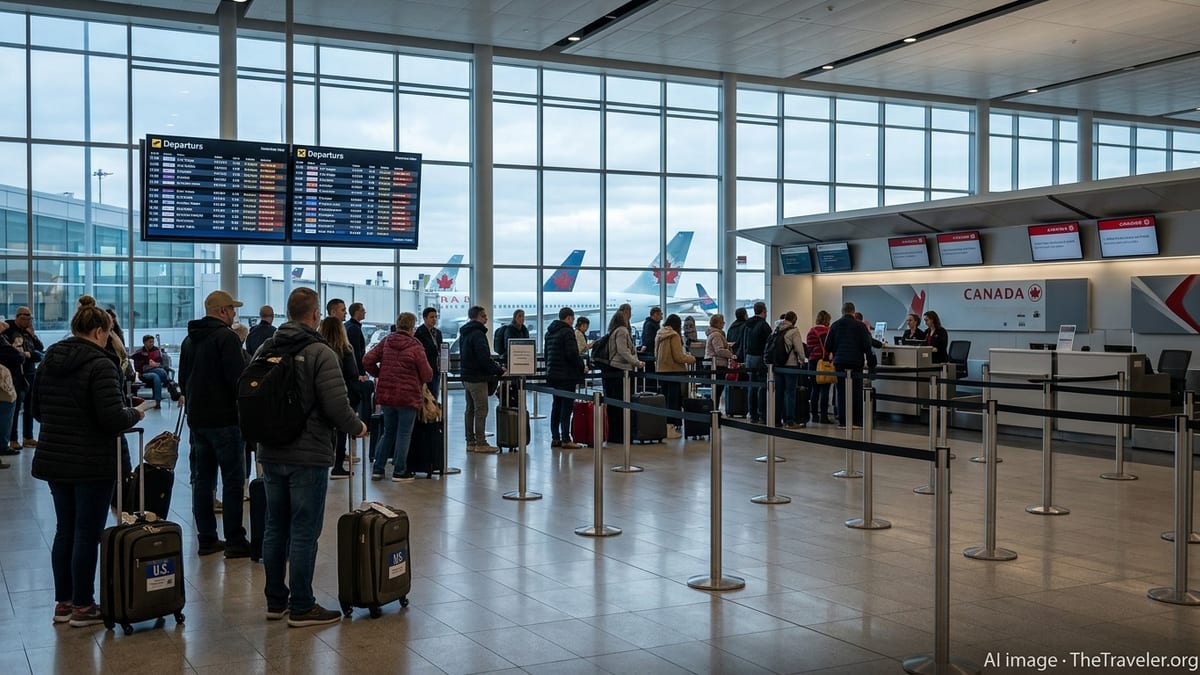
Airline Disruptions Meet a Steep Fall in Cross-Border Demand
Recent months have brought a wave of schedule reductions, route adjustments and higher airfares on Canada–U.S. corridors as airlines respond to softening demand and operational pressures. Publicly available airline and tourism data indicate that transborder air traffic has fallen for multiple consecutive months, with one widely cited data set showing an 8.4 percent decline in passenger volumes on key routes compared with a year earlier.
Air Canada and WestJet, the two dominant players in the Canada–U.S. market, have trimmed capacity on several leisure and business routes to major American hubs and sun destinations. Industry analyses and government statistics show that while overall Canadian air travel has grown modestly, the volume of passengers flying to the United States has contracted, forcing carriers to redeploy aircraft to domestic and overseas markets.
Regional connectivity has also shifted. Jazz, which operates many Air Canada Express flights linking smaller Canadian cities with U.S. gateways, has adjusted frequencies and aircraft gauge in response to the downturn. Travel analysts note that when regional frequencies are reduced, the impact ripples outward, making it harder for second tier U.S. destinations to attract Canadians who once relied on convenient one stop itineraries.
Travel research and financial commentary suggest that this 8.4 percent transborder decline sits within an even broader slump in Canadian visitation to the United States. In several recent monthly snapshots, Canadian resident return trips from the U.S. have registered double digit year over year drops, underscoring how airline turbulence and shifting traveler sentiment are reshaping a once reliable tourism pipeline.
Hotels and Resorts on the U.S. Side Feel the Strain
Hotels and resorts in key American tourism hubs that historically leaned on Canadian snowbirds and weekend visitors are reporting softer booking curves and lower advance purchase activity for 2025 and early 2026. Data released by state and city tourism boards point to weaker Canadian arrivals in popular destinations ranging from border shopping towns to major resort markets in states such as Nevada, Florida and Arizona.
Hospitality benchmarking reports show that some properties are experiencing lower occupancy and pressure on room rates compared with initial post pandemic recovery forecasts. Market commentary from lodging analysts indicates that properties closest to the border, and those in secondary cities that depended on short haul flights from Canada, are among the most exposed to the pullback.
Revenue managers at resort hotels have responded by increasing promotional offers targeted at domestic U.S. travelers and by shifting marketing budgets away from Canada toward other international source markets. Industry briefings describe a scramble to fill shoulder season gaps that Canadian visitors once helped smooth out, particularly in late winter and early spring when cross border leisure travel traditionally peaked.
Smaller independent hotels are especially vulnerable. Without the brand scale and diversified distribution channels of large chains, many rely heavily on repeat Canadian guests and long standing relationships with Canadian travel agencies. As Canada–U.S. air services shrink and fares rise, those pipelines are delivering fewer bookings, leaving some properties operating below their expected revenue baselines.
Cruise Operators and Port Cities Confront a Softer Booking Picture
The weakening flow of Canadian travelers has also begun to filter into cruise markets that depend on air connections through Canadian hubs. Industry summaries of source market trends for Alaska, Hawaii and Caribbean sailings note a measurable slide in Canadian passenger share on itineraries that require flights through Vancouver, Calgary, Toronto and Montreal.
Alaska cruises are particularly sensitive. Many itineraries rely on Canadians flying into Vancouver to embark or connecting through western Canadian airports to reach U.S. ports such as Seattle. With transborder air capacity under pressure, cruise planners have flagged softer demand from Canada relative to pre slump expectations, even as global cruise volumes continue to recover.
Port authorities and local tourism offices in several U.S. gateway cities have published outlooks acknowledging that a drop in Canadian source passengers could weigh on hotel stays, restaurant spending and excursions linked to cruise traffic. While the overall cruise sector remains on an upward trajectory, the loss of a historically loyal Canadian customer base is prompting some brands to recalibrate deployment and pricing strategies for shoulder season sailings.
Some cruise lines are leaning more heavily on U.S. and European markets to fill cabins once occupied by Canadians, promoting bundled air and cruise offers out of American hubs. Analysts caution, however, that this approach may not fully offset the loss of high frequency Canadian travelers who traditionally booked repeated sailings, especially in Alaska and short haul West Coast itineraries.
Canadian Travelers Pivot to Domestic, Mexico and Overseas Trips
Parallel to the airline adjustments, travel behavior data show Canadians redirecting trips away from the United States toward domestic destinations, Mexico, the Caribbean and Europe. Statistics agencies and tourism boards report that while transborder travel to the U.S. has fallen, international trips to non U.S. destinations have increased year over year, with some countries noting double digit growth in Canadian arrivals.
Reports from Mexican tourism authorities and major resort groups describe robust gains in Canadian vacationers during the northern winter, helped by competitive airfares and aggressive capacity additions from Canadian carriers on southbound routes. Similarly, travel trade commentary highlights expanded schedules from Air Canada and WestJet to European and Asian gateways, reflecting airline strategies to chase stronger demand outside the United States.
Within Canada, provincial tourism organizations are capitalizing on the shift. Campaigns promoting staycations, outdoor adventures and urban cultural breaks have coincided with increases in domestic hotel nights and visitor spending, partially offsetting the drag from weaker U.S. bound travel. For airlines, this rebalancing has meant more aircraft serving Canadian and overseas routes, leaving fewer resources dedicated to transborder services.
Underlying these shifts are a mix of economic and perceptual factors. A weaker Canadian dollar, higher average airfares on Canada–U.S. routes and concerns about political tensions and border frictions are frequently cited in published coverage and consumer surveys as reasons for rethinking trips south of the border. As a result, even travelers who continue to fly appear more selective about when and where they go in the United States.
Tourism Industry Braces for a Prolonged Adjustment
For tourism businesses on both sides of the border, the combination of airline turbulence and an 8.4 percent slide in cross border arrivals points to a more drawn out adjustment than many had anticipated during the early stages of post pandemic recovery. Economic modeling by tourism consultancies and government offices suggests that reduced Canadian visitation could shave hundreds of millions of dollars from U.S. tourism receipts if current patterns persist.
Large hotel companies with diversified geographic portfolios are expected to weather the downturn more easily, but analysts warn that smaller operators, independent attractions and border town retailers may face tougher conditions. Several state and regional tourism bodies have already revised their 2025 and 2026 projections downward, citing weaker than expected performance in Canadian source markets despite growth from other countries.
On the aviation side, carrier schedule filings and booking trends imply that airlines are preparing for a structurally smaller Canada–U.S. market in the near term. Some industry observers note that capacity cuts, regional retrenchment and higher fares can become self reinforcing, making it harder for demand to bounce back even if economic or political conditions improve.
For now, the turbulence surrounding Air Canada, WestJet and Jazz on transborder routes is serving as both a symptom and a driver of a deeper shift in North American travel flows. With hotels, resorts and cruise operators already feeling the strain from an 8.4 percent drop in arrivals, the Canada–U.S. tourism corridor is entering a period in which rebuilding confidence and connectivity may prove as important as traditional marketing campaigns.