

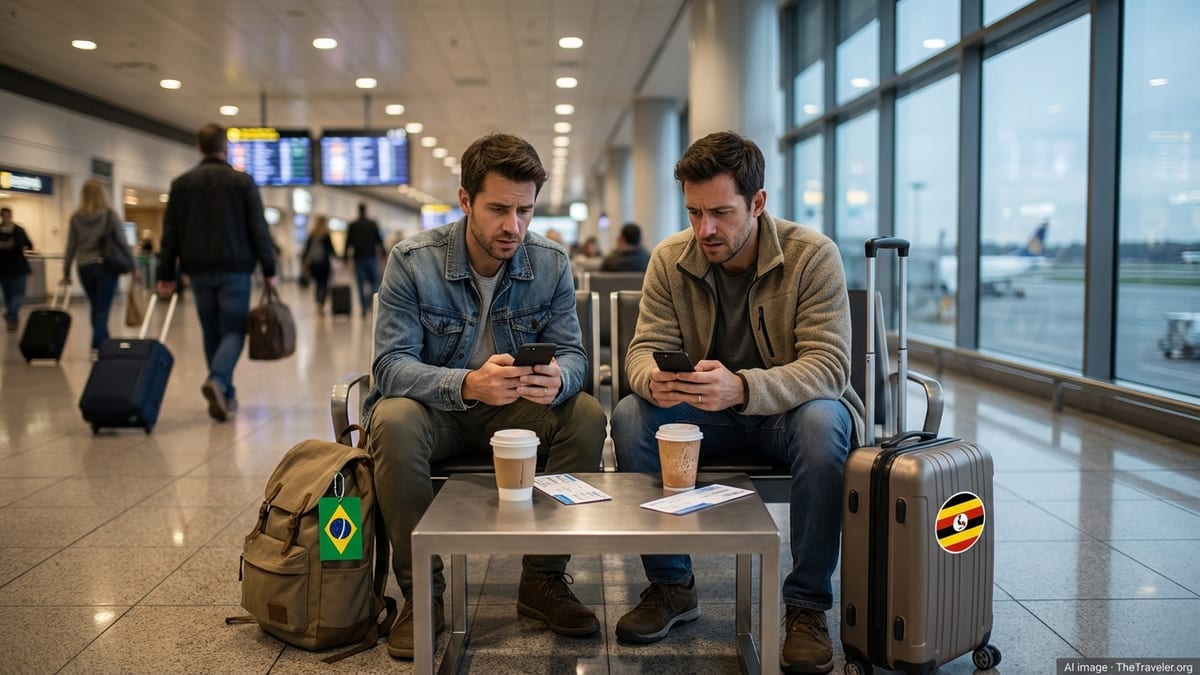
North American travelers heading to Brazil and Uganda are being urged to rethink their safety routines after fresh alerts from Canadian and United States authorities flagged rising drink-spiking incidents in Brazilian cities and mounting restrictions on communications technology and internet access in Uganda.
Fresh Warnings Target Brazil’s Growing Drink-Spiking Trend
Canadian and United States officials are sharpening their language on drink safety in Brazil, following a marked rise in reports of food and beverages being surreptitiously drugged in major urban centers. Updated Canadian travel advice for Brazil on February 13, 2026, highlights a surge in incidents of spiked food and drinks, particularly in Rio de Janeiro and São Paulo, with tourists coerced into withdrawing cash or handing over bank cards after being incapacitated. The advisory stresses that the trend is no longer confined to nightlife districts but is increasingly visible in busy beach areas and crowded restaurants.
U.S. officials have also drawn attention to what they describe as a persistent pattern of assaults involving sedatives and drugs placed in drinks, noting that such attacks are common in Rio de Janeiro and other tourist hubs. Security messages issued around Carnival season have warned of “drugging-dating” scams in which travelers, often targeted through bars, nightclubs or dating apps, are lured to more private settings, drugged and robbed. While the overall travel advisory level for Brazil remains moderate, the emphasis on drink-related crime has intensified in recent updates and public messaging.
Authorities in both countries underline that foreign visitors are particularly attractive targets because they often carry passports, multiple bank cards and high-value electronics. Officials also note that drink-spiking incidents are widely believed to be underreported, since many victims do not recall events clearly, hesitate to involve local police or simply seek consular assistance to replace travel documents and move on. The combination of an expanding nightlife economy, the popularity of app-based dating and crowded festivals has created what security specialists describe as “fertile ground” for these scams.
For Canadians and Americans preparing trips to Brazil, the latest alerts do not advise cancelling travel outright to most parts of the country, but they do signal a clear shift in risk perception around socializing, nightlife and casual encounters. Travelers are being encouraged to treat managing their personal safety in bars, clubs and informal social settings with the same seriousness they would apply to safeguarding their passports or complying with visa rules.
How Drink Spiking in Brazil Actually Happens
The pattern described by law enforcement agencies and consular officials in Brazil is often calculated and methodical. In many cases, victims report meeting an apparently friendly stranger in a bar, on a public beach kiosk or via a dating app, then moving on to a second location such as a hotel room, short-term rental or quieter bar. Drinks or food are then prepared or handled out of the traveler’s direct line of sight, providing the opportunity for sedatives or other substances to be added without detection.
Canadian officials report that some victims are forced, while impaired, to use their bank cards at cash machines, with criminals withdrawing the maximum possible amount in a short period. In other cases, travelers simply wake up hours later in their accommodation, disoriented and missing passports, electronics and bank cards. Security professionals say that victims are sometimes unable to pinpoint where they were drugged, which complicates both medical treatment and police investigation.
Recent Brazilian media coverage has also detailed separate, but related, concerns over methanol-adulterated alcohol in parts of the country, including São Paulo and Brasília, where authorities are investigating poisonings and deaths linked to tainted spirits. Health officials have urged residents and visitors to avoid unverified distilled drinks, particularly colorless liquors served in mixed cocktails, unless they are certain of their origin. While adulterated alcohol and deliberate drink-spiking are distinct problems, both have underscored how something as simple as accepting an unknown drink can now carry elevated risk.
Travel risk specialists say the rise in drink-spiking incidents fits a broader global pattern in busy party destinations, but the combination of organized crime, large festivals such as Carnival and high tourist traffic has made Brazil a particular focus of concern. Officials stress that the primary aim in most cases appears to be robbery rather than physical harm, yet some incidents have escalated into serious assaults, and medical complications from powerful sedatives or contaminated alcohol can be life threatening.
Practical Steps Travelers Can Take to Stay Safe in Brazil
For Canadians and Americans bound for Brazil in 2026, the latest alerts translate into a checklist of concrete behaviors intended to reduce risk without eliminating the possibility of enjoying local nightlife. Both governments advise travelers never to leave drinks or food unattended, never to accept beverages from strangers or new acquaintances, and to prioritize drinks in factory-sealed cans or bottles that they open themselves. When ordering mixed drinks, travelers are urged to watch the preparation closely and avoid situations where a contact insists on ordering or pouring in private.
Officials recommend arriving and leaving bars or clubs in groups, avoiding isolated venues and steering clear of nightlife in informal housing areas or unfamiliar neighborhoods. Tourists are advised to meet contacts from dating apps only in busy public places, to inform friends or travel companions of their plans and location, and to be prepared to leave quickly if a situation feels uncomfortable or pressured. Carrying only one bank card, limiting the amount of cash on hand and storing passports and backup cards in a hotel safe can substantially reduce the damage if a theft does occur.
Travelers are also encouraged to think about digital security as part of their personal safety strategy. Consular officers and security experts increasingly advise disabling facial recognition or fingerprint unlocking on smartphones when going out at night, relying instead on strong passcodes to prevent criminals from using a victim’s biometrics to access financial or messaging apps while they are incapacitated. Installing tracking software that allows friends or family to locate a missing device, and backing up critical documents such as passport ID pages to secure cloud storage before departure, can make recovery from theft faster and less stressful.
While these precautions may sound onerous, seasoned Brazil specialists say that many align with common-sense habits that experienced travelers already use in large cities worldwide. The key message from the latest advisories is not that Brazil has suddenly become off-limits for tourism, but that the nature of certain risks has evolved and demands more focused, proactive behavior from visitors who want to enjoy the country’s beaches, music and culture without becoming easy targets.
Uganda Tightens Controls on Devices and Connectivity
As Brazil grapples with drink-spiking crime, Uganda is drawing scrutiny for a different reason: tighter rules governing communications technology and internet access. In late 2025, the Uganda Revenue Authority instructed customs officials to restrict the importation and clearance of satellite internet systems and related communications equipment, including kits associated with low-orbit providers. Under the directive, importers must obtain authorization from senior defense officials before such devices can enter the country, reflecting growing concern over the security implications of advanced connectivity tools.
Ugandan customs officials have framed the move as consistent with global practice, noting that many countries subject sensitive communications hardware to licensing and security vetting. Yet the requirement adds a new layer of uncertainty for travelers and expatriates who rely on personal satellite gear or specialized networking equipment to work or stay connected in remote areas. For most casual tourists, the change may have limited day-to-day impact, but it signals a policy environment in which communications technologies are more closely monitored and regulated.
Alongside hardware restrictions, Uganda has again been criticized for imposing election-period internet disruptions. In January 2026, the national communications regulator ordered mobile network operators and internet service providers to suspend most public internet access ahead of general elections, citing concerns about misinformation, electoral fraud and potential unrest. The shutdown, affecting social media, messaging apps and general web browsing, left only limited connectivity for specific critical services such as banking platforms and official election systems.
Human rights groups have condemned the blackouts as disproportionate and damaging to fundamental freedoms of expression and access to information. International observers argue that repeated shutdowns during politically sensitive periods undermine transparency, complicate independent election monitoring and harm the economy, particularly small businesses that depend on online tools for daily trade. For foreign visitors, such measures can abruptly sever communications, disrupt digital payments and make navigation, ride-hailing and routine online tasks significantly more difficult.
What Uganda’s Policies Mean for Your Devices on the Ground
For Canadians and Americans planning travel to Uganda in 2026, the evolving landscape around devices and connectivity means that pre-departure planning is more important than ever. While there is no blanket ban on personal smartphones, laptops or standard consumer electronics for visitors, travelers should be cautious about bringing specialized communications gear, such as personal satellite terminals, advanced networking hardware or professional radio equipment, without verifying current import requirements. Items considered “sensitive” may be subject to inspection, delayed at customs or even denied entry without proper authorization.
Even for those carrying only everyday devices, the potential for sudden internet shutdowns or platform-specific restrictions complicates routine travel behavior. Messaging apps, social media platforms and navigation tools that work smoothly on arrival can become inaccessible with little warning, especially around elections or other politically tense events. Tourists may find that hotel Wi-Fi remains available for certain services, while mobile data or specific apps suddenly fail to connect, leading to confusion that is often only explained after the fact.
Travel experts recommend that visitors to Uganda download offline maps for key cities and national parks before departure, store digital copies of flight itineraries and hotel confirmations locally on their phones, and ensure they have access to multiple forms of payment, including physical cash in widely accepted currencies. Relying solely on cloud-based services, mobile payments or app-based ride-hailing can be risky in an environment where connectivity may be constrained at short notice.
Business travelers, journalists and others who require stable communications for work may wish to consult their organizations’ security teams or specialized risk advisors before traveling, particularly if their trips coincide with electoral events or major political gatherings. In some cases, it may be advisable to adjust itineraries, enhance backup communications plans or postpone nonessential travel if the risk of internet disruption is deemed too high for mission-critical activities.
Comparing the Canada and US Guidance for Brazil and Uganda
Canada and the United States frequently coordinate on travel risk messaging, but their advisories emphasize slightly different aspects of the challenges in Brazil and Uganda. Ottawa’s latest notice for Brazil places strong focus on the mechanics of drink spiking, listing spiked food and drinks, increased criminal activity in certain Rio neighborhoods and other urban security concerns prominently among risk factors. The advisory provides granular guidance on where such incidents are most likely to occur, including bars, restaurants, hotels, nightclubs and public beaches, and highlights the role of new acquaintances met through social or dating platforms.
Washington’s Brazil advisory, while also cautioning about drinks spiked with sedatives, tends to describe the issue as one component of a broader crime landscape that includes armed robbery, carjacking and kidnapping. U.S. messaging around Carnival and peak tourist seasons further underscores the role of organized criminal groups that use drink-spiking and online lures as part of more complex schemes. Both governments converge on similar practical recommendations: avoid accepting drinks from strangers, maintain constant control over food and beverages, stay in groups at night and be prudent when using rideshare services or public transport.
In Uganda, the alignment is more about the democratic environment and digital rights. Canada and the United States have both expressed concern in recent years about restrictions on media, civil society and opposition activity, and the January 2026 internet shutdown has added new urgency to those worries. While detailed traveler-facing advisories may frame the issue through the lens of potential inconvenience and safety for their citizens, diplomatic statements and human rights reporting point to deeper unease about how connectivity controls are used during elections.
For individual travelers trying to interpret these signals, the key is to read beyond the overall risk level and pay attention to the specific behaviors flagged in each advisory. A country may not be labeled as “do not travel,” yet still pose significant situational risks if you plan to participate in nightlife, rely heavily on digital tools or travel close to politically sensitive dates. Understanding these nuances can help travelers calibrate their decisions in line with their own risk tolerance and plans.
How These Alerts Should Shape Your 2026 Travel Planning
The convergence of heightened drink-spiking warnings in Brazil and tighter technology and connectivity controls in Uganda illustrates how modern travel risks increasingly extend beyond traditional concerns like petty theft or health issues. For North American travelers, the latest advisories are a reminder that personal safety now involves both physical and digital awareness: what you drink, who you meet, which devices you carry and how you expect to stay connected all matter more than they did a decade ago.
Those planning trips to Brazil in 2026 may wish to time their visits outside of major festivals if they are uncomfortable with crowded street parties and a heavier police presence, or to focus itineraries on daytime cultural, culinary and outdoor experiences while taking a more conservative approach to nightlife. Travelers intent on enjoying Rio de Janeiro’s bar and beach culture can still do so, but with a deliberate plan for watching drinks, staying in groups and limiting valuables carried on a night out.
In Uganda, visitors might plan itineraries with the assumption that full internet access cannot be guaranteed, particularly around elections or politically charged events. That could mean arranging airport transfers and key accommodation details well in advance, sharing detailed travel plans with trusted contacts at home and downloading essential information for offline use. Travelers who depend on uninterrupted data connectivity for work may view the current environment as a signal to build in redundancy or reconsider timing.
Ultimately, the new alerts from Canada and the United States do not close the door on tourism to Brazil or Uganda. Instead, they sketch a more complex risk picture that demands preparation, situational awareness and flexibility. For many seasoned travelers, these are simply the new fundamentals of global mobility in 2026: understand the specific threats, adapt your behavior and technology accordingly, and make informed choices about where and how you explore the world.